 よみうち英語Read the classics by typing
Notes Scene 11: Three Letters
You've finished this scene
Notes on this scene
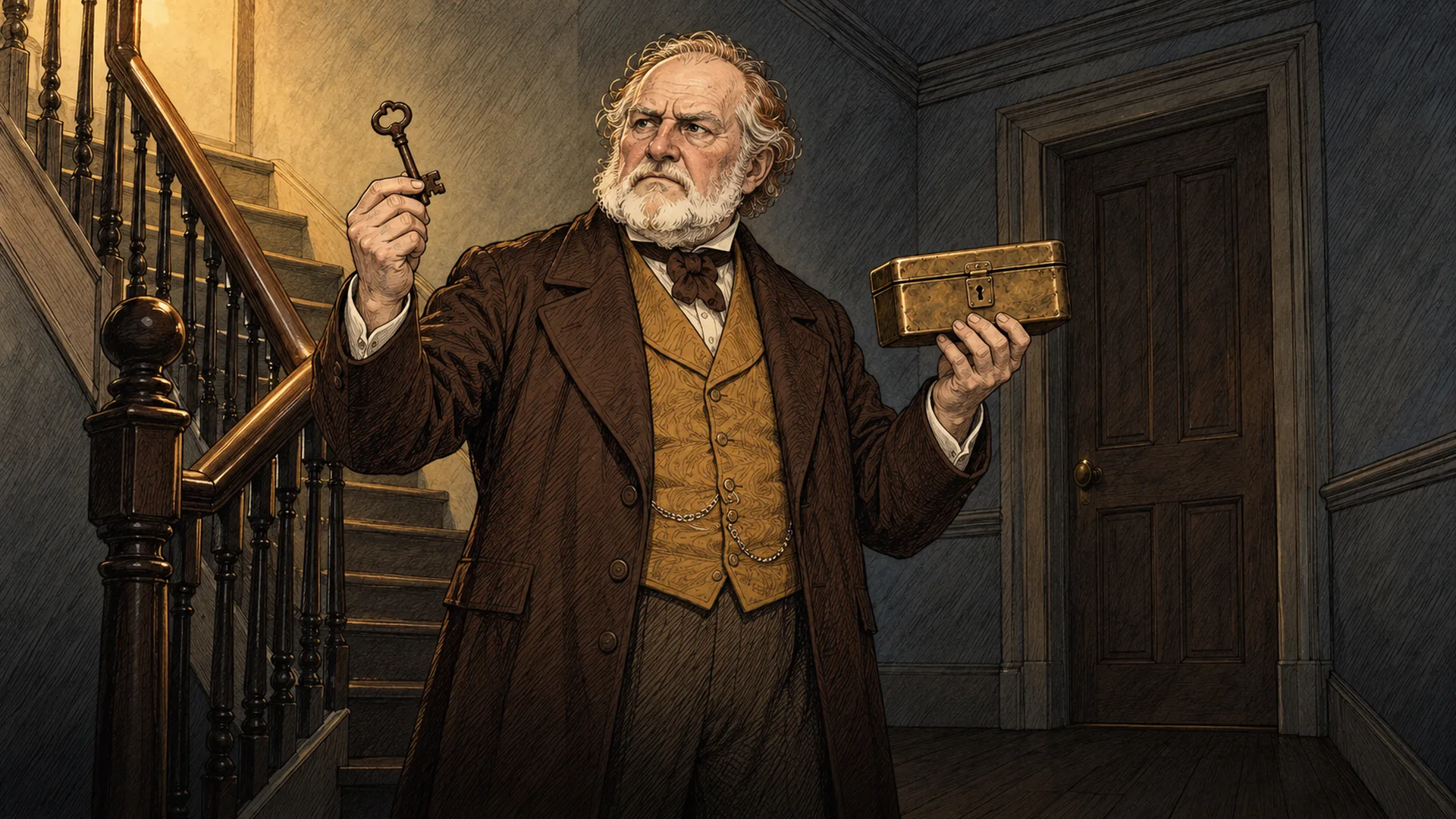
John finds three red letters written inside the envelope. Elias retreats to his room, then reappears carrying a key and a brass box. He tells John to have Mary light a fire and to send for the family lawyer, leaving the boy frightened and confused.
Japanese in this scene
- のでしょう
- のでしょう gives an explanatory question a tentative tone, like “what could the reason be?”
- 言って
- 言って is the て-form of 言う, “to say,” and connects the act of speaking to the action or quotation that follows.
- おじ
- おじ means “uncle.” Here it refers to John’s uncle Elias rather than to an unrelated older man.
Full text: original English and Japanese translation
"'Death,' said he, and rising from the table he retired to his room, leaving me palpitating with horror. I took up the envelope and saw scrawled in red ink upon the inner flap, just above the gum, the letter K three times repeated. There was nothing else save the five dried pips. What could be the reason of his overpowering terror? I left the breakfast-table, and as I ascended the stair I met him coming down with an old rusty key, which must have belonged to the attic, in one hand, and a small brass box, like a cashbox, in the other.
「『死だ』と言って、おじは食卓から立ち、自分の部屋へ戻りました。私は恐怖で胸をどきどきさせたまま、取り残されました。封筒を手に取ると、封をする内側の折り返しの、のりのすぐ上に、赤インクでKの字が三つ書きなぐってありました。ほかには、乾いた種が五つあるだけでした。あの圧倒的な恐怖には、どんな理由があるのでしょう。朝食の席を離れ、階段を上がっていくと、おじが下りてくるのに会いました。片手には屋根裏のものらしい古いさびた鍵、もう片方には金庫のような小さな真鍮の箱を持っていました。
"'They may do what they like, but I'll checkmate them still,' said he with an oath. 'Tell Mary that I shall want a fire in my room to-day, and send down to Fordham, the Horsham lawyer.'
「『やつらが何をしようと、おれはそれでもやつらを詰みにしてやる』と、おじは悪態をつきました。『今日は部屋で火をたいてほしいとメアリーに伝えろ。それからホーシャムの弁護士フォーダムに使いを出せ』