 よみうち英語Read the classics by typing
Notes Scene 12: The Summons Upstairs
You've finished this scene
Notes on this scene
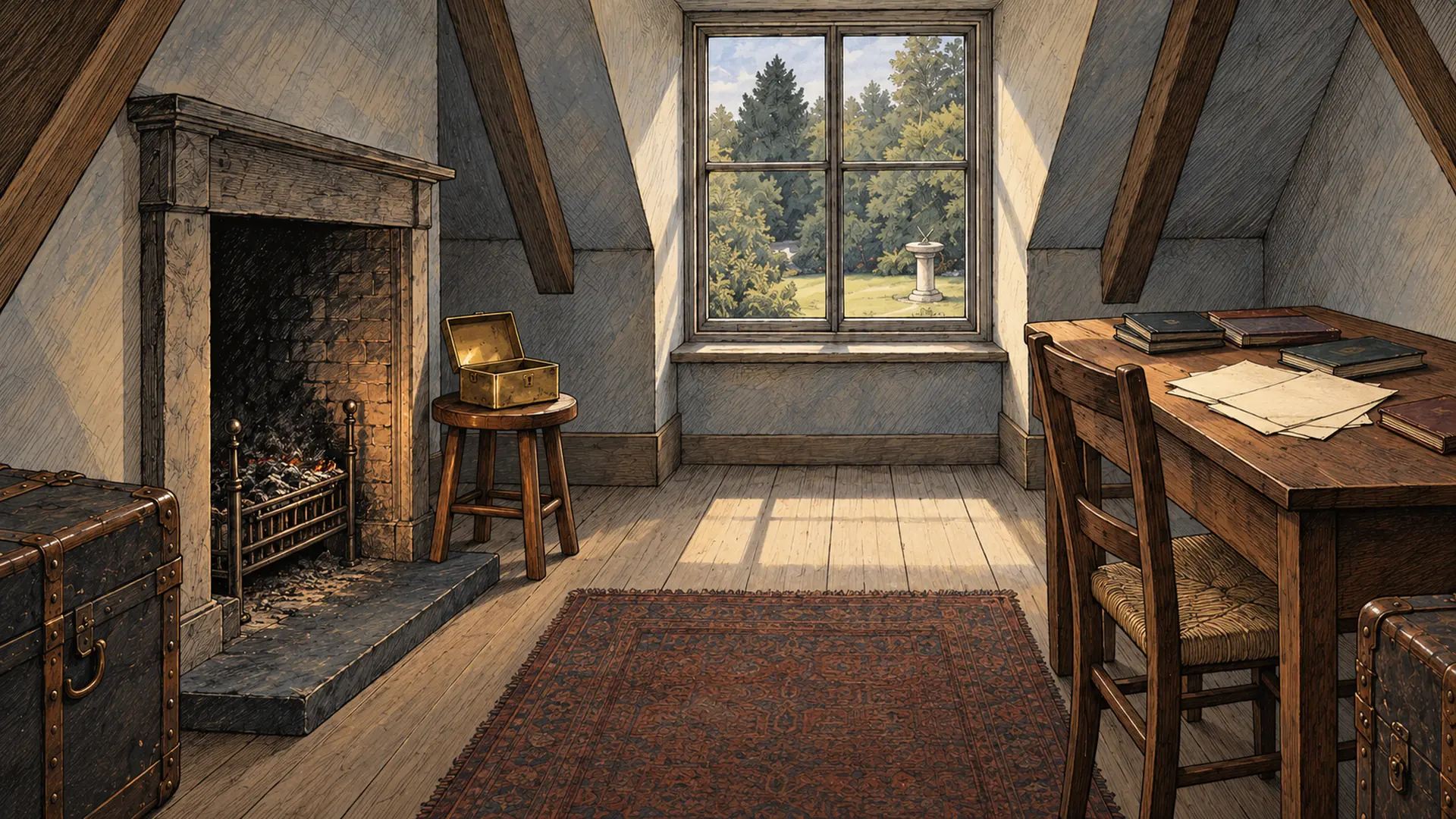
When John enters the room with the lawyer, he sees burned paper in the grate and the brass box standing empty. Elias makes a new will, asks John to witness it, and gives an ominous warning about the inheritance that may eventually pass to him.
Japanese in this scene
- ている
- The 〜ている form can show an action in progress, a continuing state, or the result of a completed action. The surrounding sentence decides which meaning applies.
- 言わ
- 言わ is the stem used before a negative or passive ending in forms of 言う, “to say.”
- れた
- The auxiliary れた marks a past passive form here: the action was done to the subject rather than by the subject.
Full text: original English and Japanese translation
"I did as he ordered, and when the lawyer arrived I was asked to step up to the room. The fire was burning brightly, and in the grate there was a mass of black, fluffy ashes, as of burned paper, while the brass box stood open and empty beside it. As I glanced at the box I noticed, with a start, that upon the lid was printed the treble K which I had read in the morning upon the envelope.
「言われたとおりにし、弁護士が来ると、私は上の部屋へ呼ばれました。火が明るく燃え、暖炉には紙を焼いたような黒くふわふわした灰が大量にあり、そのそばで真鍮の箱が空になって口を開けていました。箱に目をやると、蓋に、朝の封筒で見たのと同じ三つのKが印刷されているのに気づき、はっとしました。
"'I wish you, John,' said my uncle, 'to witness my will. I leave my estate, with all its advantages and all its disadvantages, to my brother, your father, whence it will, no doubt, descend to you. If you can enjoy it in peace, well and good! If you find you cannot, take my advice, my boy, and leave it to your deadliest enemy. I am sorry to give you such a two-edged thing, but I can't say what turn things are going to take. Kindly sign the paper where Mr. Fordham shows you.'
「『ジョン、おまえに』とおじは言いました。『遺言の証人になってもらいたい。この財産は、利点も不利な点もすべて含めて、おれの兄弟であるおまえの父親に残す。そこからおまえに受け継がれるのは、まず間違いなかろう。平穏に楽しめるなら、それでよし。そうはいかないと分かったら、おれの忠告を聞いて、一番憎い敵にくれてやれ。こんな両刃のものを渡してすまないが、事がどちらに転ぶか、おれには分からん。フォーダムさんの指す所へ署名してくれ』