 よみうち英語Read the classics by typing
Notes Scene 18: Arguing with His Father
You've finished this scene
Notes on this scene
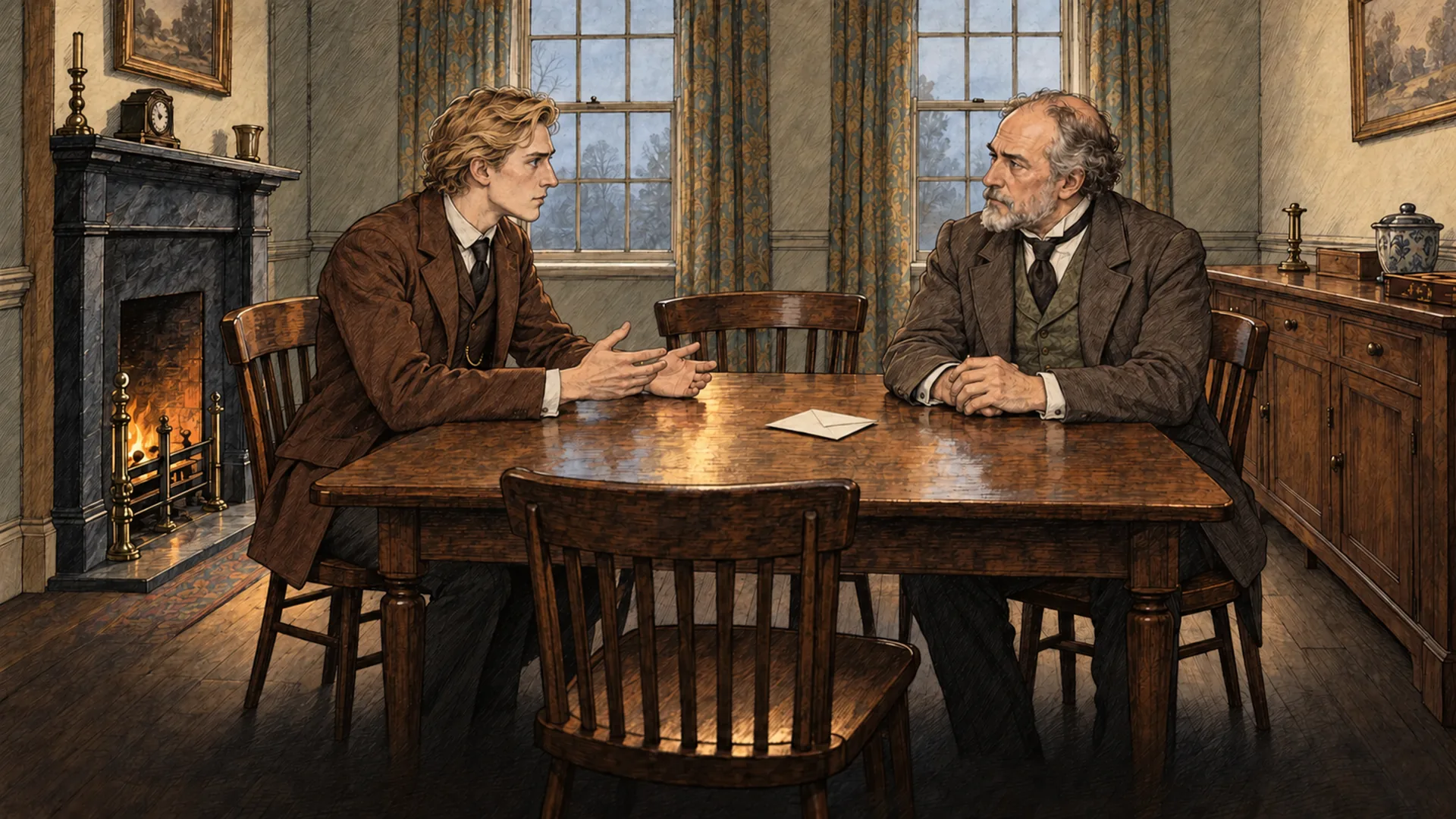
John urges his father to consult the police, but the stubborn man refuses because he expects ridicule. He also forbids John to report the matter himself. Unable to change his father’s mind, John spends the following days in anxious uncertainty.
Japanese in this scene
- という
- という links a quoted name, statement, or idea to the noun that follows. It can be translated as “called,” “that,” or “the idea that.”
- ながら
- ながら links two actions done at the same time, or can introduce a contrast like “although.”
- なら
- なら sets up a condition or topic: “if it is…” or “as for….” The surrounding statement supplies the result.
Full text: original English and Japanese translation
"'I should certainly speak to the police,' I said.
「『僕なら必ず警察に話すけれど』と私は言いました。
"'And be laughed at for my pains. Nothing of the sort.'
「『その挙げ句、ばかにされるというわけだ。そんなまねはせん』
"'Then let me do so?'
「『では、僕に話させてくれないか』
"'No, I forbid you. I won't have a fuss made about such nonsense.'
「『だめだ。おまえにも禁ずる。こんなくだらんことで騒ぎを起こされてたまるか』
"It was in vain to argue with him, for he was a very obstinate man. I went about, however, with a heart which was full of forebodings.
「父は大変頑固な人でしたから、言い争っても無駄でした。ですが私は、不吉な予感で胸をいっぱいにしながら日々を過ごしました。