 よみうち英語Read the classics by typing
Notes Scene 20: The Inherited House
You've finished this scene
Notes on this scene
John inherits the estate but remains there because he believes moving would not remove the danger. Two years and eight months after his father’s death, he receives five orange pips and the same instruction, this time in an envelope posted in London.
Japanese in this scene
- ように
- ように can express a goal, a desired result, or the manner in which something is done. It often follows a plain-form verb.
- のです
- のです presents the preceding statement as an explanation or emphasized fact. It does not mean “because” in this sentence.
- のだ
- のだ adds explanation or emphasis. In conversation it often appears as んだ.
Full text: original English and Japanese translation
"In this sinister way I came into my inheritance. You will ask me why I did not dispose of it? I answer, because I was well convinced that our troubles were in some way dependent upon an incident in my uncle's life, and that the danger would be as pressing in one house as in another.
「こうして不吉な成り行きで、私は遺産を受け継ぎました。なぜ処分しなかったのかと、お尋ねになるでしょう。答えは、一族の災難はおじの生涯のある出来事と何らかの関係があり、どこに住んでも危険は同じように差し迫ると、強く信じていたからです。
"It was in January, '85, that my poor father met his end, and two years and eight months have elapsed since then. During that time I have lived happily at Horsham, and I had begun to hope that this curse had passed away from the family, and that it had ended with the last generation. I had begun to take comfort too soon, however; yesterday morning the blow fell in the very shape in which it had come upon my father."
「気の毒な父が最期を遂げたのは八五年一月で、それから二年八か月が過ぎました。その間、私はホーシャムで幸せに暮らし、この呪いも父の代で終わり、一族から去ったのだと期待し始めていました。ですが、安心するのは早すぎました。昨日の朝、父を襲ったのと全く同じ形で、災難が降りかかったのです」
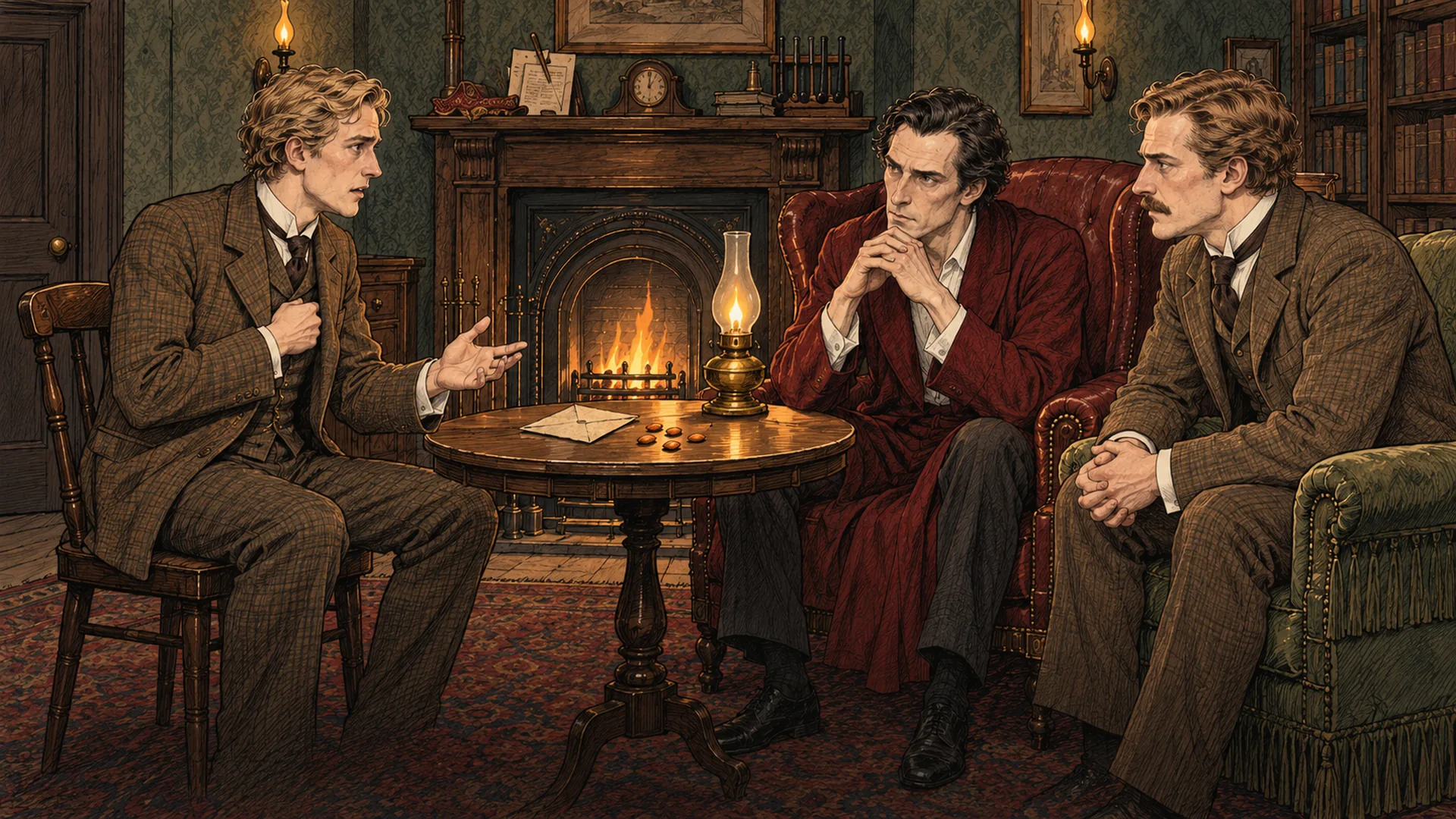
The young man took from his waistcoat a crumpled envelope, and turning to the table he shook out upon it five little dried orange pips.
青年は胴着からしわくちゃの封筒を取り出し、卓の方を向くと、その上へ、小さな乾いたオレンジの種を五つ振り落とした。
"This is the envelope," he continued. "The postmark is London—eastern division. Within are the very words which were upon my father's last message: 'K. K. K.'; and then 'Put the papers on the sundial.'"
「これが封筒です」と彼は続けた。「消印はロンドン東部地区です。中には父の最後の便りにあったのと全く同じ言葉が書かれています。『K・K・K』、それから『書類を日時計の上に置け』です」