 よみうち英語Read the classics by typing
Notes Scene 23: Coming for Advice
You've finished this scene
Notes on this scene
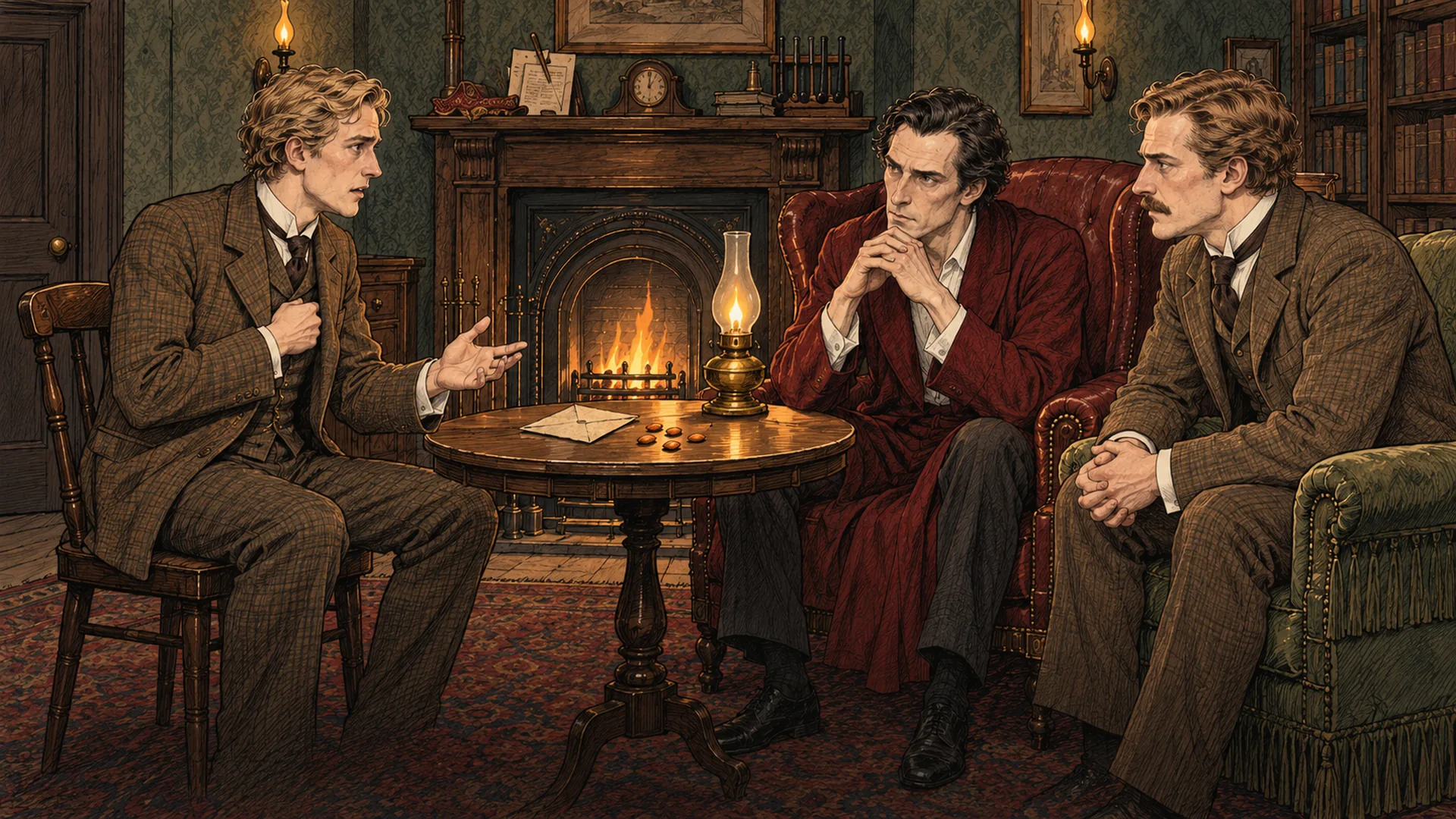
Holmes asks why John waited before seeking him out. John explains that Major Prendergast recommended Holmes only that day. When asked for any further clue, he produces a blue scrap of paper that apparently escaped the burning of his uncle’s records.
Japanese in this scene
- ている
- The 〜ている form can show an action in progress, a continuing state, or the result of a completed action. The surrounding sentence decides which meaning applies.
- ように
- ように can express a goal, a desired result, or the manner in which something is done. It often follows a plain-form verb.
- のです
- のです and its question form のですか add explanation or ask for one. The construction is different from reason-giving ので.
- べき
- べき expresses what ought to be done or what is expected: “should; ought to.”
Full text: original English and Japanese translation
"Why did you come to me?" he said, "and, above all, why did you not come at once?"
「なぜ私のところへいらしたのですか」と彼は言った。「何より、なぜすぐに来なかったのですか」
"I did not know. It was only to-day that I spoke to Major Prendergast about my troubles and was advised by him to come to you."
「存じなかったのです。今日になって初めて、プレンダーガスト少佐に悩みを話し、あなたを訪ねるよう勧められました」
"It is really two days since you had the letter. We should have acted before this. You have no further evidence, I suppose, than that which you have placed before us—no suggestive detail which might help us?"
「手紙を受け取ってから、実に二日もたっています。もっと前に手を打つべきでした。今示された以外に、証拠はないのでしょうね。助けになるような、何かを示唆する細かな事実も」
"There is one thing," said John Openshaw. He rummaged in his coat pocket, and, drawing out a piece of discoloured, blue-tinted paper, he laid it out upon the table. "I have some remembrance," said he, "that on the day when my uncle burned the papers I observed that the small, unburned margins which lay amid the ashes were of this particular colour. I found this single sheet upon the floor of his room, and I am inclined to think that it may be one of the papers which has, perhaps, fluttered out from among the others, and in that way has escaped destruction. Beyond the mention of pips, I do not see that it helps us much. I think myself that it is a page from some private diary. The writing is undoubtedly my uncle's."
「一つだけあります」とジョン・オープンショーは言った。外套のポケットを探り、色あせた青みがかった紙片を取り出して、卓の上に広げた。「おじが書類を焼いた日、灰の中に残っていた、焼け残りの小さな縁が、ちょうどこの色だったのを覚えている気がします」と彼は言った。「この一枚だけが部屋の床に落ちていたのを見つけました。ほかの紙の間からひらひらと落ち、そのおかげで焼失を免れた一枚ではないかと思います。種に触れている以外には、あまり役に立つとも思えません。私には、個人的な日記の一ページのように思えます。筆跡は間違いなくおじのものです」