 よみうち英語Read the classics by typing
Notes Scene 39: Resolve by the Fire
You've finished this scene
Notes on this scene
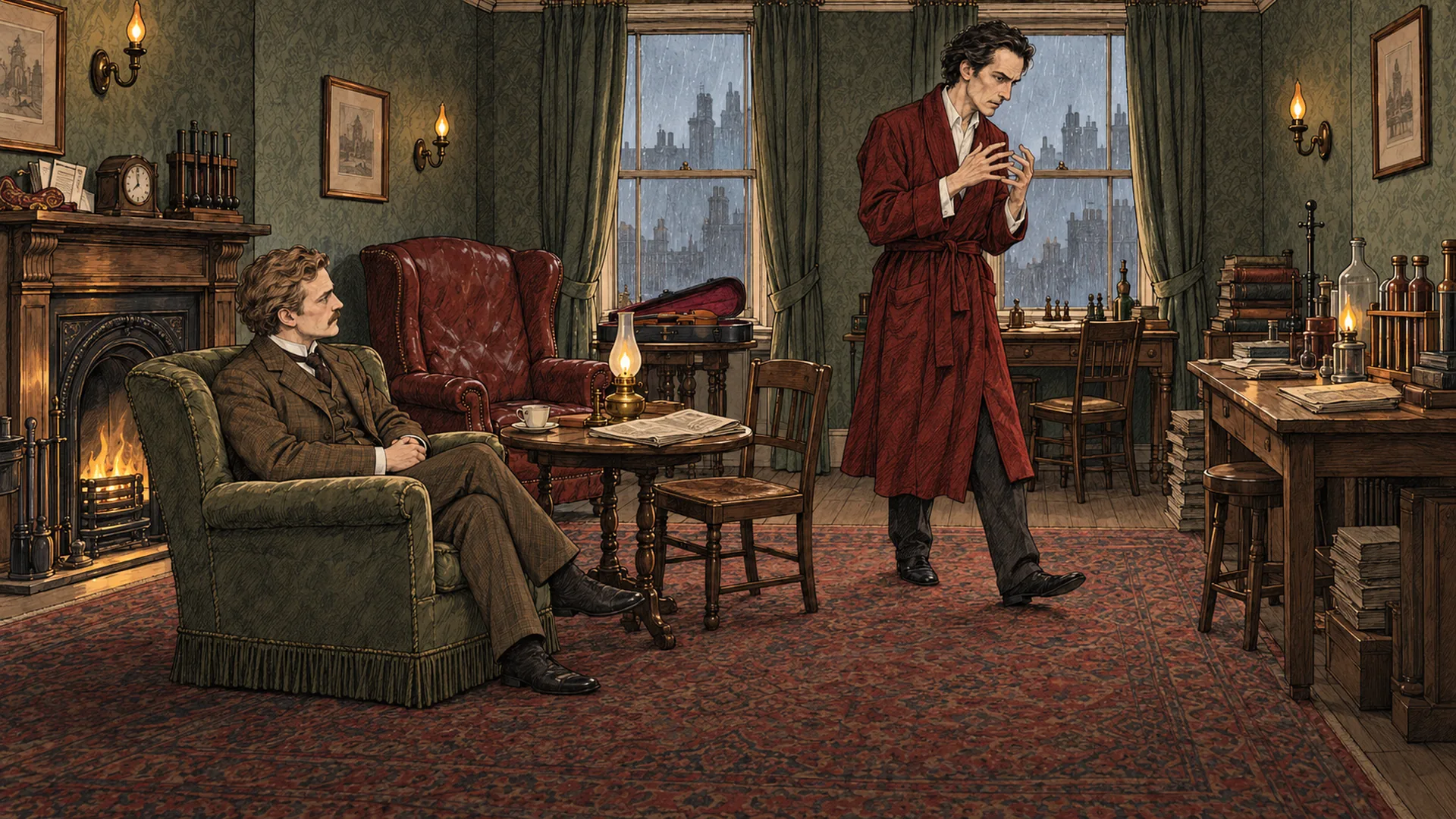
Holmes is deeply distressed that John died after asking him for help. The failure wounds his pride and makes the case personal. Refusing to leave the matter to the police, he resolves to identify the gang and immediately begins his own investigation.
Japanese in this scene
- に違いない
- に違いない expresses a strong conclusion: “must be; there is no doubt that.” It is stronger than かもしれない.
- ている
- The 〜ている form can show an action in progress, a continuing state, or the result of a completed action. The surrounding sentence decides which meaning applies.
- のだ
- のだ adds explanation or emphasis. In conversation it often appears as んだ.
- さえ
- さえ highlights an extreme example: “even.” It can also appear in conditional patterns meaning “if only.”
Full text: original English and Japanese translation
We sat in silence for some minutes, Holmes more depressed and shaken than I had ever seen him.
私たちは数分間黙って座っていた。ホームズがこれほど落ち込み、動揺しているのは初めてだった。
"That hurts my pride, Watson," he said at last. "It is a petty feeling, no doubt, but it hurts my pride. It becomes a personal matter with me now, and, if God sends me health, I shall set my hand upon this gang. That he should come to me for help, and that I should send him away to his death—!" He sprang from his chair and paced about the room in uncontrollable agitation, with a flush upon his sallow cheeks and a nervous clasping and unclasping of his long thin hands.
「私の誇りが傷つくよ、ワトソン」と、やがて彼は言った。「つまらない感情なのは確かだが、それでも誇りが傷つく。今や私自身の問題だ。神が健康を授けてくださるなら、必ずこの一味を捕らえてみせる。助けを求めて来た彼を、私が死へ送り出してしまうとは」彼は椅子から跳ね起き、抑えられない激しい動揺のまま部屋を歩き回った。黄ばんだ頬を赤らめ、長く細い両手を神経質に握ったり開いたりしていた。
"They must be cunning devils," he exclaimed at last. "How could they have decoyed him down there? The Embankment is not on the direct line to the station. The bridge, no doubt, was too crowded, even on such a night, for their purpose. Well, Watson, we shall see who will win in the long run. I am going out now!"
「実に狡猾な悪党どもに違いない」と、ついに彼は叫んだ。「どうやって、あそこへ誘い出したんだろう。河岸通りは、駅への最短の道筋ではない。あんな夜でさえ、橋の上はやつらの目的には人が多すぎたのだろう。さて、ワトソン、最後にどちらが勝つか見届けよう。私は今から出かける」
"To the police?"
「警察へかい」
"No; I shall be my own police. When I have spun the web they may take the flies, but not before."
「いや、私自身が警察になる。私が網を織り終えたら、警察がハエを捕らえてもよいが、それまではだめだ」