 よみうち英語Read the classics by typing
Notes Scene 41: Preparing an Envelope
You've finished this scene
Notes on this scene
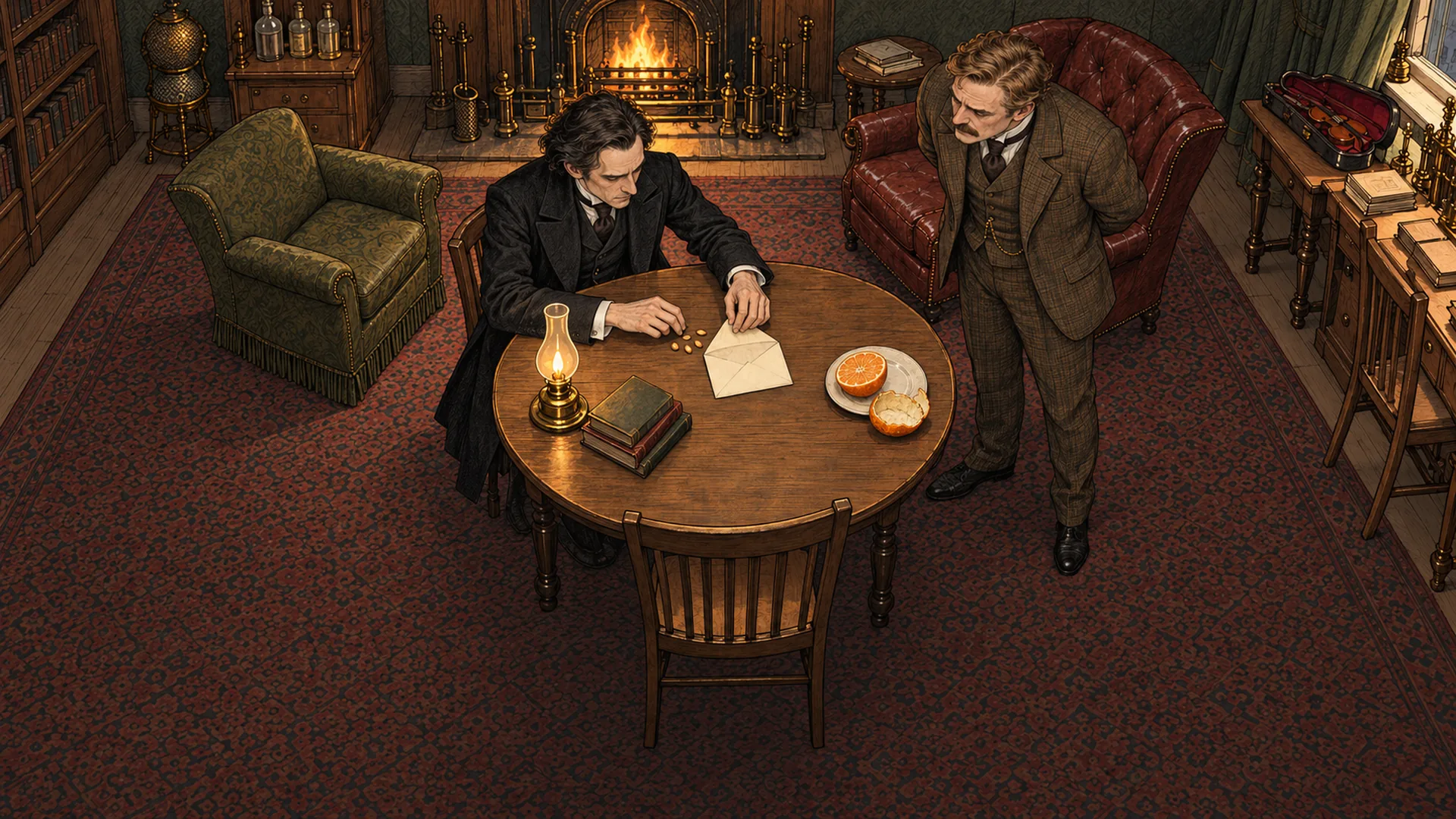
Confident that he has identified the culprits, Holmes decides to use their own warning against them. He places five orange pips in an envelope, adds initials inside, and addresses it to a ship’s captain in Savannah as a sign of pursuit.
Japanese in this scene
- かもしれない
- かもしれない marks possibility: “might; may.” It presents the statement as uncertain rather than as a firm conclusion.
- ている
- The 〜ている form can show an action in progress, a continuing state, or the result of a completed action. The surrounding sentence decides which meaning applies.
- ように
- ように can express a goal, a desired result, or the manner in which something is done. It often follows a plain-form verb.
- ながら
- ながら links two actions done at the same time, or can introduce a contrast like “although.”
Full text: original English and Japanese translation
"I have them in the hollow of my hand. Young Openshaw shall not long remain unavenged. Why, Watson, let us put their own devilish trade-mark upon them. It is well thought of!"
「やつらは私の手のひらの中だ。若いオープンショーの仇を討つのに、長くはかからない。そうだ、ワトソン、あの悪魔じみたやつら自身の目印を、今度はやつらにつけてやろう。よい思いつきだ」
"What do you mean?"
「どういう意味だい」
He took an orange from the cupboard, and tearing it to pieces he squeezed out the pips upon the table. Of these he took five and thrust them into an envelope. On the inside of the flap he wrote "S. H. for J. O." Then he sealed it and addressed it to "Captain James Calhoun, Barque Lone Star, Savannah, Georgia."
彼は戸棚からオレンジを一つ取り出し、ばらばらに割ると、卓の上へ種を絞り出した。そのうち五つを取り、封筒へ押し込んだ。封をする折り返しの内側に、「J・OのためのS・H」と書いた。それから封をし、宛先を「ジョージア州サヴァンナ、バーク型帆船ローン・スター号、ジェームズ・カルフーン船長」とした。
"That will await him when he enters port," said he, chuckling. "It may give him a sleepless night. He will find it as sure a precursor of his fate as Openshaw did before him."
「入港すれば、これが待っている」と、彼は含み笑いをしながら言った。「眠れない夜を過ごすかもしれないな。先にオープンショーがそう思ったように、彼もこれを自分の運命の確かな前触れと知ることになる」