 よみうち英語Read the classics by typing
Notes Scene 2: A Taste for the Bizarre
You've finished this scene
Notes on this scene
Holmes says that Watson’s love of unusual events explains why he has recorded, and sometimes embellished, so many of Holmes’s adventures. He again argues that life itself produces stranger effects and combinations than imagination can devise. Watson recalls that he once questioned this confident claim.
Japanese in this scene
- ている
- The 〜ている form can show an action in progress, a continuing condition, or the present result of a completed action. The surrounding context selects the meaning.
- のだ
- のだ adds explanation or emphasis, similar to “the fact is…” or “it is that….” In polite speech it becomes のです or んです.
- は
- は marks the topic of a sentence and can also set up a contrast with another item.
- が
- が marks the grammatical subject or newly focused information. It can also link clauses with a mild contrast.
Background
- Miss Mary Sutherland
- Mary Sutherland is the client in “A Case of Identity.” The story was published after “The Red-Headed League,” although its events are placed slightly earlier in Holmes’s chronology.
Full text: original English and Japanese translation
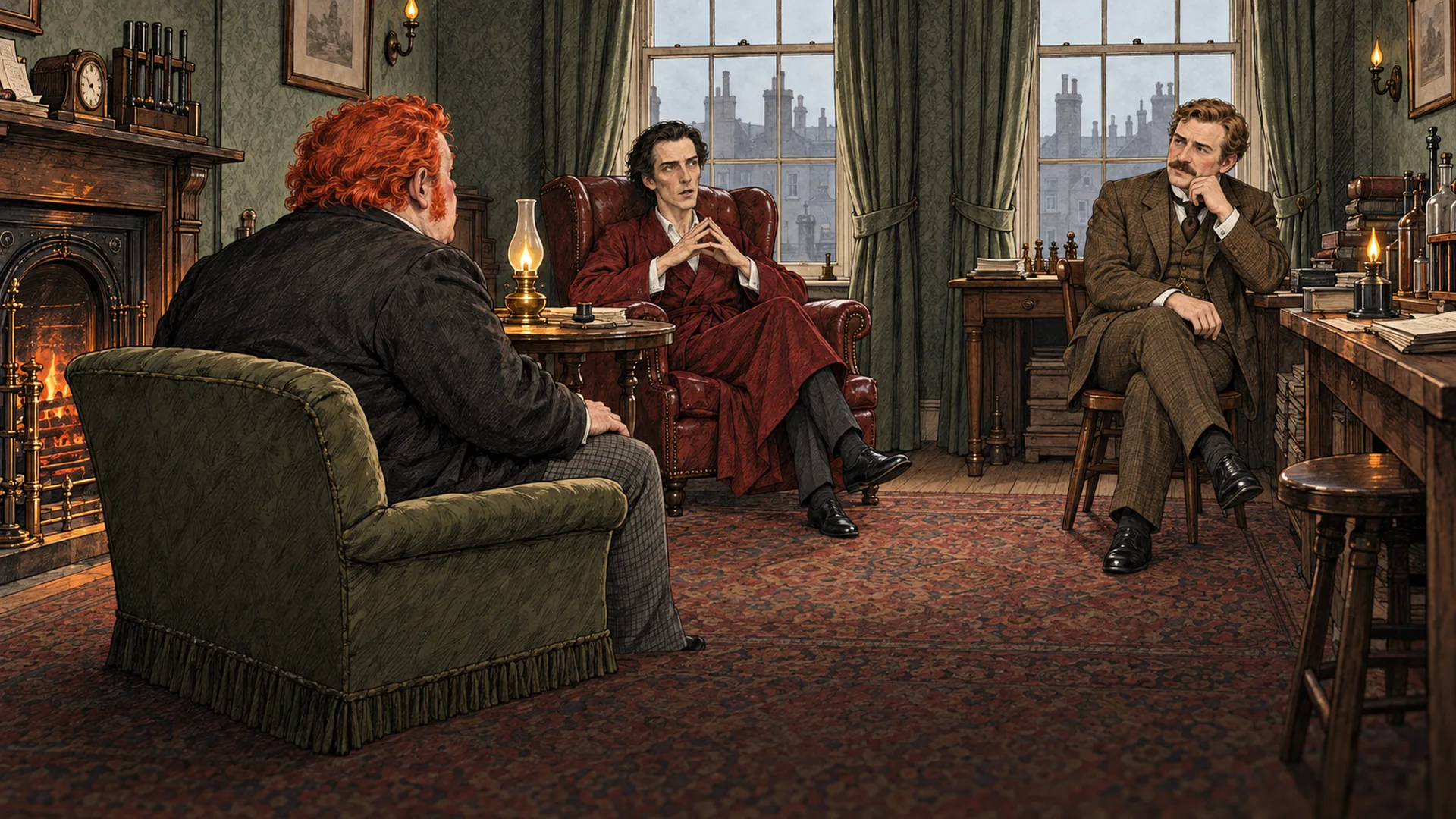
"Try the settee," said Holmes, relapsing into his armchair and putting his fingertips together, as was his custom when in judicial moods. "I know, my dear Watson, that you share my love of all that is bizarre and outside the conventions and humdrum routine of everyday life. You have shown your relish for it by the enthusiasm which has prompted you to chronicle, and, if you will excuse my saying so, somewhat to embellish so many of my own little adventures."
「長椅子にかけたまえ」とホームズは言うと、肘掛け椅子にまた深く身を沈め、物事を吟味するときのいつもの癖で、両手の指先を突き合わせた。「ワトソン、きみも私と同じで、奇妙なもの、世のしきたりや退屈な日々の決まりごとからはみ出したものなら何でも好きなのは知っているよ。その好みは、私のささやかな冒険を数多く記録し、こう言っては何だが、いくらか脚色までしてくれたきみの熱心さに表れている」
"Your cases have indeed been of the greatest interest to me," I observed.
「きみの事件は、たしかに私にはこの上なく興味深かったからね」と私は言った。
"You will remember that I remarked the other day, just before we went into the very simple problem presented by Miss Mary Sutherland, that for strange effects and extraordinary combinations we must go to life itself, which is always far more daring than any effort of the imagination."
「覚えているだろうが、先日メアリー・サザーランド嬢が持ち込んだごく単純な問題に取りかかる直前に、私は言ったね。奇妙な効果や並外れた組み合わせを求めるなら人生そのものに当たるべきで、人生はいつだって、どんな想像力の働きよりもはるかに大胆なのだ、と」
"A proposition which I took the liberty of doubting."
「その説には、失礼ながら疑問を呈させてもらったね」