 よみうち英語Read the classics by typing
Notes Scene 4: Watson Observes
You've finished this scene
Notes on this scene
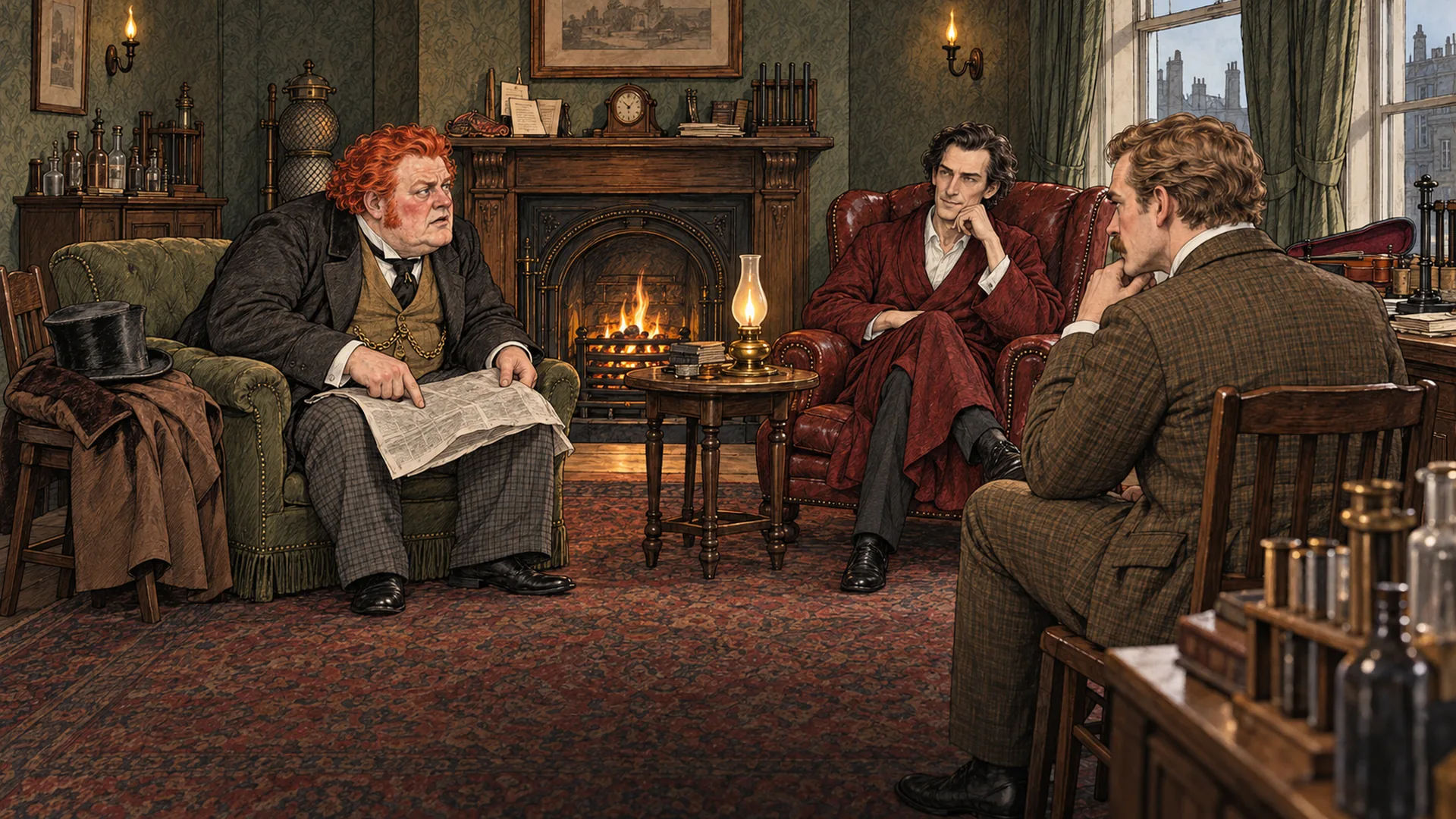
As Wilson searches the newspaper, Watson tries to read the man’s history from his appearance. He sees an overweight, commonplace merchant wearing worn and unfashionable clothes, but discovers little else. Only Wilson’s vivid red hair and the frustrated, unhappy look on his face seem truly remarkable.
Japanese in this scene
- ている
- The 〜ている form can show an action in progress, a continuing condition, or the present result of a completed action. The surrounding context selects the meaning.
- ていた
- The 〜ていた form is the past of 〜ている. It describes an action that was in progress or a state that continued at the time being discussed.
- ような
- ような links a comparison or example to a following noun: “like; such as.” It is the noun-modifying form corresponding to ように.
- そうな
- The stem of an adjective or verb + そうな modifies a noun with the sense “looks likely to…” or “appears….” It is based on visible impression.
Background
- Albert chain
- A heavy chain connected a waistcoat buttonhole to a pocket watch. It was named after Prince Albert, Queen Victoria’s husband, and often carried decorative fobs at the loose end.
- Frock coat
- This knee-length daytime coat was formal wear for Victorian gentlemen and businessmen. Wilson’s open, unclean coat contributes to the impression of a shabby man who pays little attention to appearance.
Full text: original English and Japanese translation
The portly client puffed out his chest with an appearance of some little pride and pulled a dirty and wrinkled newspaper from the inside pocket of his greatcoat. As he glanced down the advertisement column, with his head thrust forward and the paper flattened out upon his knee, I took a good look at the man and endeavoured, after the fashion of my companion, to read the indications which might be presented by his dress or appearance.
恰幅のいい依頼人はいささか得意げに胸を張り、外套の内ポケットから、汚れてしわくちゃになった新聞を引っぱり出した。彼が首を前に突き出し、膝の上に新聞を広げて広告欄に目を走らせているあいだに、私はその男をじっくり眺め、友人のやり方にならって、服装や外見に表れている手がかりを読み取ろうとした。
I did not gain very much, however, by my inspection. Our visitor bore every mark of being an average commonplace British tradesman, obese, pompous, and slow. He wore rather baggy grey shepherd's check trousers, a not over-clean black frock-coat, unbuttoned in the front, and a drab waistcoat with a heavy brassy Albert chain, and a square pierced bit of metal dangling down as an ornament. A frayed top-hat and a faded brown overcoat with a wrinkled velvet collar lay upon a chair beside him. Altogether, look as I would, there was nothing remarkable about the man save his blazing red head, and the expression of extreme chagrin and discontent upon his features.
だが、観察してみても大した収穫はなかった。客はどこから見ても、太っていて、もったいぶっていて、鈍そうな、ありふれたイギリスの商人そのものだった。身につけているのは、だぶついた灰色の細かい格子縞のズボンに、前をはだけた、あまり清潔とはいえない黒のフロックコート、そしてくすんだ色のチョッキで、チョッキには真鍮めいた重いアルバート型の時計鎖と、飾りに下げた穴あきの四角い金属片がぶら下がっていた。すり切れたシルクハットと、しわの寄ったビロードの襟がついた色あせた茶色のオーバーが、彼のそばの椅子に置いてあった。結局、どれほど見ても、この男に目立つところといえば、燃えるような赤い頭と、顔に浮かんだひどく悔しげで不満そうな表情くらいのものだった。