 よみうち英語Read the classics by typing
Notes Scene 5: Holmes Reads the Man
You've finished this scene
Notes on this scene
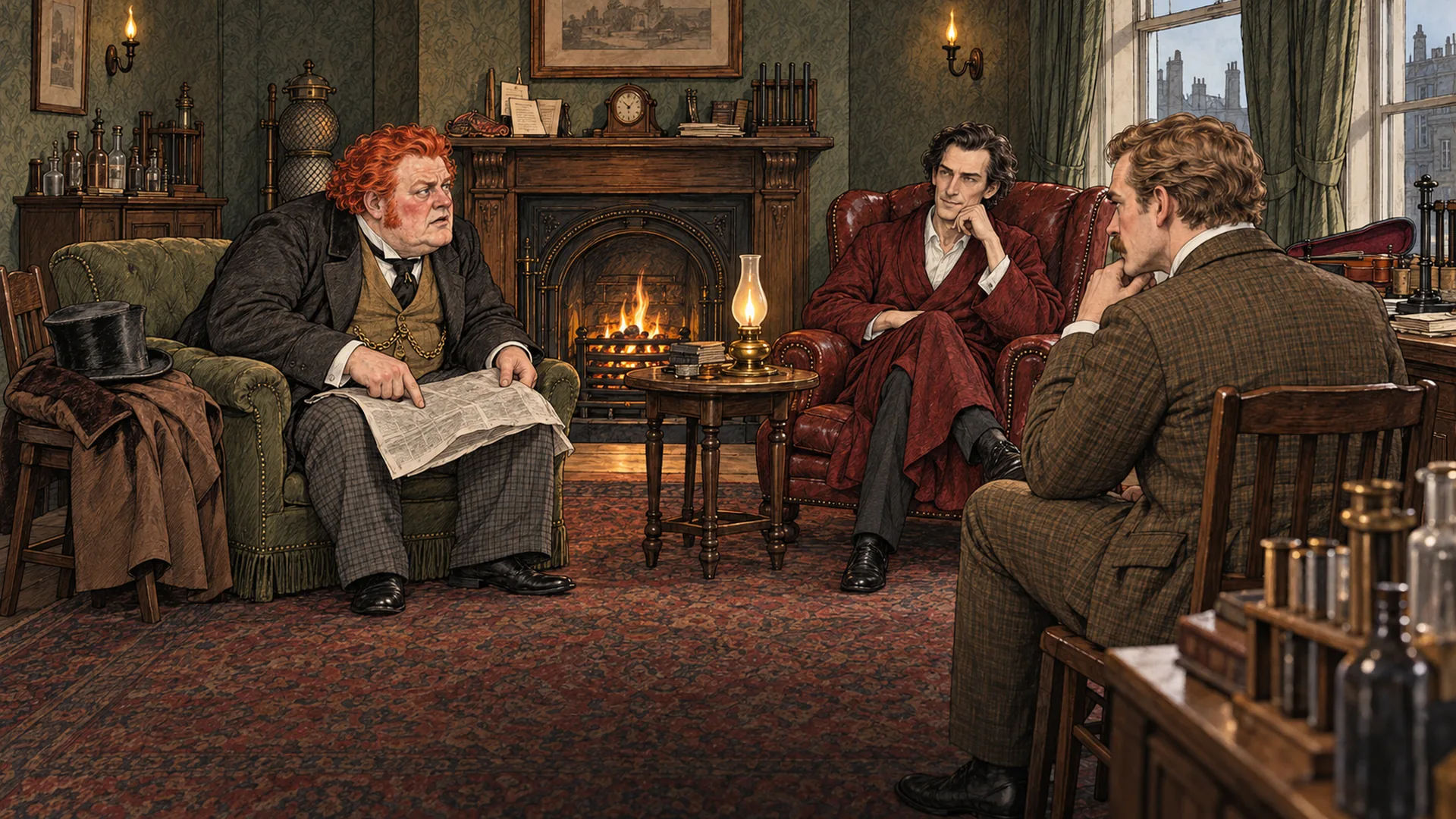
Holmes notices Watson’s investigation and promptly identifies five facts about Wilson: he once performed manual labor, takes snuff, belongs to the Freemasons, has visited China, and has recently done much writing. Astonished, Wilson admits that he began as a ship’s carpenter and demands to know how Holmes reached these conclusions.
Japanese in this scene
- たことがある
- Past-tense verb + ことがある means “have done before.” It describes experience at some point in the past without naming a particular occasion.
- ている
- The 〜ている form can show an action in progress, a continuing condition, or the present result of a completed action. The surrounding context selects the meaning.
- ていた
- The 〜ていた form is the past of 〜ている. It describes an action that was in progress or a state that continued at the time being discussed.
- ような
- ような links a comparison or example to a following noun: “like; such as.” It is the noun-modifying form corresponding to ように.
Background
- Snuff
- Snuff is powdered tobacco taken through the nose. It remained a familiar habit among older men in the late nineteenth century and gives Wilson a slightly old-fashioned air.
- Freemason
- Freemasonry is a fraternal organization associated with distinctive rituals and symbols. It had many members among Victorian merchants and gentlemen, who recognized emblems such as the square and compasses.
Full text: original English and Japanese translation
Sherlock Holmes' quick eye took in my occupation, and he shook his head with a smile as he noticed my questioning glances. "Beyond the obvious facts that he has at some time done manual labour, that he takes snuff, that he is a Freemason, that he has been in China, and that he has done a considerable amount of writing lately, I can deduce nothing else."
シャーロック・ホームズの鋭い目は、私のしていることをすぐに見て取った。問いかけるような私の視線に気づくと、彼は笑って首を振った。「以前に力仕事をしていたこと、嗅ぎたばこをやること、フリーメイソンであること、中国にいたことがあること、そして最近かなりの量の書き物をしていること。そういう分かりきった事実のほかは、何も推理できないね」
Mr. Jabez Wilson started up in his chair, with his forefinger upon the paper, but his eyes upon my companion.
ジェイベズ・ウィルソン氏は椅子の上で跳び上がり、人差し指は新聞に置いたまま、目だけを私の友人に向けた。
"How, in the name of good-fortune, did you know all that, Mr. Holmes?" he asked. "How did you know, for example, that I did manual labour. It's as true as gospel, for I began as a ship's carpenter."
「いったいぜんたい、どうしてそんなことまで分かったんです、ホームズさん?」と彼は尋ねた。「たとえば、私が力仕事をしていたことが、どうして分かったんです。まったくそのとおりでしてね、私は船大工から始めたんですよ」