 よみうち英語Read the classics by typing
Notes Scene 7: The China Question
You've finished this scene
Notes on this scene
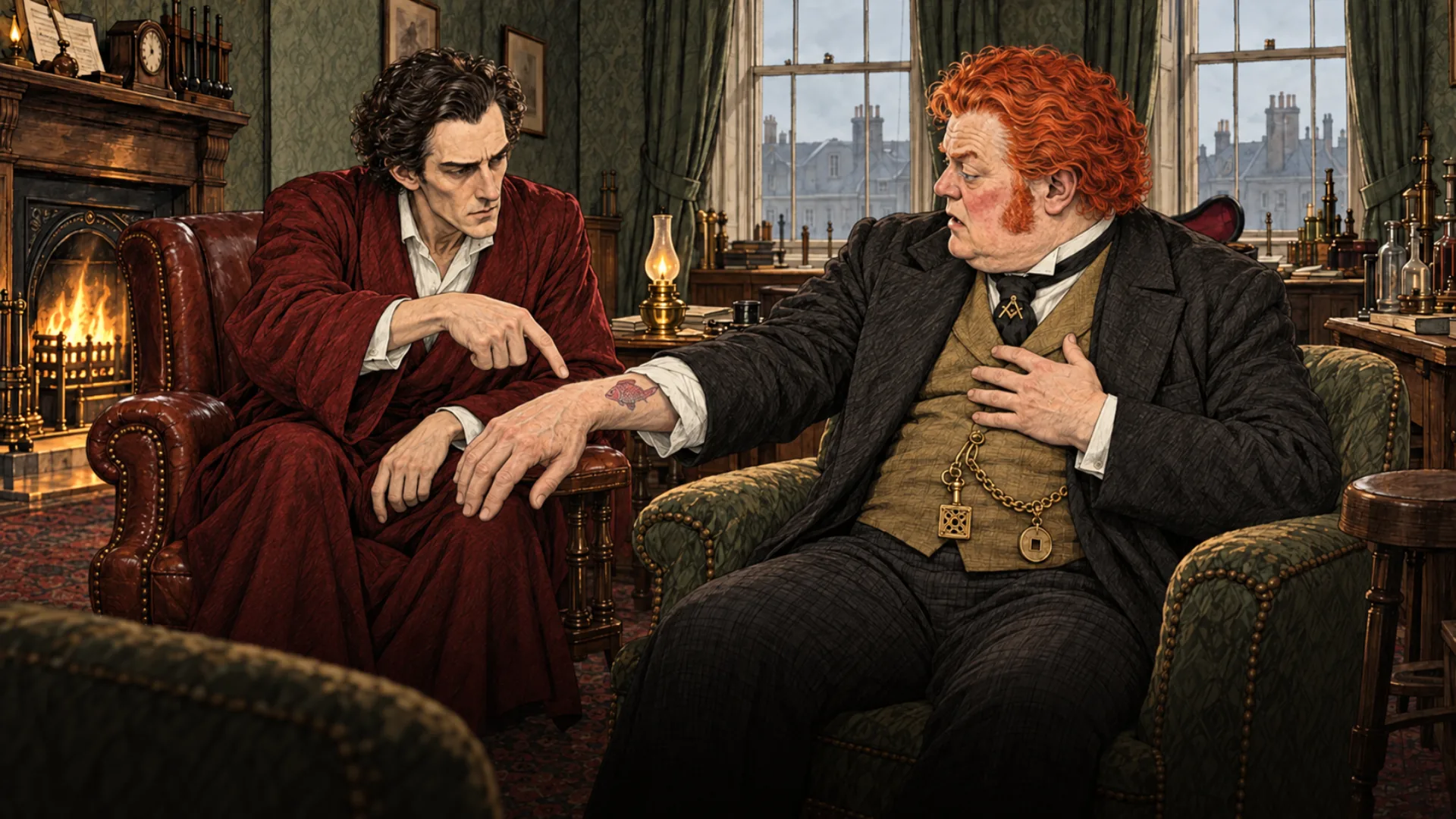
Holmes identifies Wilson’s Chinese connection from a fish tattoo made in a distinctive Chinese style and a Chinese coin hanging from his watch chain. Wilson laughs loudly when the method is explained and remarks that the feat sounds much less impressive once its simple basis is known.
Japanese in this scene
- ている
- The 〜ている form can show an action in progress, a continuing condition, or the present result of a completed action. The surrounding context selects the meaning.
- のだ
- のだ adds explanation or emphasis, similar to “the fact is…” or “it is that….” In polite speech it becomes のです or んです.
- ばかり
- ばかり can mean “only,” “nothing but,” or “just did,” depending on the form before it. It focuses attention on a narrow range or recent action.
- しか
- しか appears with a negative predicate and means “only; nothing but.” Even though the English meaning is positive, the Japanese sentence must remain negative.
Background
- Tattoo
- Tattoos were common among nineteenth-century sailors, who often received them in foreign ports. Chinese and Japanese tattoo artists were particularly admired in the West.
Full text: original English and Japanese translation
"Well, but China?"
「なるほど、でも中国は?」
"The fish that you have tattooed immediately above your right wrist could only have been done in China. I have made a small study of tattoo marks and have even contributed to the literature of the subject. That trick of staining the fishes' scales of a delicate pink is quite peculiar to China. When, in addition, I see a Chinese coin hanging from your watch-chain, the matter becomes even more simple."
「右の手首のすぐ上に彫ってある魚の入れ墨は、中国でしか彫れないものだ。私は入れ墨について少しばかり研究していて、その分野の文献に寄稿したことさえあるのだよ。魚のうろこを淡い桃色に染めるあの技法は、まったく中国独特のものだ。そのうえ、時計の鎖に中国の硬貨がぶら下がっているのを見れば、話はなおさら簡単になる」
Mr. Jabez Wilson laughed heavily. "Well, I never!" said he. "I thought at first that you had done something clever, but I see that there was nothing in it after all."
ジェイベズ・ウィルソン氏は太い声でどっと笑った。「いやはや、驚いた!」と彼は言った。「最初は何かうまい手でも使いなさったのかと思いましたが、種を明かせば何でもないことだったんですなあ」