 よみうち英語Read the classics by typing
Notes Scene 10: The Pawnbroker
You've finished this scene
Notes on this scene
Watson notes that the advertisement appeared in the Morning Chronicle on April 27, 1890. Wilson explains that he owns a small pawnbroker’s business in Coburg Square near the City. Times are difficult, and he can afford only one employee, who works for half the usual wage to gain experience.
Japanese in this scene
- てくれる
- Verb + てくれる says that someone performs an action for the speaker or the speaker’s group. It presents the act as a welcome favor.
- ている
- The 〜ている form can show an action in progress, a continuing condition, or the present result of a completed action. The surrounding context selects the meaning.
- ような
- ような links a comparison or example to a following noun: “like; such as.” It is the noun-modifying form corresponding to ように.
- は
- は marks the topic of a sentence and can also set up a contrast with another item.
Background
- Pawnbroker
- Pawnbrokers lent money against deposited goods and were important to working-class life before payday. Three golden balls hanging outside traditionally identified a pawnbroker’s shop.
- The City
- The City of London is the old central district inside the Roman walls. By the nineteenth century it was Britain’s commercial and financial heart, crowded with banks, offices, and merchants by day.
Full text: original English and Japanese translation
"It is The Morning Chronicle of April 27, 1890. Just two months ago."
「一八九〇年四月二十七日付のモーニング・クロニクル紙だね。ちょうど二か月前だ」
"Very good. Now, Mr. Wilson?"
「よろしい。では、ウィルソンさん?」
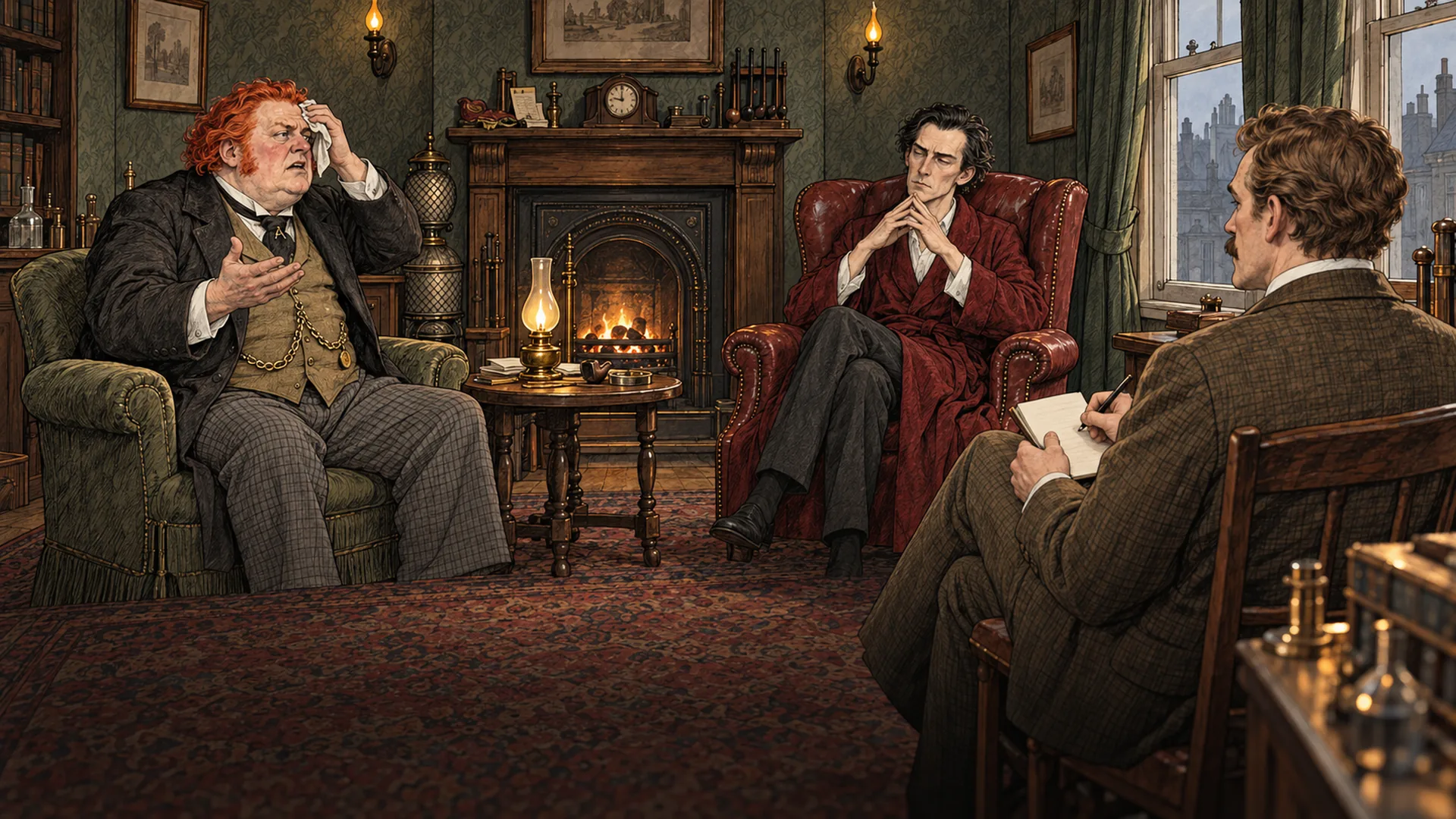
"Well, it is just as I have been telling you, Mr. Sherlock Holmes," said Jabez Wilson, mopping his forehead; "I have a small pawnbroker's business at Coburg Square, near the City. It's not a very large affair, and of late years it has not done more than just give me a living. I used to be able to keep two assistants, but now I only keep one; and I would have a job to pay him but that he is willing to come for half wages so as to learn the business."
「ええ、さっきからお話ししているとおりでしてね、シャーロック・ホームズさん」とジェイベズ・ウィルソンは額の汗をぬぐいながら言った。「私はシティの近くのコバーグ・スクエアで、小さな質屋を営んでおりまして。たいした店じゃありませんし、ここ数年は、どうにか食べていけるくらいの稼ぎしかありません。以前は店員を二人置いておけたんですが、今は一人だけでして。それも、商売を覚えたいからと給金半分で来てくれるからいいようなもので、そうでなけりゃ給金を払うのにひと苦労ですよ」