 よみうち英語Read the classics by typing
Notes Scene 20: The Hair Test
You've finished this scene
Notes on this scene
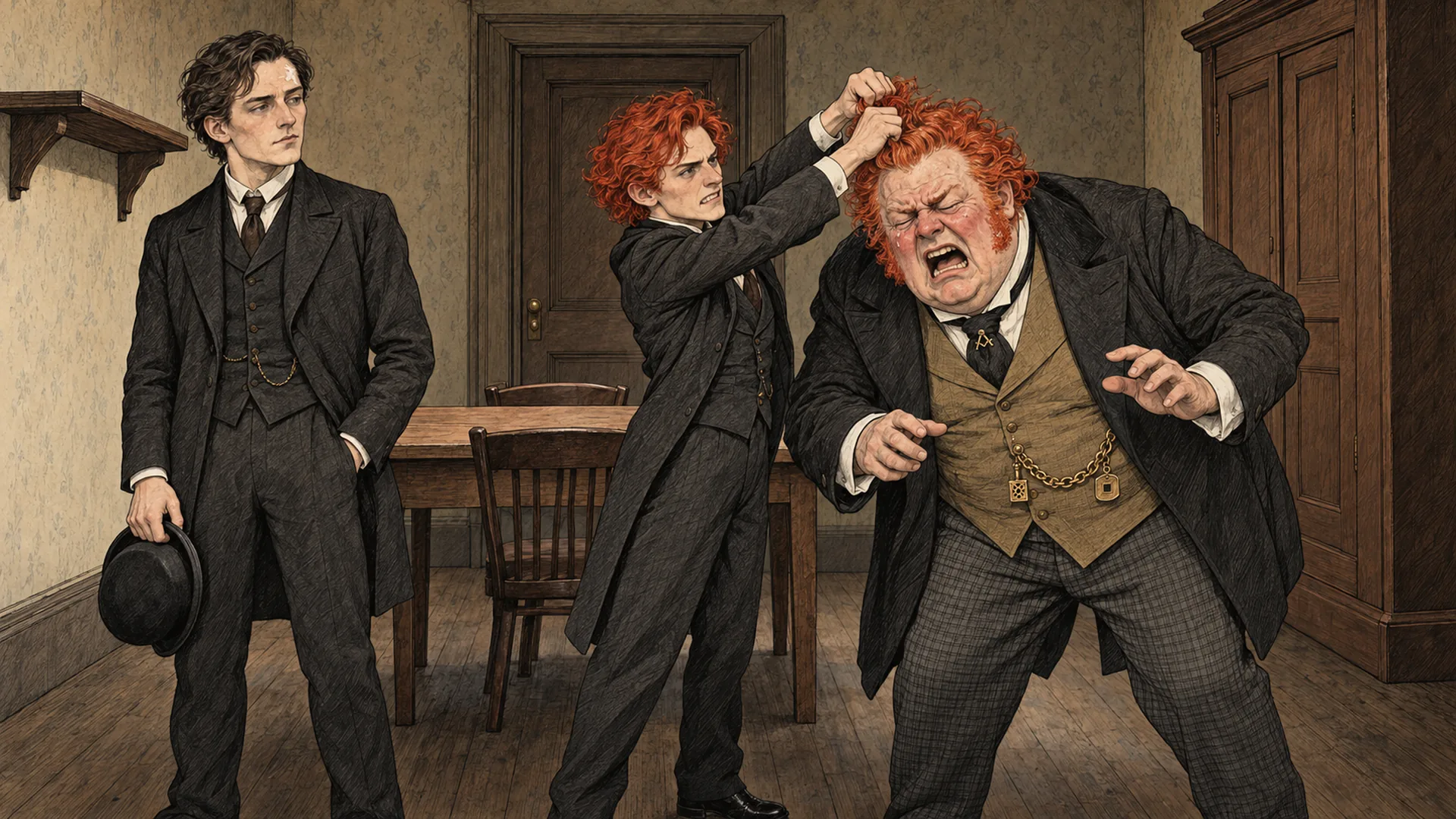
To make sure Wilson’s hair is real, the interviewer pulls it hard enough to bring tears to his eyes. He explains that false hair and dye have caused trouble before. After confirming Wilson’s authenticity, he calls from the window that the vacancy has been filled, sending the remaining applicants away.
Japanese in this scene
- ていただく
- ていただく is the humble, polite form of てもらう. It describes receiving another person’s action while lowering the speaker’s position.
- という
- という connects quoted words, a name, or an idea to the noun that follows. Depending on context, it can mean “called,” “that,” or “the idea that.”
- は
- は marks the topic of a sentence and can also set up a contrast with another item.
- が
- が marks the grammatical subject or newly focused information. It can also link clauses with a mild contrast.
Background
- Cobbler’s wax
- Shoemakers used dark resinous wax to strengthen thread. The mention suggests the kinds of materials dishonest applicants had used to attach false hair or disguise its color.
Full text: original English and Japanese translation
"'It would be injustice to hesitate,' said he. 'You will, however, I am sure, excuse me for taking an obvious precaution.' With that he seized my hair in both his hands, and tugged until I yelled with the pain. 'There is water in your eyes,' said he as he released me. 'I perceive that all is as it should be. But we have to be careful, for we have twice been deceived by wigs and once by paint. I could tell you tales of cobbler's wax which would disgust you with human nature.' He stepped over to the window and shouted through it at the top of his voice that the vacancy was filled. A groan of disappointment came up from below, and the folk all trooped away in different directions until there was not a red-head to be seen except my own and that of the manager.
「『迷ったりしては、かえってあなたに失礼というものです』と男は言いました。『とはいえ、当然の用心をさせていただくのは、きっとお許しいただけますな』そう言うなり、男は両手で私の髪をつかみ、私が痛さに悲鳴を上げるまで引っぱったんです。『目に涙が浮かんでいますな』と、私を放しながら男は言いました。『どうやら、すべて申し分ないようだ。しかし、用心しなくてはならんのです、なにしろ二度はかつらに、一度は染料にだまされていますからな。靴屋の蝋を使った手口の話でもしようものなら、人間というものに愛想が尽きますよ』男は窓のところへ行き、空きは埋まったと、声をかぎりに外へ叫びました。下からはがっかりしたうめき声が上がり、人々はぞろぞろと散っていって、しまいには私と支配人の頭のほかに、赤い頭はひとつも見当たらなくなりました。