 よみうち英語Read the classics by typing
Notes Scene 27: Weeks of Copying
You've finished this scene
Notes on this scene
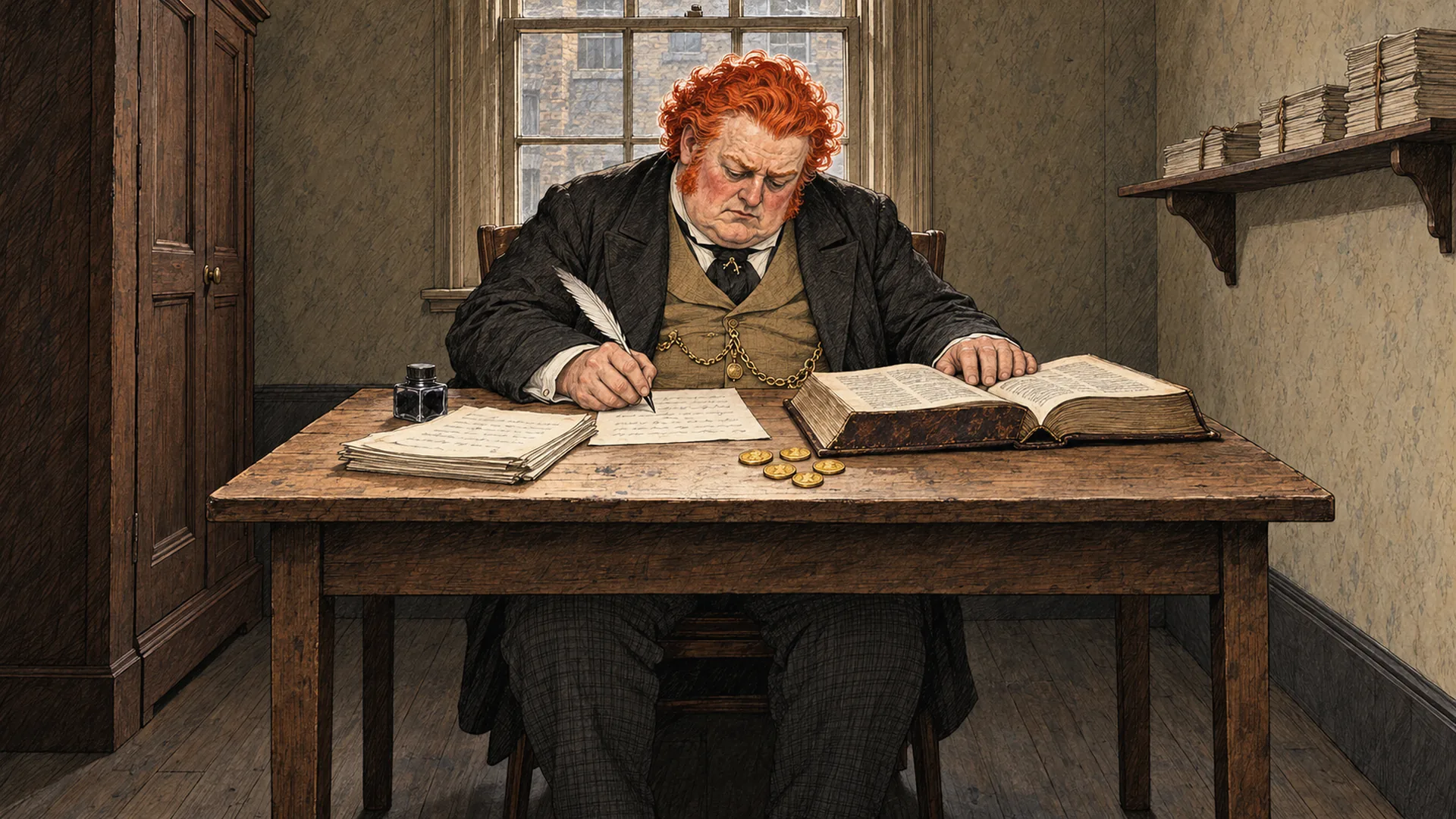
Wilson copies the encyclopedia every morning and receives four sovereigns at the end of each week. Ross first checks his work often, then appears less and less. Although the manager’s visits cease, Wilson remains faithfully at his desk because he cannot risk losing a job so well suited to him.
Japanese in this scene
- ている
- The 〜ている form can show an action in progress, a continuing condition, or the present result of a completed action. The surrounding context selects the meaning.
- ていた
- The 〜ていた form is the past of 〜ている. It describes an action that was in progress or a state that continued at the time being discussed.
- ような
- ような links a comparison or example to a following noun: “like; such as.” It is the noun-modifying form corresponding to ように.
- ため
- ため can mean “for the purpose of” or “because of.” A following action usually signals purpose, while a completed fact before it often gives a cause.
Background
- Sovereign
- A sovereign was a British gold coin worth one pound. Receiving four of them each Saturday would give Wilson about twice the weekly pay of many skilled workers.
Full text: original English and Japanese translation
"Well, to my surprise and delight, everything was as right as possible. The table was set out ready for me, and Mr. Duncan Ross was there to see that I got fairly to work. He started me off upon the letter A, and then he left me; but he would drop in from time to time to see that all was right with me. At two o'clock he bade me good-day, complimented me upon the amount that I had written, and locked the door of the office after me.
「ところが驚いたことに、そしてうれしいことに、何もかもがこれ以上ないほどきちんとしていたんです。机は私のためにちゃんと用意されていて、ダンカン・ロスさんが、私がきちんと仕事に取りかかるのを見届けに来ていました。彼は私にAの項から始めさせると出ていきましたが、ときどき顔を出しては、ちゃんとやっているか確かめていきました。二時になると、彼は私にあいさつをして、書いた量をほめてくれ、私が出たあと事務所のドアに鍵をかけました。
"This went on day after day, Mr. Holmes, and on Saturday the manager came in and planked down four golden sovereigns for my week's work. It was the same next week, and the same the week after. Every morning I was there at ten, and every afternoon I left at two. By degrees Mr. Duncan Ross took to coming in only once of a morning, and then, after a time, he did not come in at all. Still, of course, I never dared to leave the room for an instant, for I was not sure when he might come, and the billet was such a good one, and suited me so well, that I would not risk the loss of it.
「こんな毎日が続きましてね、ホームズさん、土曜日には支配人がやって来て、一週間の仕事の代金としてソヴリン金貨を四枚、ぽんと置いていったんです。次の週も同じ、その次の週も同じでした。毎朝十時にはそこにいて、毎日午後二時に帰りました。そのうちダンカン・ロスさんは午前中に一度しか来なくなり、やがてしばらくすると、まったく来なくなりました。それでももちろん、私はかたときも部屋を離れる気にはなれませんでした。いつ彼が来るかわかりませんでしたし、こんなにいい、私にぴったりの勤め口を、失うような危ないまねはしたくなかったものですから。