 よみうち英語Read the classics by typing
Notes Scene 31: The New Offices
You've finished this scene
Notes on this scene
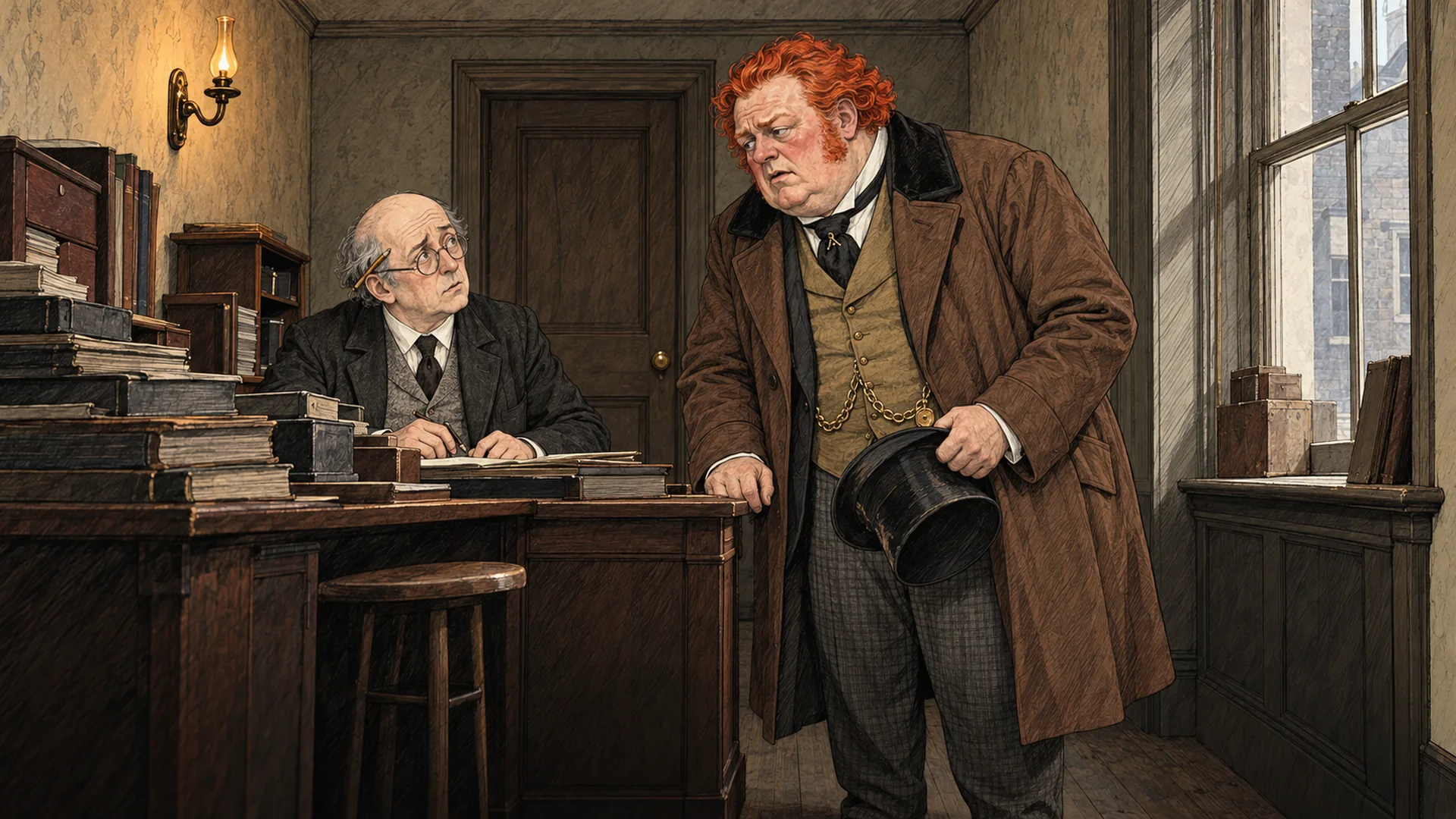
According to the landlord, the red-haired tenant was a solicitor named William Morris who rented the room while his own office was being prepared. The address he left leads Wilson to a manufacturer of artificial kneecaps, where no one has heard of either Morris or Duncan Ross.
Japanese in this scene
- てみる
- Verb + てみる means “try doing” in order to see the result. It describes an experimental action, not simply looking at something.
- ていた
- The 〜ていた form is the past of 〜ている. It describes an action that was in progress or a state that continued at the time being discussed.
- という
- という connects quoted words, a name, or an idea to the noun that follows. Depending on context, it can mean “called,” “that,” or “the idea that.”
- は
- は marks the topic of a sentence and can also set up a contrast with another item.
Background
- Solicitor
- British legal practice distinguished solicitors, who advised clients and prepared documents, from barristers, who argued in higher courts. A solicitor would seem a respectable tenant for a city office.
- St. Paul’s Cathedral
- St. Paul’s is the great cathedral of the City of London, rebuilt by Christopher Wren after the Great Fire of 1666. Its dome made it a natural landmark for addresses.
Full text: original English and Japanese translation
"'Oh,' said he, 'his name was William Morris. He was a solicitor and was using my room as a temporary convenience until his new premises were ready. He moved out yesterday.'
「『ああ』と大家は言いました。『その人ならウィリアム・モリスという名前ですよ。事務弁護士でしてね、新しい事務所の用意ができるまで、仮の場所として私の部屋を使っていたんです。昨日、引っ越していきましたよ』
"'Where could I find him?'
「『どこへ行けば会えるでしょう?』
"'Oh, at his new offices. He did tell me the address. Yes, 17 King Edward Street, near St. Paul's.'
「『ああ、新しい事務所ですよ。住所はたしかに聞いています。そうそう、キング・エドワード街十七番地、セント・ポール大聖堂の近くです』
"I started off, Mr. Holmes, but when I got to that address it was a manufactory of artificial knee-caps, and no one in it had ever heard of either Mr. William Morris or Mr. Duncan Ross."
「すぐに出かけたんですがね、ホームズさん、その住所に着いてみると、そこは人工のひざ皿を作る製造所でして、ウィリアム・モリスさんのこともダンカン・ロスさんのことも、誰ひとり聞いたことがないと言うんです」
"And what did you do then?" asked Holmes.
「それで、あなたはどうしたのかね?」とホームズは尋ねた。