 よみうち英語Read the classics by typing
Notes Scene 46: Ten Tonight
You've finished this scene
Notes on this scene
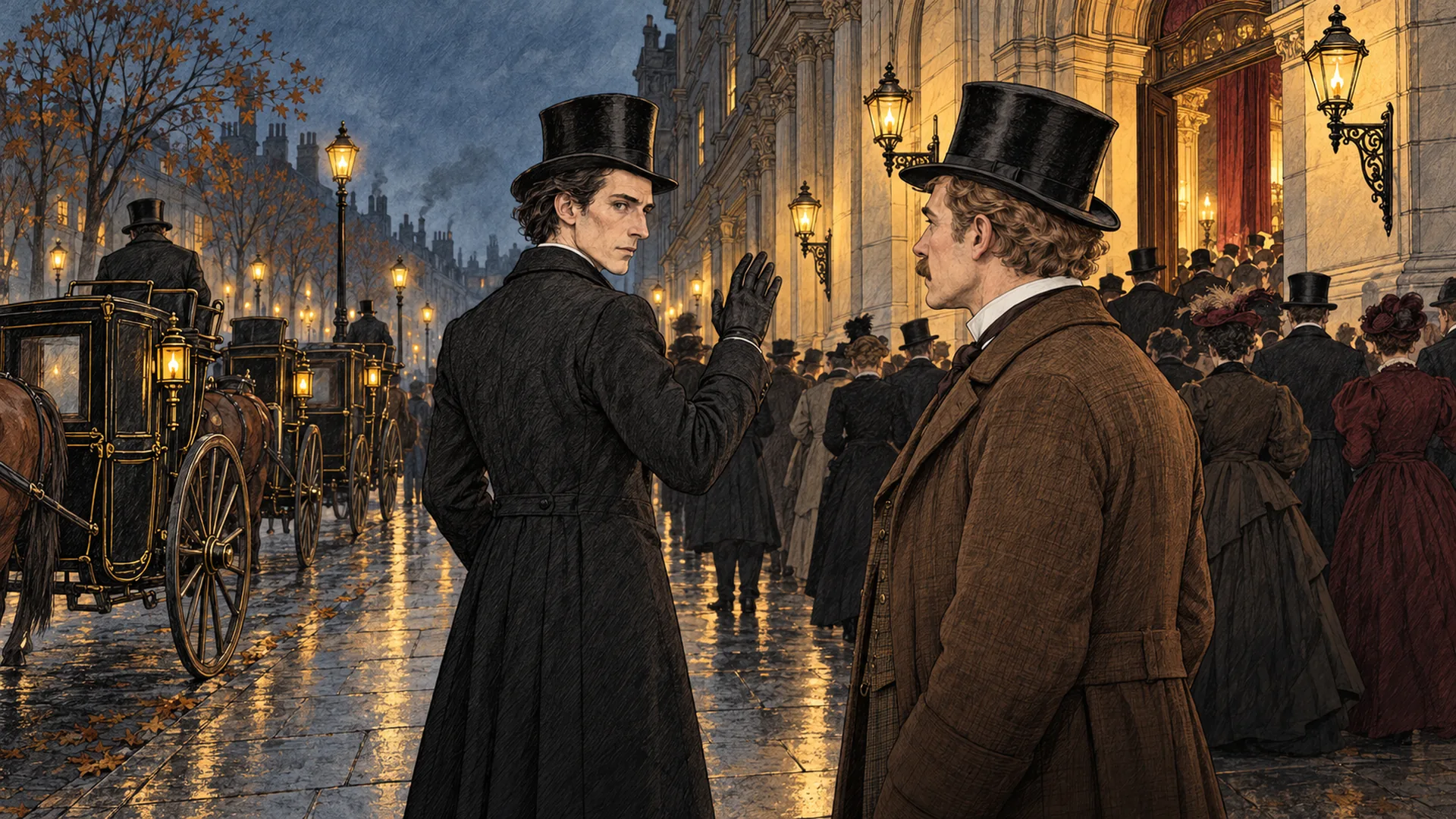
Holmes sends Watson home after the concert but says that a considerable crime is being planned near Coburg Square. It can still be prevented, although the fact that it is Saturday makes the situation more difficult. He asks Watson to meet him at Baker Street at ten o’clock that night.
Japanese in this scene
- ている
- The 〜ている form can show an action in progress, a continuing condition, or the present result of a completed action. The surrounding context selects the meaning.
- そうだ
- そうだ can report something heard from another source, or after a word stem it can mean “looks as if.” The form immediately before it distinguishes the two uses.
- だけ
- だけ means “only; just; as much as.” Unlike しか, it does not require a negative predicate.
- は
- は marks the topic of a sentence and can also set up a contrast with another item.
Background
- The spellings to-day and to-night
- Nineteenth-century English commonly wrote today and tonight with hyphens. The unhyphenated modern forms became standard during the twentieth century.
Full text: original English and Japanese translation
"You want to go home, no doubt, Doctor," he remarked as we emerged.
「先生は、そろそろ家へ帰りたいところだろうね」と、外へ出たところで彼が言った。
"Yes, it would be as well."
「ああ、そのほうがよさそうだ」
"And I have some business to do which will take some hours. This business at Coburg Square is serious."
「私のほうは、何時間かかかる用事があってね。コバーグ・スクエアの一件は重大だよ」
"Why serious?"
「どうして重大なんだい?」
"A considerable crime is in contemplation. I have every reason to believe that we shall be in time to stop it. But to-day being Saturday rather complicates matters. I shall want your help to-night."
「相当な犯罪がたくらまれているんだ。食い止めるのに間に合うと信じるだけの理由は、十分にある。ただ、今日が土曜日なのが、話をいささかややこしくしている。今夜はきみの手を借りたい」
"At what time?"
「何時に?」
"Ten will be early enough."
「十時なら間に合う」