 よみうち英語Read the classics by typing
Notes Scene 7: The Roylotts of Stoke Moran
You've finished this scene
Notes on this scene
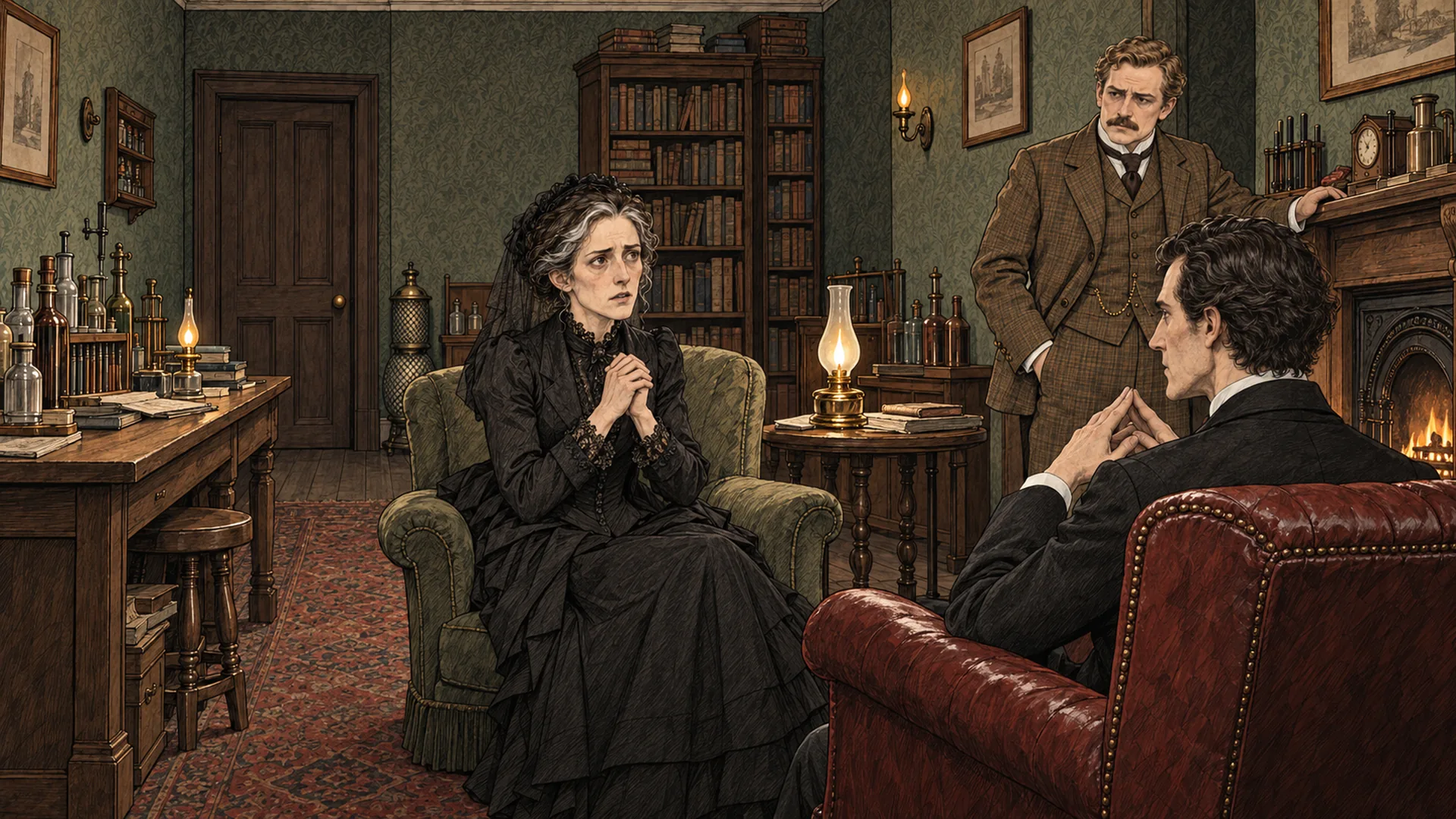
The visitor introduces herself as Helen Stoner and says that she lives with her stepfather in an old Surrey house. Holmes recognizes the family name. Helen begins the history of the Roylotts of Stoke Moran, describing their former wealth, their decline, and the path her stepfather followed when he was young.
Japanese in this scene
- ところが前の世紀に
- ところが introduces the reversal in the family's history: despite its former wealth, decline began in the previous century.
- かつて
- かつて places the family's wealth firmly in the past. Helen contrasts its former standing among England's richest families with its later decline.
- 浪費家の気質だったため
- だった is the past form of だ. Before ため it states the cause: because four successive heirs had the temperament of spendthrifts.
- 賭博好きの手でついに決定的になりました
- ついに marks the final outcome of a long decline: the gambling heir ultimately made the family's ruin decisive.
Background
- the Regency
- The British Regency lasted from 1811 to 1820. It became associated with fashionable society, gambling, and extravagant spending that could ruin old estates.
- Calcutta
- Calcutta, now Kolkata, was a major city of British India. British officials and doctors travelled there to build careers, as Roylott did.
Full text: original English and Japanese translation
"My name is Helen Stoner, and I am living with my stepfather, who is the last survivor of one of the oldest Saxon families in England, the Roylotts of Stoke Moran, on the western border of Surrey."
「私の名はヘレン・ストーナーです。義父と暮らしていますが、義父はイングランドで最も古いサクソン系の家柄の一つ、サリー州の西の境にあるストーク・モランのロイロット家の、最後の生き残りです」
Holmes nodded his head. "The name is familiar to me," said he.
ホームズはうなずいた。「その名には聞き覚えがある」と彼は言った。
"The family was at one time among the richest in England, and the estates extended over the borders into Berkshire in the north, and Hampshire in the west. In the last century, however, four successive heirs were of a dissolute and wasteful disposition, and the family ruin was eventually completed by a gambler in the days of the Regency. Nothing was left save a few acres of ground, and the two-hundred-year-old house, which is itself crushed under a heavy mortgage. The last squire dragged out his existence there, living the horrible life of an aristocratic pauper; but his only son, my stepfather, seeing that he must adapt himself to the new conditions, obtained an advance from a relative, which enabled him to take a medical degree and went out to Calcutta, where, by his professional skill and his force of character, he established a large practice. In a fit of anger, however, caused by some robberies which had been perpetrated in the house, he beat his native butler to death and narrowly escaped a capital sentence. As it was, he suffered a long term of imprisonment and afterwards returned to England a morose and disappointed man.
「一族はかつてイングランドでも指折りの富豪で、領地は境を越え、北はバークシャー、西はハンプシャーにまで及んでいました。ところが前の世紀に、四代続けて跡取りが放蕩で浪費家の気質だったため、家の没落は、摂政時代のある賭博好きの手でついに決定的になりました。残ったのは数エーカーの土地と築二百年の屋敷だけで、その屋敷自体も重い抵当の下で押しつぶされそうです。最後の地主はそこで細々と生き長らえ、貴族とは名ばかりの貧乏暮らしを送りました。しかし一人息子である義父は、新しい境遇に合わせねばならないと悟り、親類から資金を前借りして医学の学位を取り、カルカッタへ渡って、医者としての腕と気性の強さで大いにはやる医院を築いたのです。ところがあるとき、屋敷で起きた数件の盗みに腹を立て、発作的に現地人の執事を殴り殺し、あやうく死刑を免れました。結局は長い禁固刑に服し、その後、気難しい失意の人となってイングランドへ戻ってきたのです。