 よみうち英語Read the classics by typing
Notes Scene 8: A Marriage in India
You've finished this scene
Notes on this scene
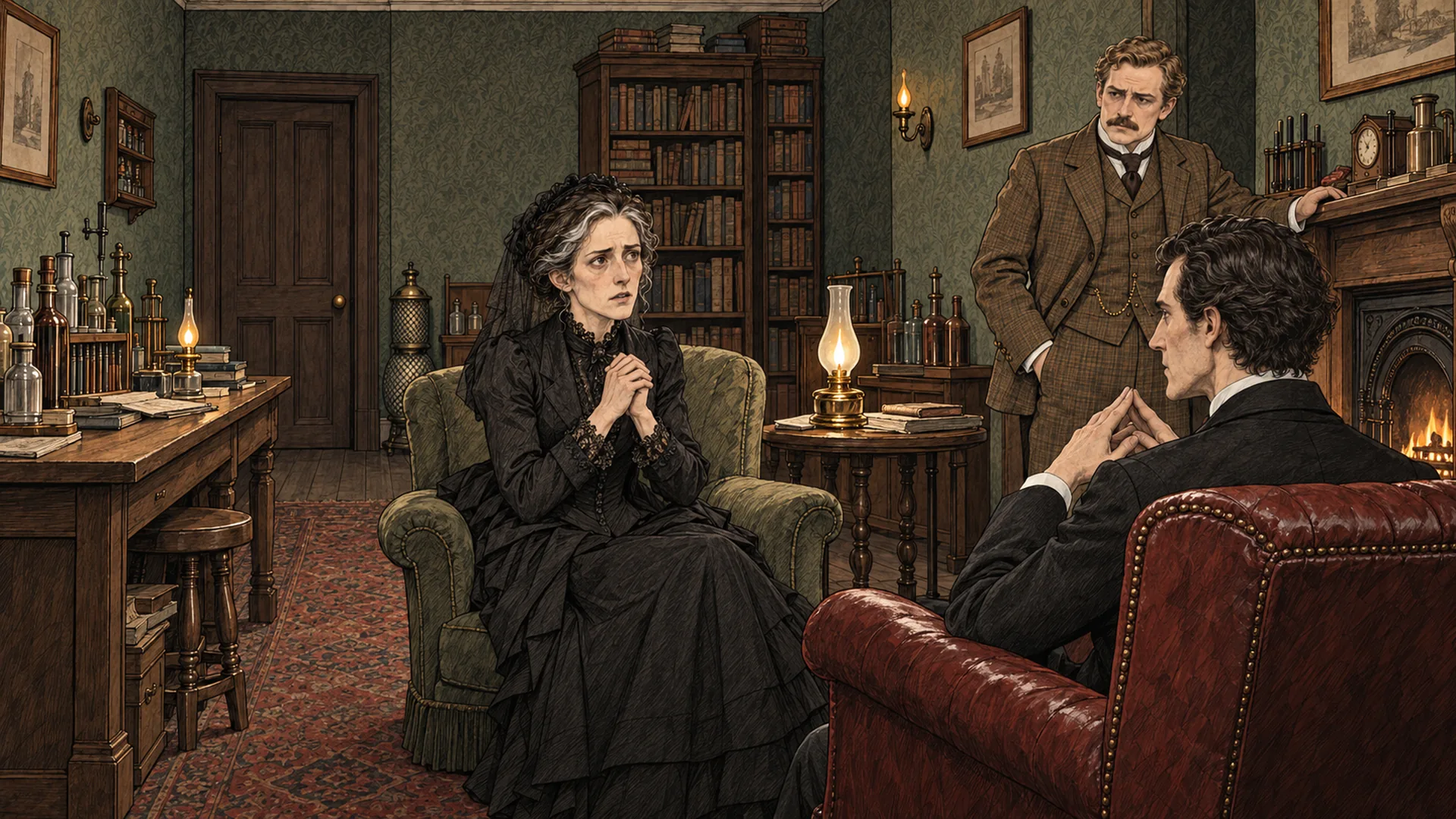
Helen continues with the circumstances of her stepfather's marriage. After establishing himself as a physician in India, he married a young widow, the mother of Helen and her twin sister Julia. Helen explains what became of her mother's property, the misfortune that followed their return to England, and the family's new home.
Japanese in this scene
- それぞれに毎年一定の額を支給する
- それぞれ distributes the payment separately to the two daughters: each would receive an annual allowance upon marriage.
- 間もなく
- 間もなく means that Mrs. Stoner died soon after the family returned to England, linking the return and the railway accident closely in time.
- まだ二歳でした
- でした is the polite past form of です. It states that the twins were still only two years old at the time.
- 母にはかなりの財産があり
- かなりの describes a substantial fortune, not merely a moderate one; the following annual figure shows its size.
Background
- Crewe
- Crewe was a major railway junction in north-west England. Railway accidents were prominent newspaper events in the nineteenth century, and Helen's mother died in one near the town.
Full text: original English and Japanese translation
"When Dr. Roylott was in India he married my mother, Mrs. Stoner, the young widow of Major-General Stoner, of the Bengal Artillery. My sister Julia and I were twins, and we were only two years old at the time of my mother's re-marriage. She had a considerable sum of money—not less than £ 1000 a year—and this she bequeathed to Dr. Roylott entirely while we resided with him, with a provision that a certain annual sum should be allowed to each of us in the event of our marriage. Shortly after our return to England my mother died—she was killed eight years ago in a railway accident near Crewe. Dr. Roylott then abandoned his attempts to establish himself in practice in London and took us to live with him in the old ancestral house at Stoke Moran. The money which my mother had left was enough for all our wants, and there seemed to be no obstacle to our happiness.
「ロイロット博士はインドにいたころ、私の母と結婚しました。母はベンガル砲兵隊のストーナー少将の若い未亡人で、ストーナー夫人といいました。姉のジュリアと私は双子で、母が再婚したとき、まだ二歳でした。母にはかなりの財産があり——年に千ポンドを下らない額で——それを、私たちが博士のもとで暮らしている間は、すべて博士に遺しました。ただし、私たちが結婚した場合には、それぞれに毎年一定の額を支給するという条件つきでした。私たちがイングランドへ戻って間もなく母は亡くなりました——八年前、クルー近くの鉄道事故で命を落としたのです。そこでロイロット博士はロンドンでの開業をあきらめ、私たちを連れて、ストーク・モランの先祖伝来の古い屋敷で暮らしはじめました。母の遺したお金は私たちの入り用をすべてまかなうに足り、幸せになるのを妨げるものは何もないように思えました。