 よみうち英語Read the classics by typing
Notes Scene 12: A Whistle in the Night
You've finished this scene
Notes on this scene
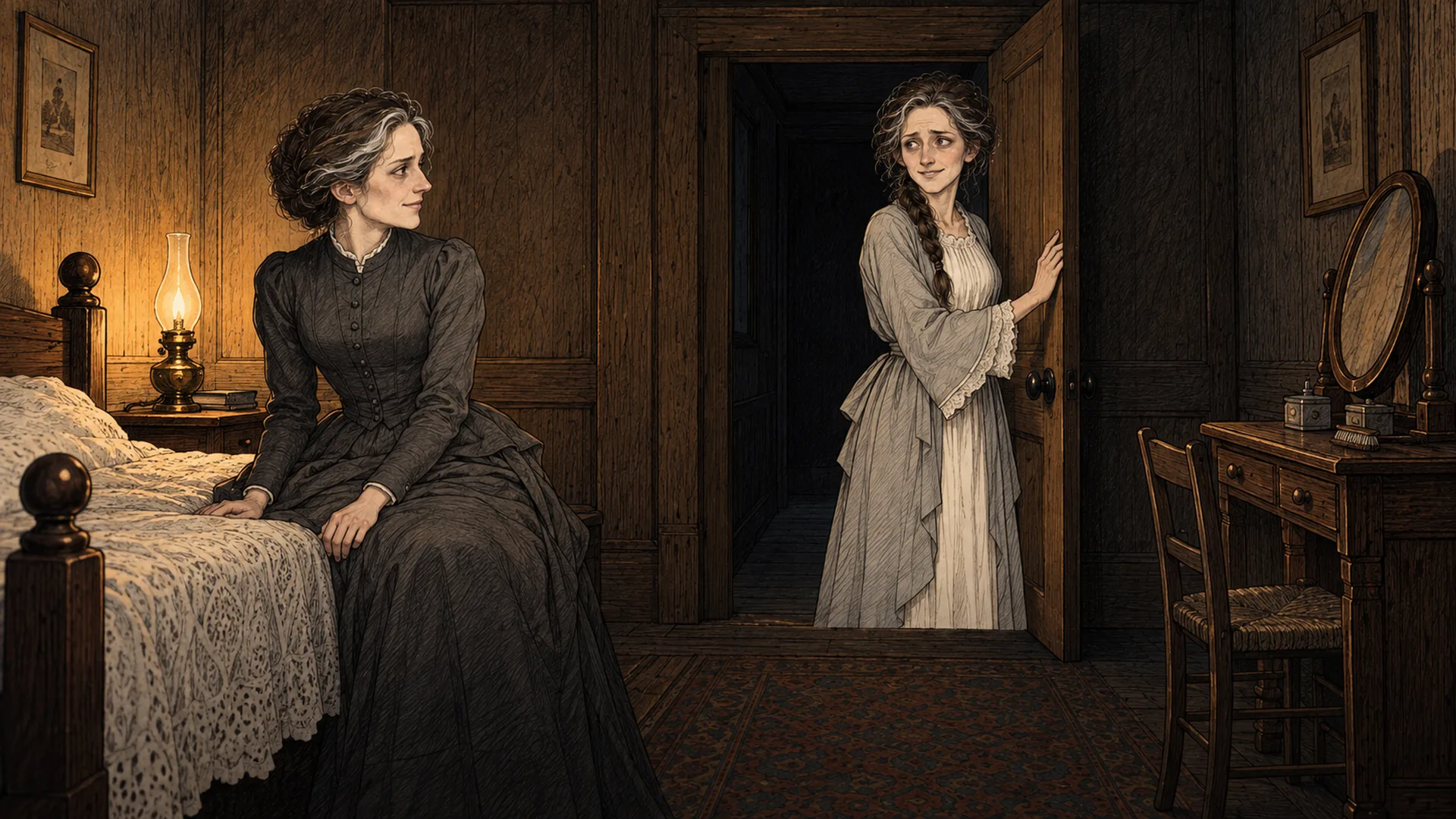
Pausing at the doorway, Julia asks Helen an unexpected question: has she ever heard a whistle in the middle of the night? For the past few nights, Julia says, a low but distinct sound has awakened her at about three in the morning. Helen has heard nothing and answers with the first explanation that occurs to her.
Japanese in this scene
- もちろんないわ
- もちろん makes Helen's denial emphatic and natural: ‘Of course not.’ She is answering Julia's question by saying that she does not whistle in her sleep.
- でも、どうして
- どうして is Helen's direct ‘why?’ She asks why Julia wants to know whether Helen whistles in her sleep.
- 低くてはっきりした口笛
- はっきりした describes a distinct whistle: it is quiet in volume but clear enough for Julia to recognize.
- ちょっと訊いてみようと思った
- ちょっと softens Julia's proposed question: she thought she would just ask briefly whether Helen heard the whistle too.
Background
- plantation
- On a British estate, a plantation could mean a deliberately planted wood or small forest. In the story it is the part of the grounds where the travelling group camps.
Full text: original English and Japanese translation
"'Tell me, Helen,' said she, 'have you ever heard anyone whistle in the dead of the night?'
「『ねえ、ヘレン』と姉は言いました。『真夜中に誰かが口笛を吹くのを、聞いたことがある?』
"'Never,' said I.
「『ないわ』と私は答えました。
"'I suppose that you could not possibly whistle, yourself, in your sleep?'
「『あなたが寝ながら口笛を吹く、なんてことはまずないわよね?』
"'Certainly not. But why?'
「『もちろんないわ。でも、どうして?』
"'Because during the last few nights I have always, about three in the morning, heard a low, clear whistle. I am a light sleeper, and it has awakened me. I cannot tell where it came from—perhaps from the next room, perhaps from the lawn. I thought that I would just ask you whether you had heard it.'
「『だってね、この数日、いつも夜中の三時ごろに、低くてはっきりした口笛が聞こえるの。私は眠りが浅いから、それで目が覚めてしまうのよ。どこから聞こえてくるのかはわからないわ——隣の部屋かもしれないし、芝生かもしれない。あなたにも聞こえたかどうか、ちょっと訊いてみようと思ったの』
"'No, I have not. It must be those wretched gipsies in the plantation.'
「『いいえ、聞いてないわ。きっと、あの林にいる、いまいましいジプシーたちのせいよ』