 よみうち英語Read the classics by typing
Notes Scene 23: Dark and Sinister
You've finished this scene
Notes on this scene
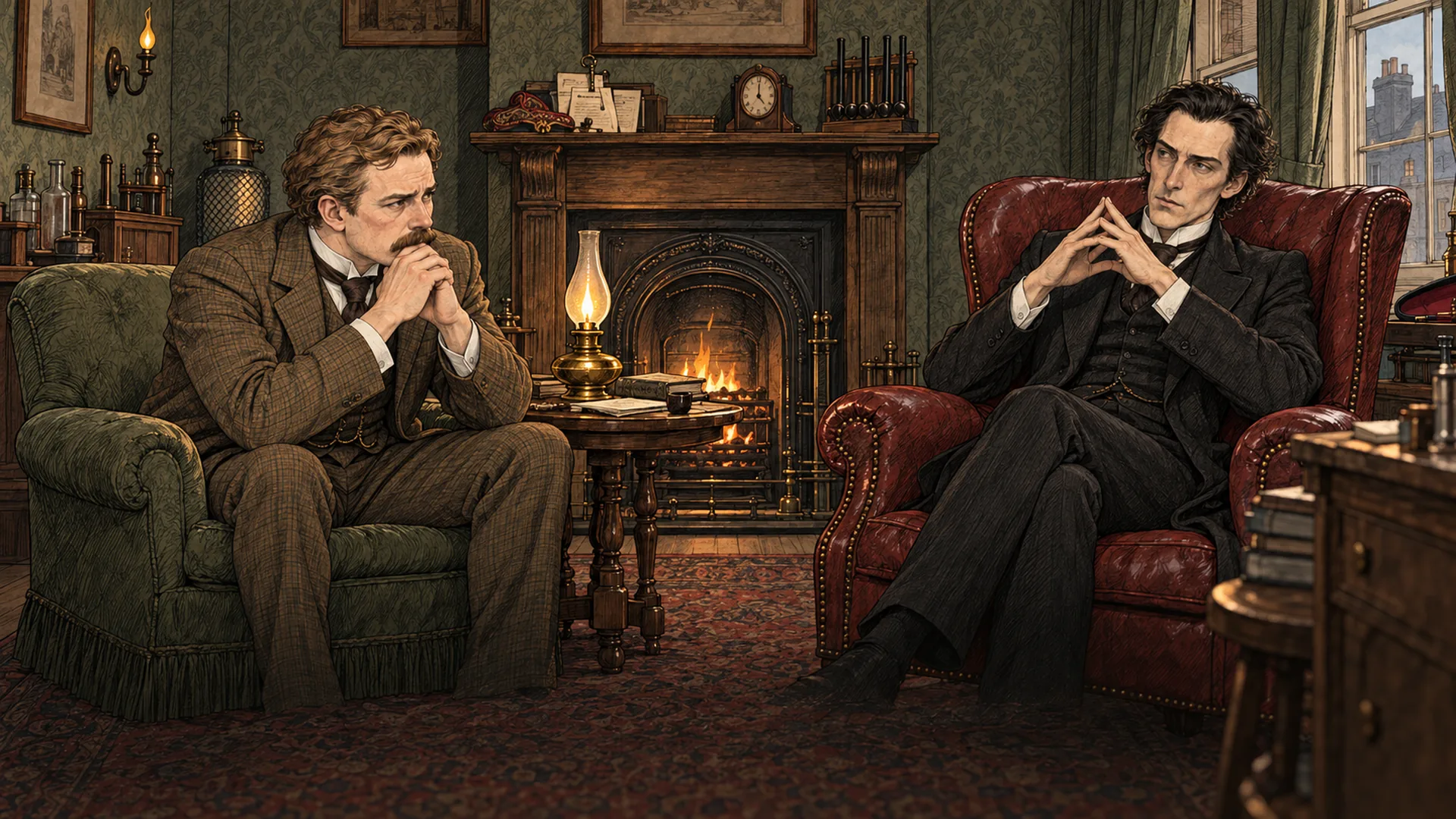
After Helen departs, Holmes leans back in his chair and asks Watson what he thinks. Watson calls the affair dark and sinister. Holmes agrees and begins arranging the clues in order, reviewing the details of the account they have just heard and identifying the points that seem most important. The scene begins from this carefully established point.
Japanese in this scene
- たしかに、暗くもあり不吉でもある
- たしかに concedes Watson's description: Holmes agrees that the case is certainly both dark and ominous.
- 『紐』あるいは『一団』という言葉
- あるいは presents two alternative readings of the same word: it may mean a band as a cord or a band as a group of people.
- 通り抜けられない
- 通り抜けられない expresses impossibility: if no one could pass through the door, windows, chimney, floor, or walls, Julia was physically isolated.
- 間違いなくひとりきりだった
- だった is the past form of だ. It states the locked-room conclusion that Julia was certainly alone.
Background
- gipsies
- Gipsies is the period term used in the story; Roma is generally preferred today. Travelling groups sometimes camped on rural estates and were often unfairly treated with suspicion.
Full text: original English and Japanese translation
"And what do you think of it all, Watson?" asked Sherlock Holmes, leaning back in his chair.
「これをどう思うね、ワトソン」とシャーロック・ホームズは椅子にもたれて尋ねた。
"It seems to me to be a most dark and sinister business."
「実に暗くて不吉な事件だと思うね」
"Dark enough and sinister enough."
「たしかに、暗くもあり不吉でもある」
"Yet if the lady is correct in saying that the flooring and walls are sound, and that the door, window, and chimney are impassable, then her sister must have been undoubtedly alone when she met her mysterious end."
「だが、あの女性の言うとおり床も壁も頑丈で、戸口も窓も煙突も通り抜けられないのなら、姉は謎の最期を遂げたとき、間違いなくひとりきりだったことになるね」
"What becomes, then, of these nocturnal whistles, and what of the very peculiar words of the dying woman?"
「では、あの夜ごとの口笛は、死にゆく女性が残した実に奇妙な言葉は、どうなるのだ」
"I cannot think."
「見当もつかないね」
"When you combine the ideas of whistles at night, the presence of a band of gipsies who are on intimate terms with this old doctor, the fact that we have every reason to believe that the doctor has an interest in preventing his stepdaughter's marriage, the dying allusion to a band, and, finally, the fact that Miss Helen Stoner heard a metallic clang, which might have been caused by one of those metal bars that secured the shutters falling back into its place, I think that there is good ground to think that the mystery may be cleared along those lines."
「夜の口笛、この老博士と親しい間柄のジプシーの一団がいること、博士には義理の娘の結婚を妨げる利害があると信じるに足る理由がそろっていること、死に際に口にされた『紐』あるいは『一団』という言葉、そして最後に、ストーナーさんが聞いた金属の響き——これは鎧戸を留める金属の棒の一本が元の位置に落ちた音かもしれない——これらを合わせて考えれば、謎はその線で解けるかもしれないと考える十分な根拠がある」