 よみうち英語Read the classics by typing
Notes Scene 29: The Mother's Will
You've finished this scene
Notes on this scene
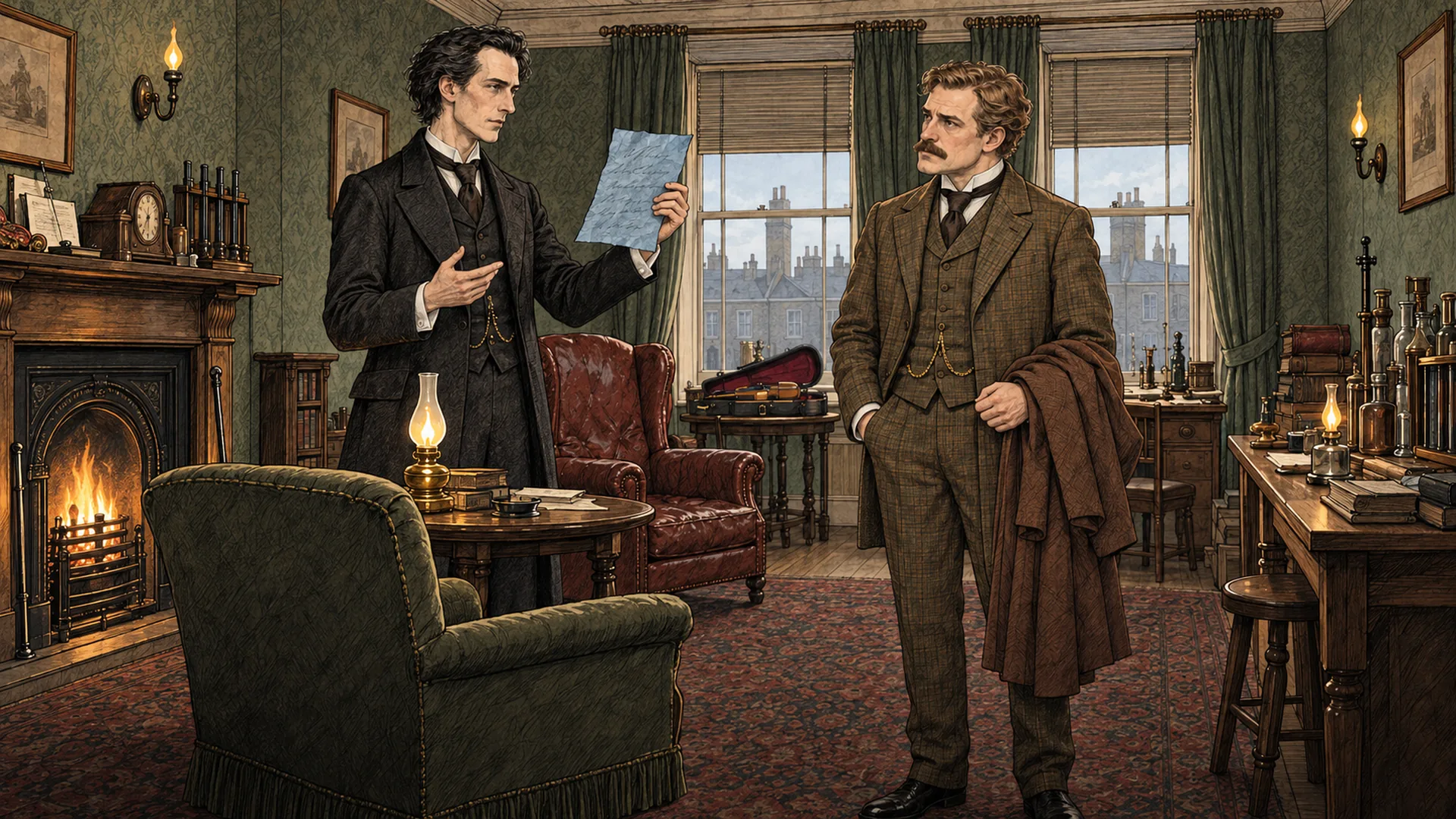
Holmes examines the terms of Mrs. Stoner's will and recalculates the income left to Dr. Roylott. Falling agricultural returns have reduced the estate's value, while each daughter's marriage would require a substantial annual payment. Holmes concludes that one marriage would seriously hurt Roylott financially and two would leave him very little, giving him a powerful motive to prevent both.
Japanese in this scene
- 娘はそれぞれ、結婚すれば二百五十ポンドの収入を請求できる
- それぞれ means that each daughter independently could claim an income of two hundred and fifty pounds when she married.
- きわめて
- きわめて raises the degree to an extreme: the financial calculation reveals that Roylott has a very powerful motive to prevent the marriages.
- ぐずぐず
- ぐずぐずしてはいられない means they cannot afford to delay or dawdle because the case is serious and Roylott knows about their movements.
- なおさら
- なおさら strengthens the urgency: because Roylott has noticed their activity, there is even more reason not to waste time.
Background
- £
- In Victorian Britain, an annual income of several hundred pounds could support a middle-class household. Roylott depends heavily on the income left by the sisters' mother.
Full text: original English and Japanese translation
"I have seen the will of the deceased wife," said he. "To determine its exact meaning I have been obliged to work out the present prices of the investments with which it is concerned. The total income, which at the time of the wife's death was little short of £ 1,100, is now, through the fall in agricultural prices, not more than £ 750. Each daughter can claim an income of £ 250, in case of marriage. It is evident, therefore, that if both girls had married, this beauty would have had a mere pittance, while even one of them would cripple him to a very serious extent. My morning's work has not been wasted, since it has proved that he has the very strongest motives for standing in the way of anything of the sort. And now, Watson, this is too serious for dawdling, especially as the old man is aware that we are interesting ourselves in his affairs; so if you are ready, we shall call a cab and drive to Waterloo. I should be very much obliged if you would slip your revolver into your pocket. An Eley's No. 2 is an excellent argument with gentlemen who can twist steel pokers into knots. That and a tooth-brush are, I think, all that we need."
「亡くなった妻の遺言書を見てきた」と彼は言った。「その正確な意味を確かめるため、遺言が関わる投資の現在の値を、計算し直さねばならなかった。総収入は、妻が亡くなった当時は千百ポンドにわずかに足りない程度だったが、農産物価格の下落で、今では七百五十ポンドを超えない。娘はそれぞれ、結婚すれば二百五十ポンドの収入を請求できる。つまり、二人とも結婚すればこのご立派な男にはわずかな端金しか残らず、一人が結婚しただけでも、彼は深刻な痛手を受けるわけだ。今朝の仕事は無駄ではなかった。彼がその手のことを妨げるのに、きわめて強い動機があると分かったのだから。さてワトソン、事は深刻でぐずぐずしてはいられない。老人が私たちの動きに気づいているのだから、なおさらだ。支度ができたら、辻馬車を呼んでウォータールー駅へ向かおう。きみのリボルバーをポケットに忍ばせてくれると、たいへんありがたい。イーリーの 2 番は、鋼鉄の火かき棒を結び目にねじれる紳士を相手にするなら、実に説得力のある論拠だ。それと歯ブラシがあれば、必要なものはそれで全部だと思う」