 よみうち英語Read the classics by typing
Notes Scene 33: The Old House
You've finished this scene
Notes on this scene
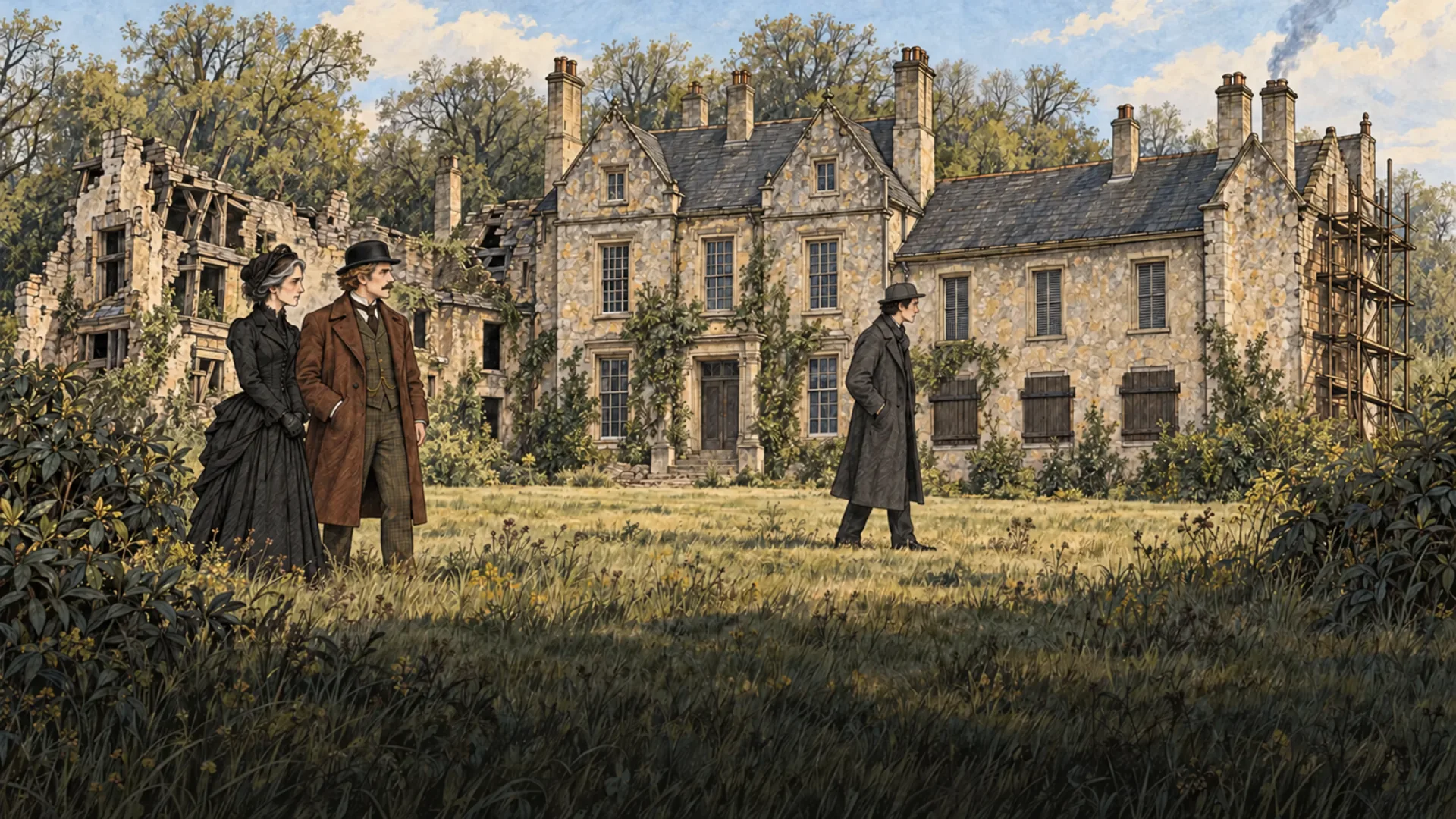
Welcomed by Helen Stoner, Holmes and Watson arrive at Stoke Moran. The old house is built of grey stone, and one wing is crumbling with age. Holmes begins outside, examining in order the windows of the three rooms Helen described, while she accompanies the two visitors around the building. The scene begins from this carefully established point.
Japanese in this scene
- そのもの
- そのもの follows a noun to mean the very thing itself. The ruined wing is not merely ruinous; it is described as ruin itself.
- 手入れの悪い芝生をゆっくり行き来しながら
- ゆっくり shows Holmes moving at a deliberate pace while he carefully examines the outside of the windows.
- ところで
- ところで shifts Holmes from observing the ruined wing to a related question about why repairs were supposedly urgent at the far wall.
- まさに
- まさに adds exactness and emphasis: with broken windows and a collapsed roof, the wing is truly the very picture of a ruin.
Background
- wing
- Large manor houses often had wings projecting from a central block. When a family's fortune declined, unused wings might be left unrepaired and fall into decay.
Full text: original English and Japanese translation
The building was of grey, lichen-blotched stone, with a high central portion and two curving wings, like the claws of a crab, thrown out on each side. In one of these wings the windows were broken and blocked with wooden boards, while the roof was partly caved in, a picture of ruin. The central portion was in little better repair, but the right-hand block was comparatively modern, and the blinds in the windows, with the blue smoke curling up from the chimneys, showed that this was where the family resided. Some scaffolding had been erected against the end wall, and the stone-work had been broken into, but there were no signs of any workmen at the moment of our visit. Holmes walked slowly up and down the ill-trimmed lawn and examined with deep attention the outsides of the windows.
建物は灰色の、地衣類のしみだらけの石造りで、中央の部分が高く、両側に二つの湾曲した翼棟が、蟹のはさみのように突き出していた。この翼棟の一つは、窓が割れて木の板でふさがれ、屋根も一部が崩れ落ちていて、まさに廃墟そのものだった。中央部もさほど状態がよいわけではなかったが、右手の棟は比較的新しく、窓にブラインドが下り、煙突から青い煙が立ちのぼっているのを見れば、そこが一家の住まいだとわかった。端の壁に足場が組まれ、石積みが一部壊されていたが、私たちが訪れた時には職人の姿は見えなかった。ホームズは手入れの悪い芝生をゆっくり行き来しながら、窓の外側を深い注意を払って調べた。
"This, I take it, belongs to the room in which you used to sleep, the centre one to your sister's, and the one next to the main building to Dr. Roylott's chamber?"
「この窓は、察するに、あなたがかつてお休みになっていた部屋のもので、真ん中がお姉さんの、母屋に接した端がロイロット博士の寝室ですね?」
"Exactly so. But I am now sleeping in the middle one."
「そのとおりです。でも今は真ん中の部屋で寝ています」
"Pending the alterations, as I understand. By the way, there does not seem to be any very pressing need for repairs at that end wall."
「改築が終わるまでの間、と理解していますが。ところで、あの端の壁には、急いで修理しなければならない理由などなさそうですね」