 よみうち英語Read the classics by typing
Notes Scene 39: A Wife's Conviction
You've finished this scene
Notes on this scene
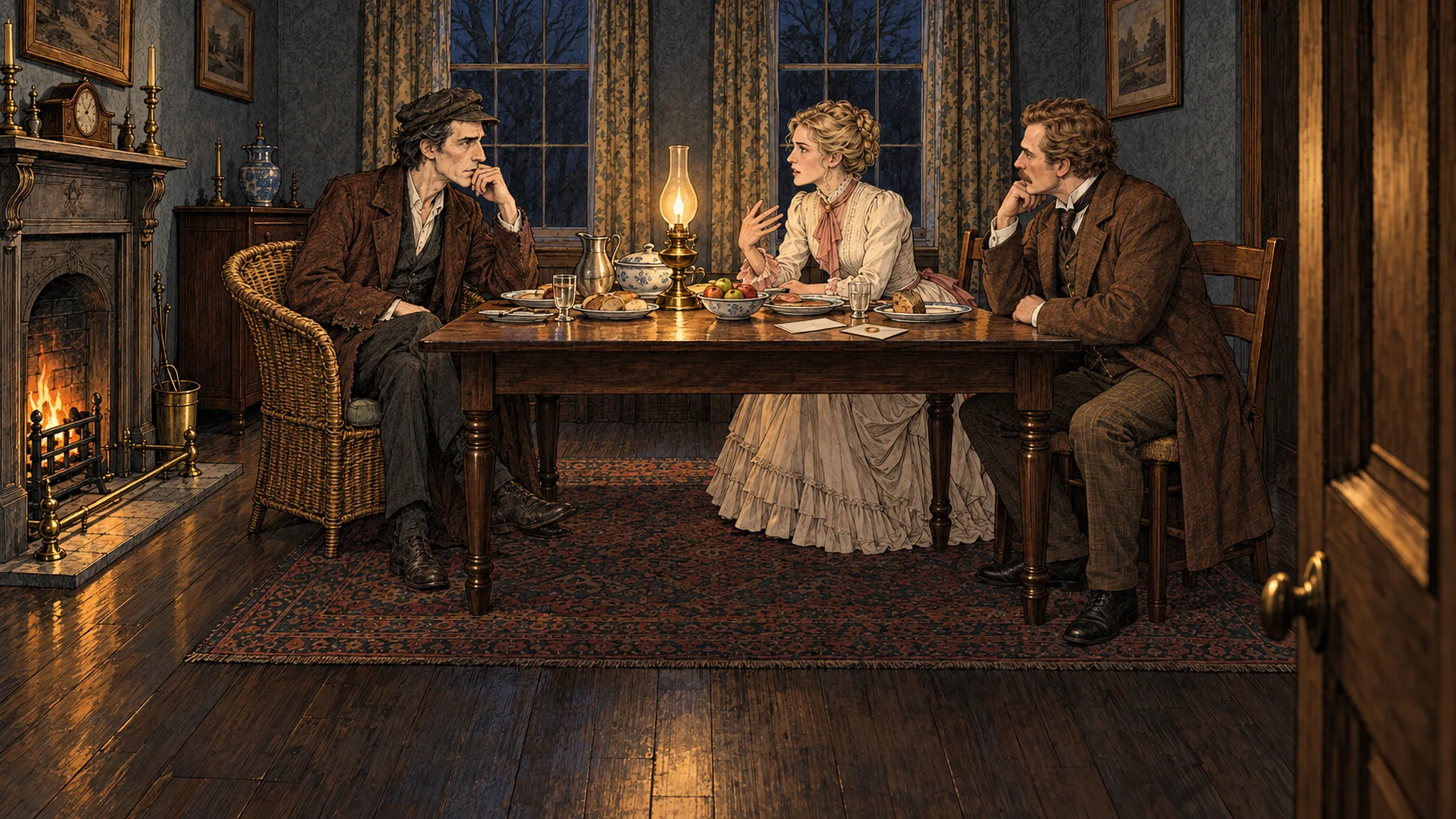
Mrs. St. Clair refuses to be discouraged. She recalls sensing immediately when Neville once cut himself in another room and argues that such sympathy would warn her of serious harm. Holmes listens but does not treat her certainty as conclusive evidence.
Japanese in this scene
- 落胆させないでください
- The causative 落胆させる means to make someone lose hope. Mrs. St. Clair politely asks Holmes not to discourage her.
- 私たちはとても強く心が通い合っています
- 心が通い合う means sharing a deep mutual understanding. 〜ています presents that bond as continuing.
- あの人が無事だということは分かっています
- 〜ということ nominalizes the whole claim that he is safe; she says she knows it with certainty.
- よく承知しています
- 承知している is a formal expression for being well aware. Holmes respectfully acknowledges the possible value of intuition.
Full text: original English and Japanese translation
"Oh, you must not discourage me, Mr. Holmes. I know that all is well with him. There is so keen a sympathy between us that I should know if evil came upon him. On the very day that I saw him last he cut himself in the bedroom, and yet I in the dining-room rushed upstairs instantly with the utmost certainty that something had happened. Do you think that I would respond to such a trifle and yet be ignorant of his death?"
「ああ、落胆させないでください、ホームズさん。あの人が無事だということは分かっています。私たちはとても強く心が通い合っていますから、何か悪いことがあれば分かるはずです。最後に会った日にも、主人は寝室で手を切りました。食堂にいた私には何か起きたとはっきり分かり、すぐ二階へ駆け上がったのです。そんな小さなことに気づいた私が、死んだことにも気づかないと思われますか」
"I have seen too much not to know that the impression of a woman may be more valuable than the conclusion of an analytical reasoner. And in this letter you certainly have a very strong piece of evidence to corroborate your view. But if your husband is alive and able to write letters, why should he remain away from you?"
「これまでにいろいろ見てきましたから、女性の直感が分析的な推論家の結論より価値を持つこともあると、よく承知しています。そして、この手紙には確かに、奥様のお考えを裏づける強い証拠があります。しかし、ご主人が生きていて手紙も書けるなら、なぜ離れたままなのでしょう」
"I cannot imagine. It is unthinkable."
「想像もできません。とても考えられないことです」