 よみうち英語Read the classics by typing
Notes Scene 40: Revisiting Monday
You've finished this scene
Notes on this scene
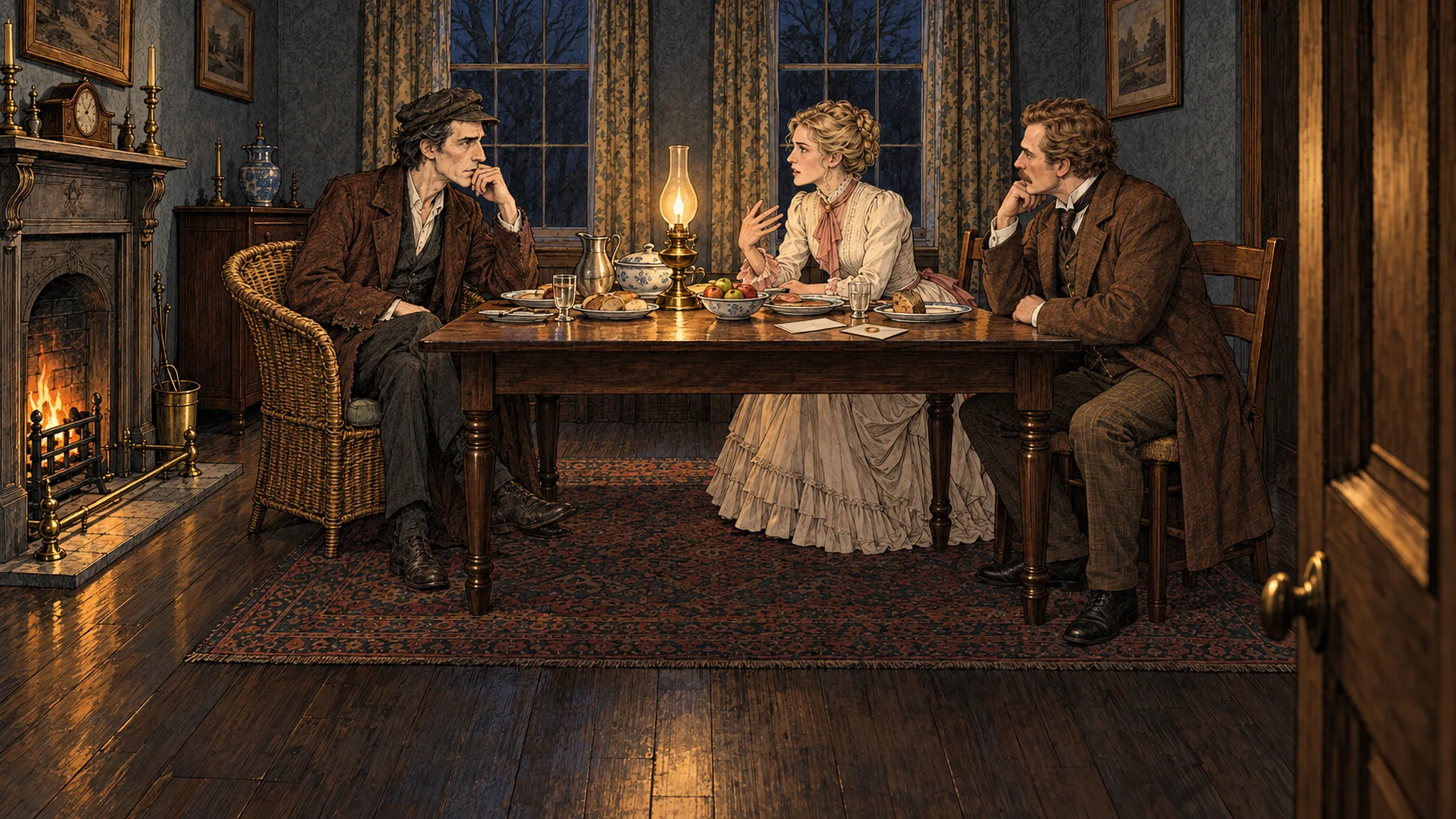
Through short questions, Holmes confirms that Neville said nothing unusual before leaving, that his wife was astonished to see him, and that the window stood open. She heard only an inarticulate cry and interpreted it as a call for help.
Japanese in this scene
- 何かおっしゃいましたか
- おっしゃる is the honorific form of 言う, used by Holmes when asking what her husband said.
- 窓は開いていましたか
- The intransitive 開いていました describes the window's state as open, rather than someone actively opening it.
- 両手を振っていました
- 〜ていました presents the repeated hand movement Mrs. St. Clair observed at the window.
- スワンダム横丁で見かけて驚かれた
- 見かけて marks seeing him as the trigger for surprise, while 驚かれた respectfully describes her reaction.
Full text: original English and Japanese translation
"And on Monday he made no remarks before leaving you?"
「月曜日、ご主人は出かける前に何かおっしゃいましたか」
"No."
「いいえ」
"And you were surprised to see him in Swandam Lane?"
「そして、スワンダム横丁で見かけて驚かれたのですね」
"Very much so."
「ええ、とても」
"Was the window open?"
「窓は開いていましたか」
"Yes."
「ええ」
"Then he might have called to you?"
「それなら、奥様へ声をかけることもできたわけですね」
"He might."
「できたでしょう」
"He only, as I understand, gave an inarticulate cry?"
「でも、私が伺ったところでは、はっきりした言葉にならない声を上げただけですね」
"Yes."
「ええ」
"A call for help, you thought?"
「助けを求める声だと思われた」
"Yes. He waved his hands."
「はい。両手を振っていました」