 よみうち英語Read the classics by typing
Notes Scene 51: The Prisoner's Words
You've finished this scene
Notes on this scene
St. Clair abandons all resistance and asks what charge can now be brought against him. Bradstreet begins to say murder of Neville St. Clair, then laughs at the obvious legal impossibility unless the case is somehow treated as attempted suicide.
Japanese in this scene
- 父親を恥じるようにはさせたくなかった
- The causative させる means making his children feel ashamed, and 〜たくなかった expresses St. Clair's wish to prevent that outcome.
- 警察で二十七年やっていますが
- 〜でやっている means working in that field. が sets up Bradstreet's contrast between long experience and this unprecedented case.
- 犯罪は起きておらず
- おらず is the formal connective negative of いる. St. Clair argues that no crime has occurred and draws a legal conclusion from it.
- 運命に身を任せる者の投げやりな様子で向き直った
- 運命に身を任せる means surrendering oneself to fate; 投げやり describes his resigned, careless manner.
Full text: original English and Japanese translation
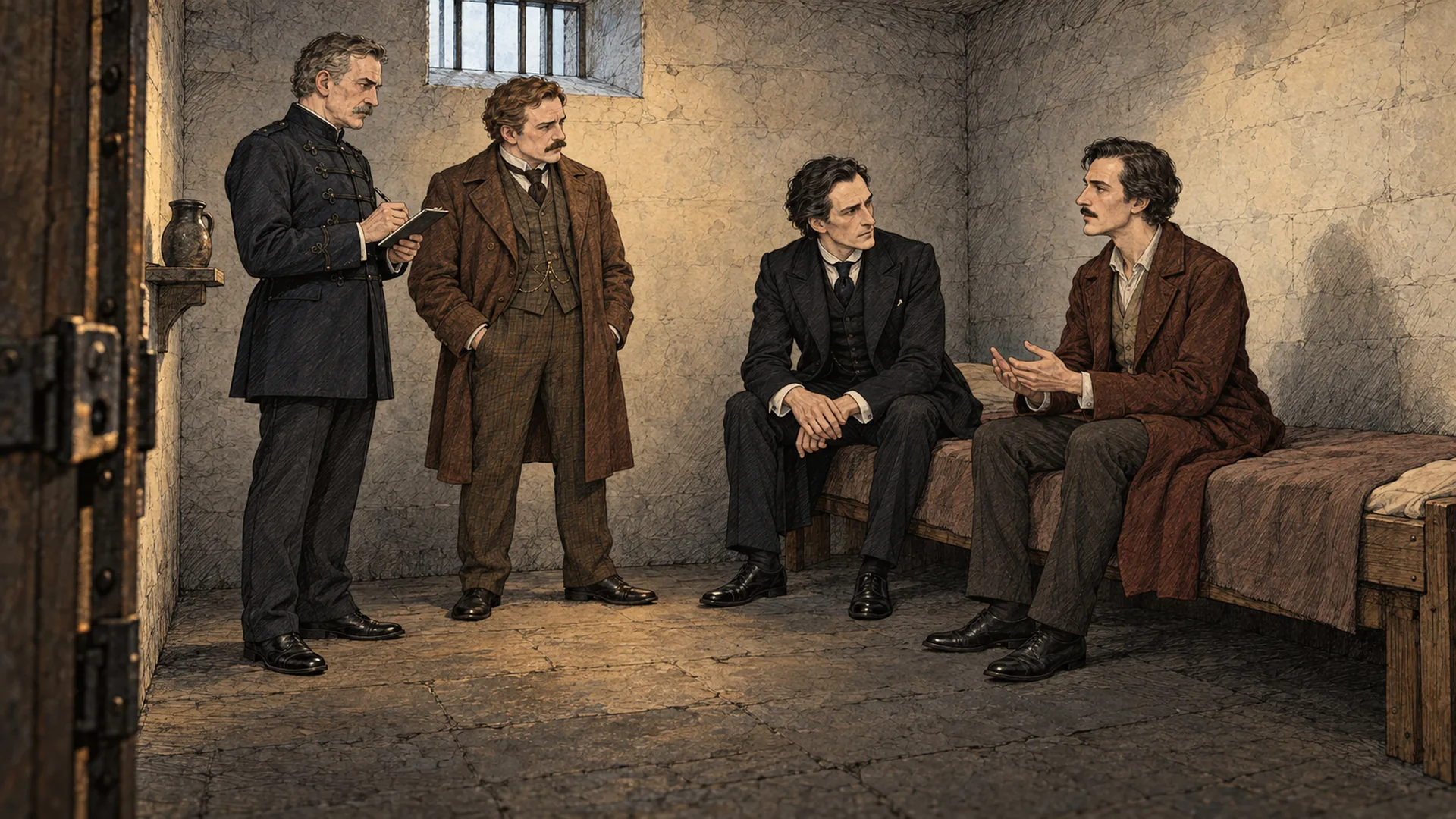
The prisoner turned with the reckless air of a man who abandons himself to his destiny. "Be it so," said he. "And pray what am I charged with?"
囚人は、運命に身を任せる者の投げやりな様子で向き直った。「そういうことなら」と言った。「それで、私は何の罪をかけられているのでしょう」
"With making away with Mr. Neville St.— Oh, come, you can't be charged with that unless they make a case of attempted suicide of it," said the inspector with a grin. "Well, I have been twenty-seven years in the force, but this really takes the cake."
「ネヴィル・セントクレア氏を殺した……いや、あなたにその罪はかけられませんね。自殺未遂とでもいうことにしない限りは」と警部はにやりとした。「警察で二十七年やっていますが、こんなのは初めてですよ」
"If I am Mr. Neville St. Clair, then it is obvious that no crime has been committed, and that, therefore, I am illegally detained."
「私がネヴィル・セントクレアなら、犯罪は起きておらず、したがって私は不法に拘束されていることになります」
"No crime, but a very great error has been committed," said Holmes. "You would have done better to have trusted your wife."
「犯罪ではないが、大きな間違いは起きた」とホームズは言った。「奥さんを信頼した方がよかったのです」
"It was not the wife; it was the children," groaned the prisoner. "God help me, I would not have them ashamed of their father. My God! What an exposure! What can I do?"
「妻ではなく、子供たちのことだったのです」と囚人はうめいた。「どうか、父親を恥じるようにはさせたくなかった。ああ、なんということだ。こんなふうに知られてしまうとは。どうすればよいのでしょう」
Sherlock Holmes sat down beside him on the couch and patted him kindly on the shoulder.
シャーロック・ホームズは寝椅子で男の隣に腰を下ろし、優しく肩をたたいた。