 よみうち英語Read the classics by typing
解説 場面 2「霧の朝」
この場面を読み終えました
この場面の解説
ホームズは、自分が重んじるのは犯罪ではなく論理だと説き、ワトソンの記録を物語化しすぎだと評する。霧のベイカー街で、彼は朝から新聞の広告欄を調べていた。
表現・文法のポイント
- rather than my words
- rather thanは二つを対比する表現。ホームズが言葉より先にワトソンの考えへ答える様子を示す。
- should dwell
- dwellはここで「詳しく扱う、重点を置く」。記録の焦点を論理へ向けよという注文である。
全文の対訳
"No, it is not selfishness or conceit," said he, answering, as was his wont, my thoughts rather than my words. "If I claim full justice for my art, it is because it is an impersonal thing—a thing beyond myself. Crime is common. Logic is rare. Therefore it is upon the logic rather than upon the crime that you should dwell. You have degraded what should have been a course of lectures into a series of tales."
「いや、これは利己心やうぬぼれではない」と彼は、いつものように私の言葉よりも考えに答えて言った。「自分の技法を正当に評価してほしいと主張するのは、それが個人を離れたもの――私自身を超えたものだからだ。犯罪はありふれている。論理はまれだ。だからきみが力を注ぐべきなのは、犯罪ではなく論理のほうなのだ。きみは本来なら一連の講義になるはずのものを、物語の連作へおとしめてしまった」
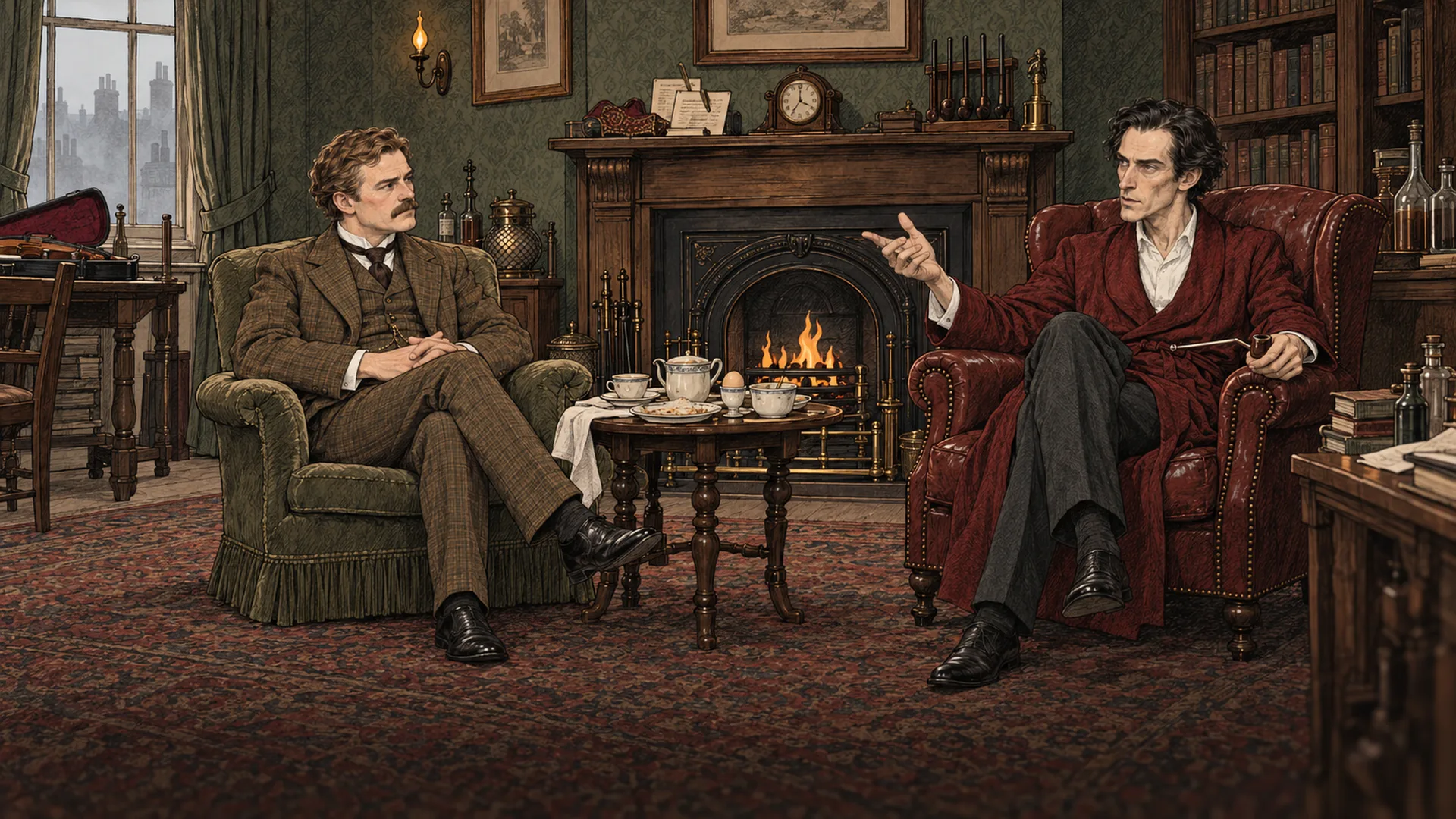
It was a cold morning of the early spring, and we sat after breakfast on either side of a cheery fire in the old room at Baker Street. A thick fog rolled down between the lines of dun-coloured houses, and the opposing windows loomed like dark, shapeless blurs through the heavy yellow wreaths. Our gas was lit and shone on the white cloth and glimmer of china and metal, for the table had not been cleared yet. Sherlock Holmes had been silent all the morning, dipping continuously into the advertisement columns of a succession of papers until at last, having apparently given up his search, he had emerged in no very sweet temper to lecture me upon my literary shortcomings.
早春の寒い朝で、私たちは朝食後、ベイカー街の古い部屋で、明るく燃える暖炉を挟んで座っていた。くすんだ色の家並みの間を濃い霧が流れ、向かいの窓は重い黄色の霧の輪の中に、暗く形のない染みのように浮かんでいた。食卓はまだ片づけられておらず、ガス灯の光が白い卓布と、陶器や金属の輝きを照らしていた。シャーロック・ホームズは朝からずっと黙り込み、次々と新聞の広告欄を読み続けていたが、ついに探し物を諦めたらしく、ひどく不機嫌な様子で、私の文章上の欠点を説教し始めたのである。