解説 場面 29「推理する頭脳」
この場面を読み終えました
この場面の解説
ホームズは、一つの事実から前後の出来事を導く理想的な推理を語る。そのために役立つ知識を備える必要を述べ、ワトソンが昔まとめた知識の一覧を持ち出す。
表現・文法のポイント
- not only all the chain of events
- not only ... but also ...の対比。「至るまでの全経過」だけでなく「その後の全結果」まで、一つの事実から推論できるという理想を述べる。
- As Cuvier could correctly describe
- as ... so ...で二つの関係を対応させる。骨から動物全体を考える例を、手掛かりから事件全体を考える推理家の理想になぞらえている。
全文の対訳
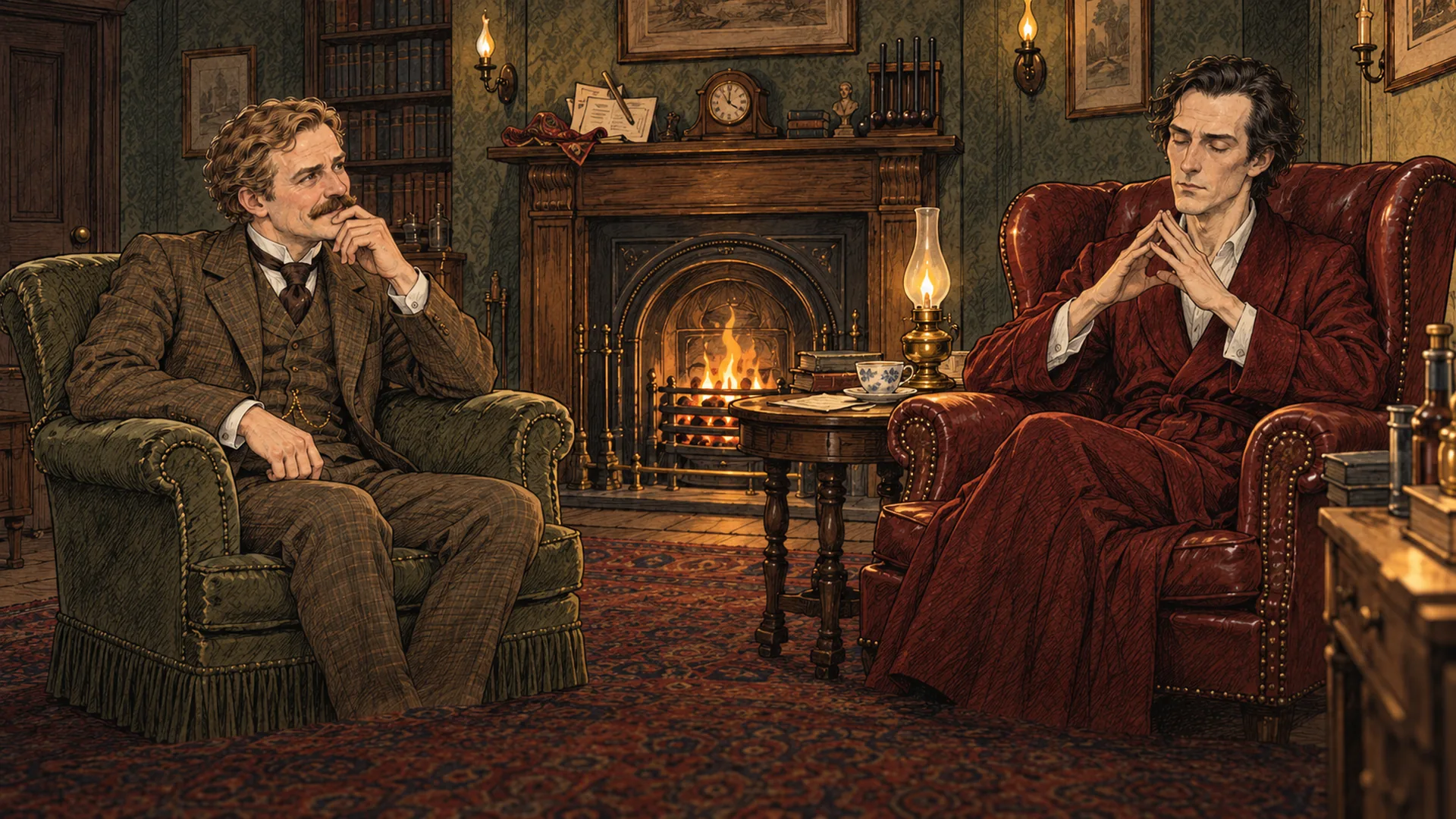
Sherlock Holmes closed his eyes and placed his elbows upon the arms of his chair, with his finger-tips together. "The ideal reasoner," he remarked, "would, when he had once been shown a single fact in all its bearings, deduce from it not only all the chain of events which led up to it but also all the results which would follow from it. As Cuvier could correctly describe a whole animal by the contemplation of a single bone, so the observer who has thoroughly understood one link in a series of incidents should be able to accurately state all the other ones, both before and after. We have not yet grasped the results which the reason alone can attain to. Problems may be solved in the study which have baffled all those who have sought a solution by the aid of their senses. To carry the art, however, to its highest pitch, it is necessary that the reasoner should be able to utilise all the facts which have come to his knowledge; and this in itself implies, as you will readily see, a possession of all knowledge, which, even in these days of free education and encyclopædias, is a somewhat rare accomplishment. It is not so impossible, however, that a man should possess all knowledge which is likely to be useful to him in his work, and this I have endeavoured in my case to do. If I remember rightly, you on one occasion, in the early days of our friendship, defined my limits in a very precise fashion."
ホームズは目を閉じ、椅子の肘掛けに肘を置いて、指先を合わせた。「理想的な推理家なら」と彼は言った。「一つの事実をあらゆる面から示されれば、それに至った出来事の連なりだけでなく、そこから生じるすべての結果まで導き出すだろう。キュヴィエが骨一本を考察して動物全体を正しく描き出せたように、一連の出来事のつながりを一つ完全に理解した観察者は、その前後にあるほかのつながりもすべて正確に述べられるはずだ。理性だけで到達できる成果を、私たちはまだ十分につかんでいない。感覚の助けを借りて解決を求めた人々が皆手こずった問題でも、書斎で解けることがある。ただし、この技を最高の域に高めるには、推理家は知り得た事実をすべて使いこなせなければならない。それは、きみにもすぐ分かるとおり、あらゆる知識を持つということで、教育が無償で受けられ、百科事典もある今日でさえ、めったに身につくものではない。しかし、自分の仕事に役立ちそうな知識をすべて備えることなら、それほど不可能ではない。私は自分なりに、それを目指してきた。確か、私たちが親しくなって間もないころ、きみは一度、私の知識の限界を実に正確に定めてくれたね」