 よみうち英語Read the classics by typing
Notes Scene 48: Maggie and Jem
You've finished this scene
Notes on this scene
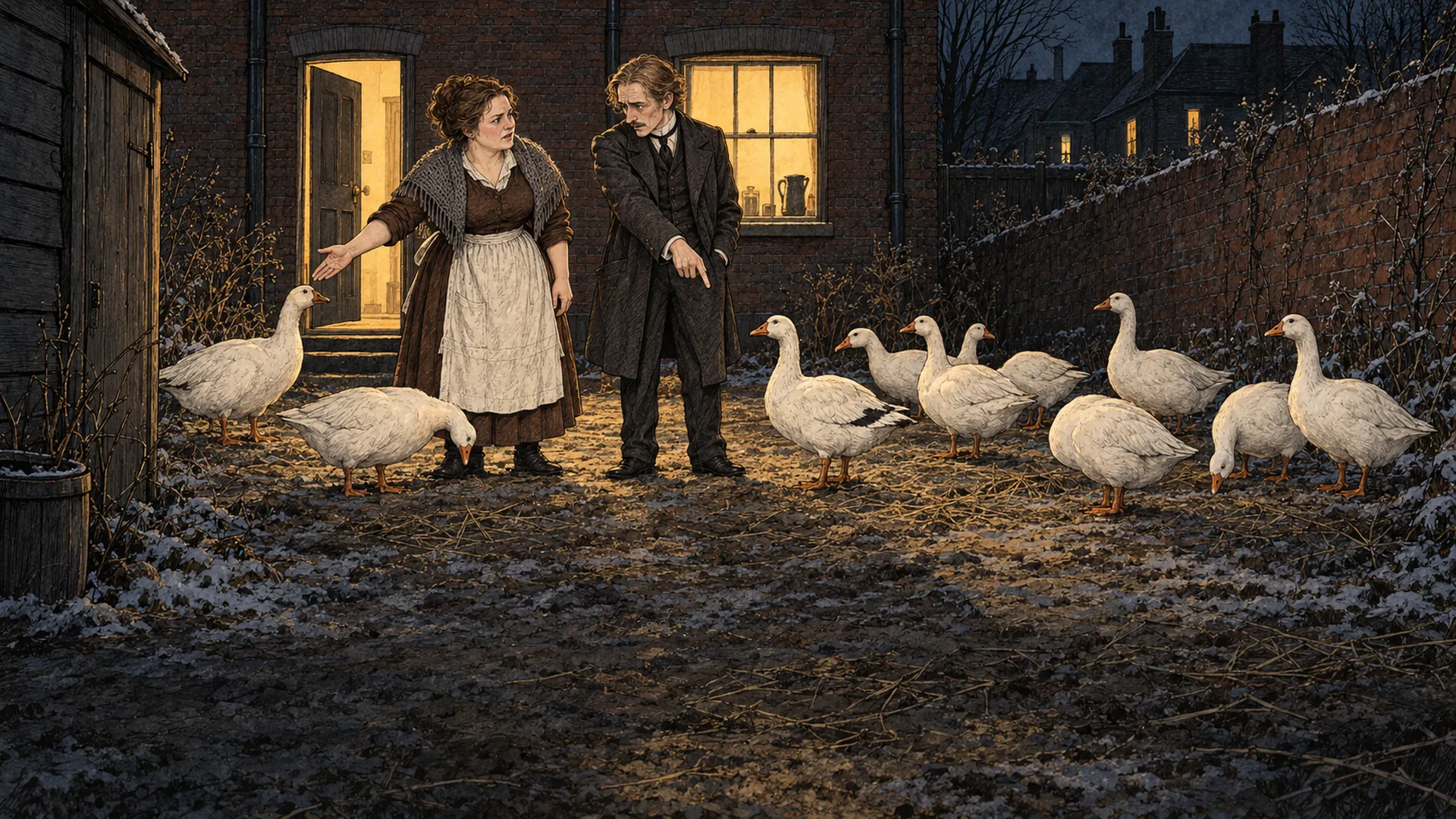
Ryder rejects the goose reserved for him and insists on taking the similar white bird with a barred tail. The scene establishes this development clearly and closes before the next step begins, preserving the original passage's order and the limits of what the characters know at this point.
Japanese in this scene
- ありがとう、マギー』と私
- In ありがとう、マギー』と私, ありがとう is the speaker's direct expression of thanks in this exchange.
- 向こうにいる大きな白いのよ
- In 向こうにいる大きな白いのよ, 大きな modifies the following noun as large or important; it is used only before a noun.
- あんたのためにわざわざ太らせたんだから
- In あんたのためにわざわざ太らせた, person + のために marks the beneficiary: Maggie says the bird was specially fattened for him.
- それで、どれがいい
- In それで、どれがいい, それで introduces the result or next step arising from what was just said.
Background
- pound
- Here pound is a unit of weight, not money. One pound is about 454 grams, so three pounds is roughly 1.4 kilograms; the bird reserved for Ryder had been fattened to a substantial size.
Full text: original English and Japanese translation
"'Oh,' says she, 'we've set yours aside for you—Jem's bird, we call it. It's the big white one over yonder. There's twenty-six of them, which makes one for you, and one for us, and two dozen for the market.'
「『あら』と姉は言いました。『あんたの分ならもう別にしてあるわよ。うちではジェムの鳥って呼んでるの。ほら、向こうにいる大きな白いのよ。全部で二十六羽だから、あんたに一羽、うちに一羽、残りの二ダースを市場に出すの』
"'Thank you, Maggie,' says I; 'but if it is all the same to you, I'd rather have that one I was handling just now.'
「『ありがとう、マギー』と私は言いました。『でも、どっちでもかまわないなら、さっき抱えていたあいつのほうがいいんだ』
"'The other is a good three pound heavier,' said she, 'and we fattened it expressly for you.'
「『もう一羽のほうが、たっぷり三ポンドは重いのよ』と姉は言いました。『あんたのためにわざわざ太らせたんだから』
"'Never mind. I'll have the other, and I'll take it now,' said I.
「『かまわないよ。そっちをもらって、今すぐ持っていくよ』と私は言いました。
"'Oh, just as you like,' said she, a little huffed. 'Which is it you want, then?'
「『あら、好きにすればいいわ』と、姉は少しむっとして言いました。『それで、どれがいいのよ?』
"'That white one with the barred tail, right in the middle of the flock.'
「『あの尾に縞のある白いのだよ。群れのちょうど真ん中にいるやつさ』
"'Oh, very well. Kill it and take it with you.'
「『あら、そう。じゃあ、しめて持っていきなさいよ』