 よみうち英語Read the classics by typing
Notes Scene 42: Two Different Methods
You've finished this scene
Notes on this scene
Lestrade insists that theories must persuade a practical English jury. Holmes calmly proposes that each pursue his own methods and says he will probably return to London that evening after a busy afternoon. Lestrade asks whether he would leave the case unresolved. Holmes replies that he will leave only after solving it, and that the mystery is already solved.
Japanese in this scene
- 相手にしなければならない
- 相手にする means to deal with someone or take them as one's counterpart. The obligation pattern 〜なければならない makes the jury an audience whose judgment investigators must face.
- 未解決のまま
- Noun + のまま means ‘remaining in that state.’ Lestrade asks whether Holmes intends to leave while the case is still unresolved, emphasizing the condition that would persist.
- 解決してから
- 〜てから sets a clear sequence: only after solving it. Holmes's short reply answers the earlier suggestion of leaving the case unresolved by reversing the order of those events.
Full text: original English and Japanese translation
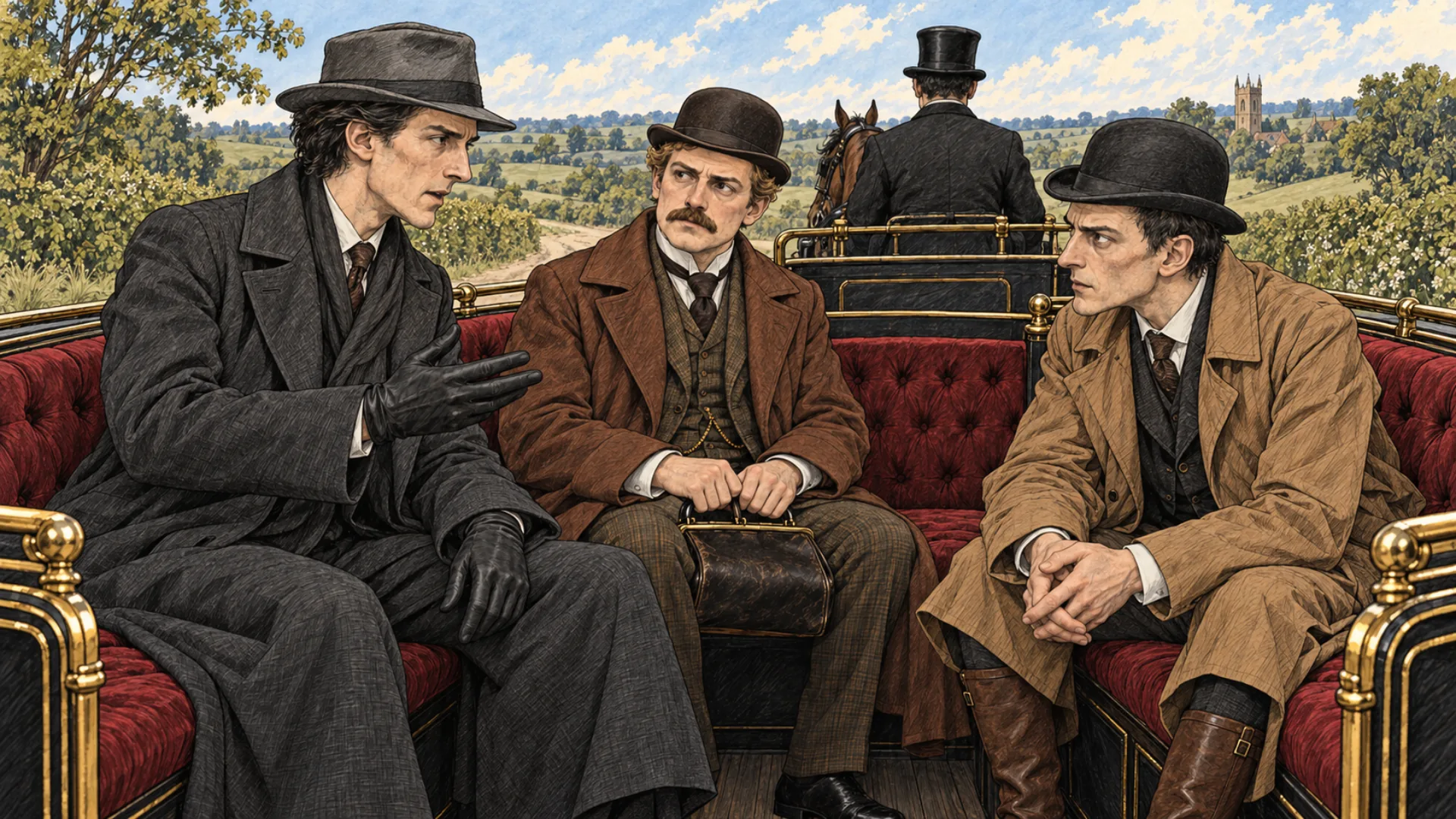
Lestrade laughed. "I am afraid that I am still a sceptic," he said. "Theories are all very well, but we have to deal with a hard-headed British jury."
レストレードは笑った。「悪いが、私はまだ信じられないね」と彼は言った。「説はいくらでも結構だが、相手にしなければならないのは、現実的なイギリスの陪審員たちだ」
"Nous verrons," answered Holmes calmly. "You work your own method, and I shall work mine. I shall be busy this afternoon, and shall probably return to London by the evening train."
「まあ、いずれ分かるよ」とホームズは落ち着いて答えた。「きみは自分のやり方でやり、私は私のやり方でやろう。午後は忙しくなるし、たぶん夕方の列車でロンドンへ戻るだろう」
"And leave your case unfinished?"
「事件を未解決のまま残してかね」
"No, finished."
「いや、解決してからだ」
"But the mystery?"
「だが、謎は」
"It is solved."
「解けている」