 よみうち英語Read the classics by typing
Notes Scene 48: The Basis of Observation
You've finished this scene
Notes on this scene
Watson understands how stride length can suggest height and how footprints can identify unusual boots. He asks how Holmes inferred a bad leg. Holmes explains that the right footprint was consistently less distinct than the left, showing that less weight rested on that foot. Watson then asks about the conclusion that the man was left-handed.
Japanese in this scene
- 見当が付く
- 見当が付く means to form an estimate or get an approximate idea. Watson accepts that stride length can give a general indication of height, rather than an exact measurement.
- 左足ほどはっきりしていなかった
- With a negative predicate, ‘A ほど…ない’ means ‘not as…as A.’ Here the right footprint was not as clear as the left one, so Holmes compares the two impressions.
- かける体重が少なかった
- The clause 右足にかける modifies 体重: the weight placed on the right foot. 少なかった is the past of 少ない and describes a smaller amount of weight, not a smaller foot.
Full text: original English and Japanese translation
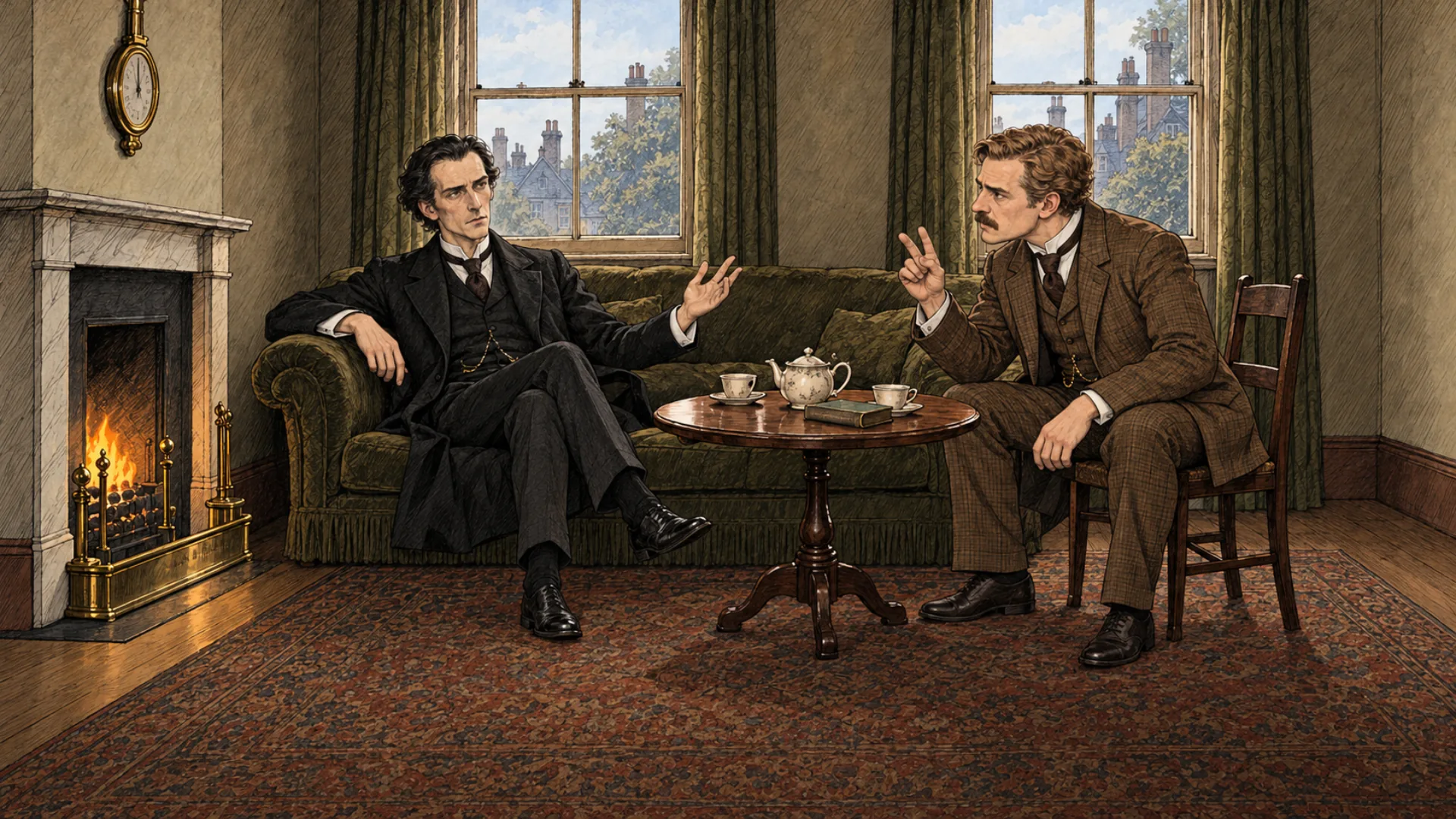
"His height I know that you might roughly judge from the length of his stride. His boots, too, might be told from their traces."
「背の高さなら、歩幅の長さから、おおよそ見当が付くのは分かる。ブーツも、その跡から分かるだろうね」
"Yes, they were peculiar boots."
「そう、変わったブーツだった」
"But his lameness?"
「だが、脚が悪いというのは」
"The impression of his right foot was always less distinct than his left. He put less weight upon it. Why? Because he limped—he was lame."
「右足の跡は、いつも左足ほどはっきりしていなかった。右足にかける体重が少なかったのだ。なぜか。脚を引きずっていたからだ。脚が悪かったのだよ」
"But his left-handedness."
「だが、左利きだというのはどうしてだい」