 よみうち英語Read the classics by typing
Notes Scene 14: His Place of Work
You've finished this scene
Notes on this scene
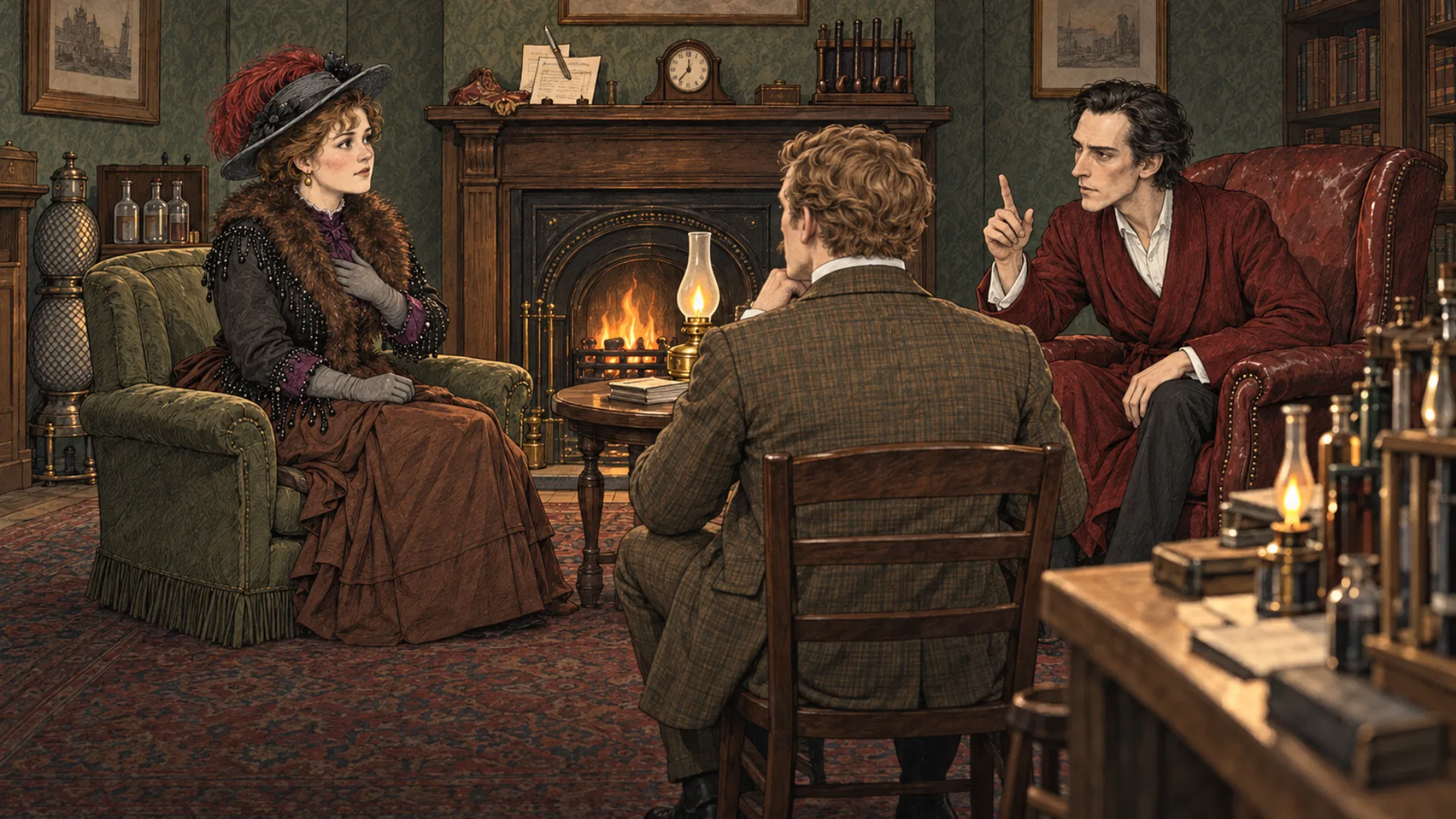
Mary says that Hosmer proposed after their first walk and worked as a cashier somewhere in Leadenhall Street. She does not know the firm’s name or his home address. Holmes presses her for the practical details, including the destination used for their correspondence.
Japanese in this scene
- は
- は marks the topic of the sentence and can also contrast it with another topic. It is written ha but normally pronounced wa.
- が
- が marks the grammatical subject or introduces newly focused information. It can also connect clauses with a mild contrast.
- に
- に can mark a destination, target, time, recipient, purpose, or resulting state. The predicate shows its role here.
- で
- で commonly marks the place of an action or the means used. It can also be the connective form of the copula だ.
Full text: original English and Japanese translation
"Were you engaged to the gentleman at this time?"
「その頃には、その方と婚約していたのですか」
"Oh, yes, Mr. Holmes. We were engaged after the first walk that we took. Hosmer—Mr. Angel—was a cashier in an office in Leadenhall Street—and—"
「ええ、ホームズさん。初めて一緒に散歩した後に、婚約したんです。ホズマー、エンジェルさんは、レドンホール街の事務所の出納係で、それで……」
"What office?"
「どこの事務所ですか」
"That's the worst of it, Mr. Holmes, I don't know."
「それが困ったことに、ホームズさん、分からないんです」
"Where did he live, then?"
「では、どこに住んでいたのですか」
"He slept on the premises."
「その勤め先に寝泊まりしていました」
"And you don't know his address?"
「でも、住所はご存じないのですね」
"No—except that it was Leadenhall Street."
「ええ、レドンホール街だということしか」
"Where did you address your letters, then?"
「では、手紙はどこ宛てに出していたのですか」