 よみうち英語Read the classics by typing
Notes Scene 25: Urgent Instructions
You've finished this scene
Notes on this scene
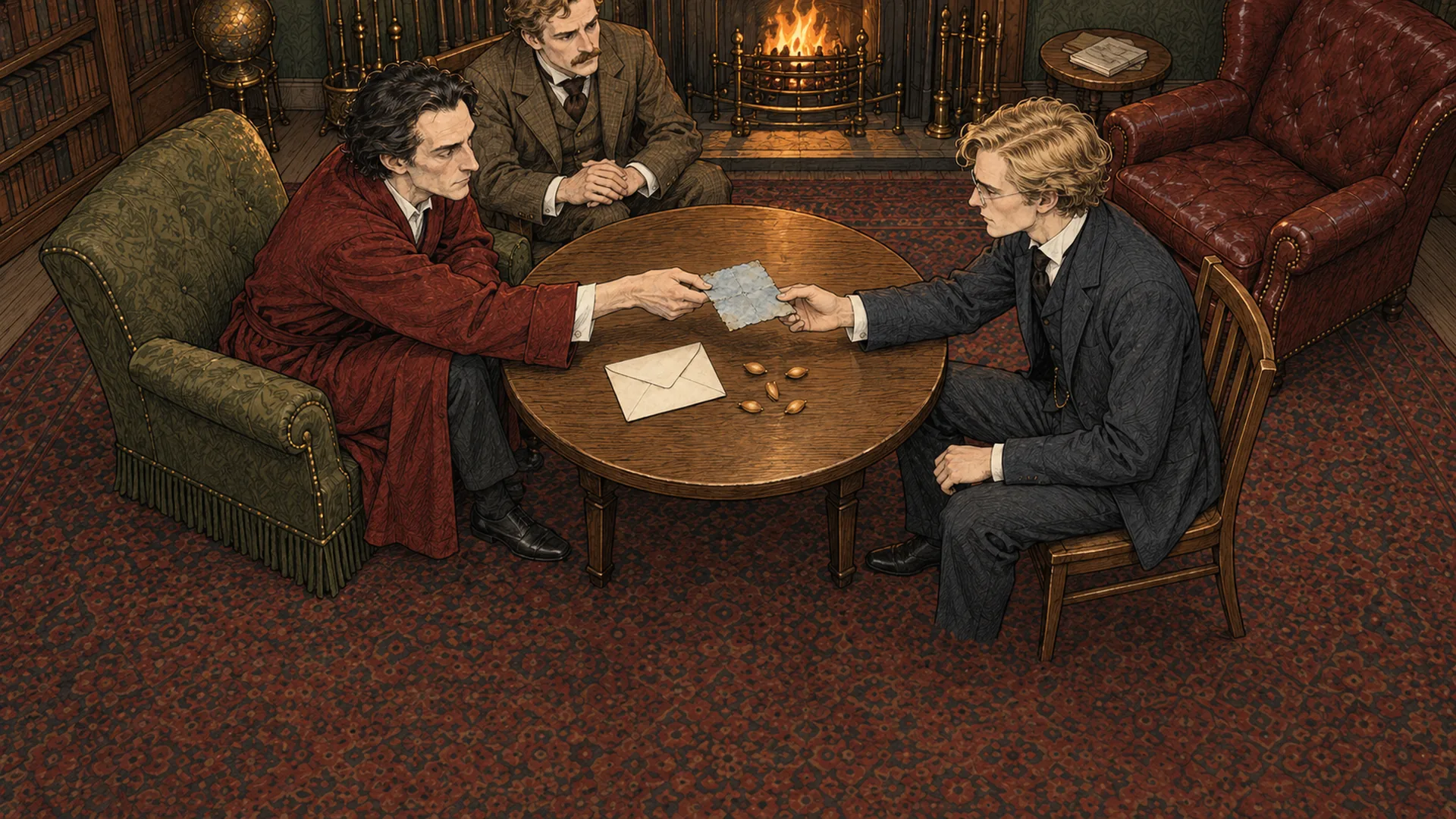
Holmes returns the paper and orders John to act without delay. He must place the surviving page in the brass box, add a note saying the other papers were burned, and leave the box on the sundial exactly as the warning demands.
Japanese in this scene
- ている
- The 〜ている form can show an action in progress, a continuing state, or the result of a completed action. The surrounding sentence decides which meaning applies.
- という
- という links a quoted name, statement, or idea to the noun that follows. It can be translated as “called,” “that,” or “the idea that.”
- のでしょう
- のでしょう makes an explanatory question tentative and polite, as in asking what action should be taken.
- ながら
- ながら links two actions done at the same time, or can introduce a contrast like “although.”
Full text: original English and Japanese translation
"Thank you!" said Holmes, folding up the paper and returning it to our visitor. "And now you must on no account lose another instant. We cannot spare time even to discuss what you have told me. You must get home instantly and act."
「ありがとうございます」とホームズは紙を畳み、来客へ返しながら言った。「さて、もう一瞬たりとも無駄にしてはいけません。今のお話を話し合う時間さえ惜しい。すぐに帰って、行動してください」
"What shall I do?"
「何をすればよいのでしょう」
"There is but one thing to do. It must be done at once. You must put this piece of paper which you have shown us into the brass box which you have described. You must also put in a note to say that all the other papers were burned by your uncle, and that this is the only one which remains. You must assert that in such words as will carry conviction with them. Having done this, you must at once put the box out upon the sundial, as directed. Do you understand?"
「すべきことは一つだけです。今すぐにしなければなりません。今見せてくださった紙片を、お話にあった真鍮の箱へ入れてください。ほかの書類はすべておじさんが焼き、残っているのはこれ一枚だけだという説明も書いて入れてください。相手に信じさせるような言葉で、はっきり述べるのです。それが済んだら、指示どおり、すぐに箱を外の日時計の上へ置いてください。お分かりですか」
"Entirely."
「よく分かりました」