 よみうち英語Read the classics by typing
Notes Scene 21: No Family?
You've finished this scene
Notes on this scene
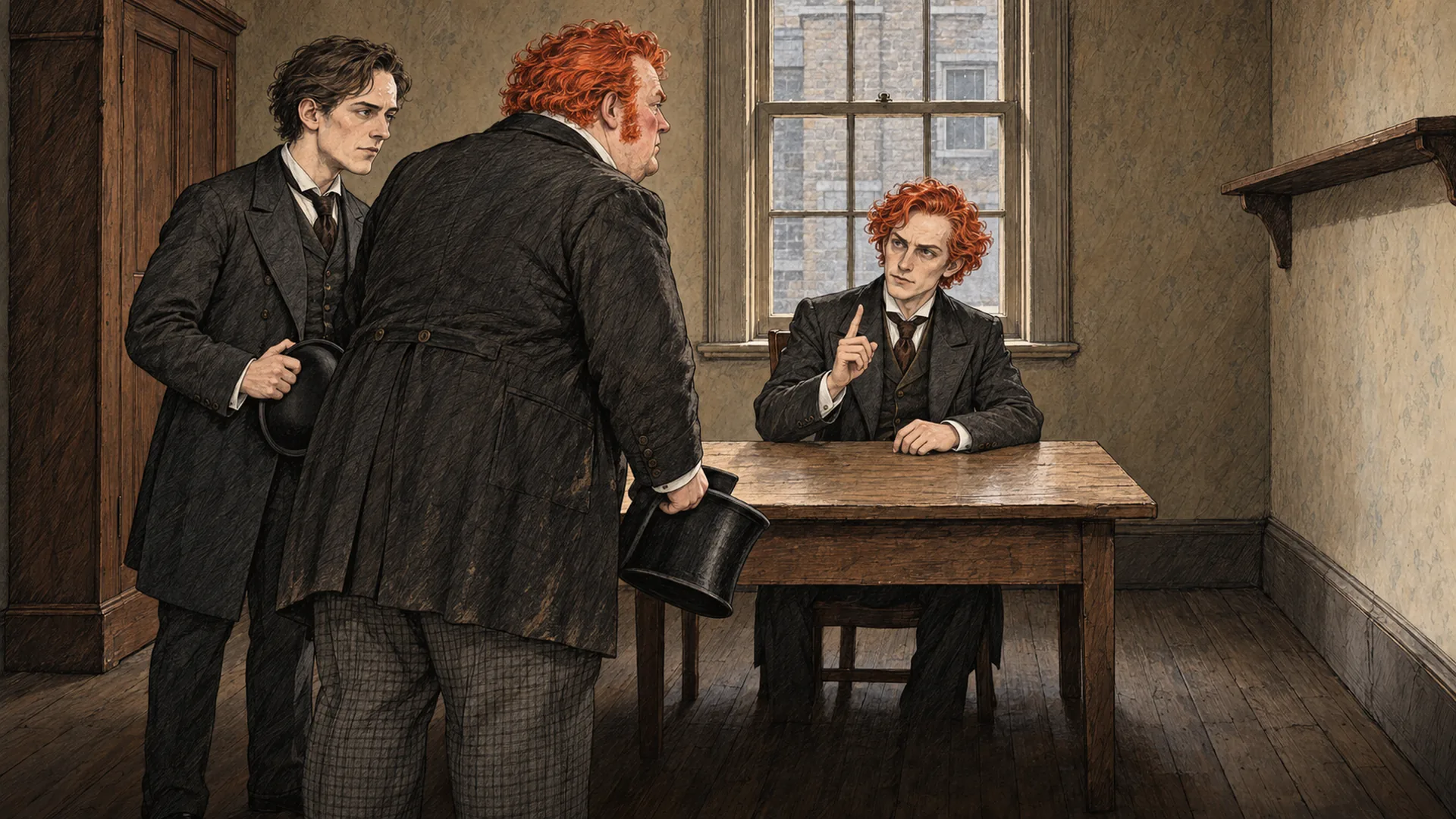
The manager names himself as Duncan Ross and says that he is one of the men supported by the League’s fund. Learning that Wilson has no wife or children, Ross expresses deep disappointment. The fund, he says, was intended not only to support red-haired men but also to increase their number.
Japanese in this scene
- ている
- The 〜ている form can show an action in progress, a continuing condition, or the present result of a completed action. The surrounding context selects the meaning.
- ため
- ため can mean “for the purpose of” or “because of.” A following action usually signals purpose, while a completed fact before it often gives a cause.
- のです
- のです is the polite explanatory form of のだ. It presents the statement as background, explanation, or a conclusion the listener should understand.
- は
- は marks the topic of a sentence and can also set up a contrast with another item.
Full text: original English and Japanese translation
"'My name,' said he, 'is Mr. Duncan Ross, and I am myself one of the pensioners upon the fund left by our noble benefactor. Are you a married man, Mr. Wilson? Have you a family?'
「『私の名は』と彼は言いました。『ダンカン・ロスと申しまして、私自身も、われらが気高き恩人の遺した基金から年金を受けている者の一人なのです。結婚はしておいでですか、ウィルソンさん?ご家族は?』
"I answered that I had not.
「おりません、と私は答えました。
"His face fell immediately.
「とたんに彼の顔が曇りましてね。
"'Dear me!' he said gravely, 'that is very serious indeed! I am sorry to hear you say that. The fund was, of course, for the propagation and spread of the red-heads as well as for their maintenance. It is exceedingly unfortunate that you should be a bachelor.'
「『なんと!』と彼は重々しく言いました。『それはまことにゆゆしいことです!そう伺うのは残念ですな。基金はもちろん、赤毛の者を養うためだけでなく、赤毛を増やし広めるためのものでもあるのですから。あなたが独り身とは、まったくもって残念でなりません』