 よみうち英語Read the classics by typing
Notes Scene 22: The Hours
You've finished this scene
Notes on this scene
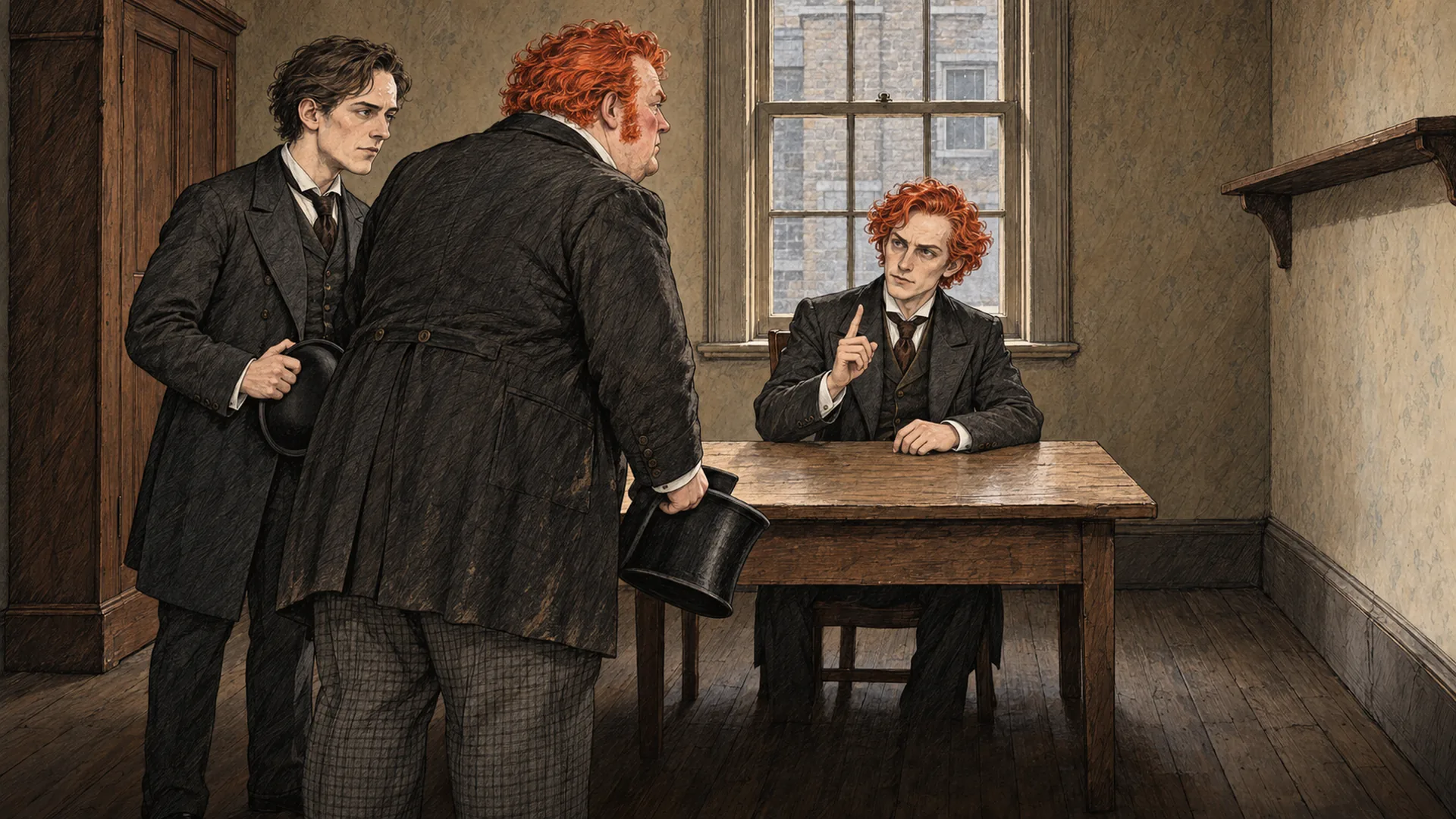
Although Wilson is disappointed by the objection to his unmarried state, Ross makes an exception because of his splendid hair. Spaulding promises to manage the shop during Wilson’s absence. Ross then gives the working hours: every morning from ten o’clock until two.
Japanese in this scene
- ため
- ため can mean “for the purpose of” or “because of.” A following action usually signals purpose, while a completed fact before it often gives a cause.
- のです
- のです is the polite explanatory form of のだ. It presents the statement as background, explanation, or a conclusion the listener should understand.
- ほど
- ほど expresses degree or an approximate extent: “to the point that; as much as; about.” The comparison in the sentence determines its natural English rendering.
- は
- は marks the topic of a sentence and can also set up a contrast with another item.
Full text: original English and Japanese translation
"My face lengthened at this, Mr. Holmes, for I thought that I was not to have the vacancy after all; but after thinking it over for a few minutes he said that it would be all right.
「これを聞いて私は浮かない顔になりましてね、ホームズさん、結局その空きはいただけないのかと思ったのですが、彼は数分考えたあとで、それでかまわないと言ってくれたんです。
"'In the case of another,' said he, 'the objection might be fatal, but we must stretch a point in favour of a man with such a head of hair as yours. When shall you be able to enter upon your new duties?'
「『ほかの人なら』と彼は言いました。『この点は命取りになるところですが、あなたほど見事な髪の方のためなら、少々大目に見ねばなりますまい。新しいお務めには、いつから就けますかな?』
"'Well, it is a little awkward, for I have a business already,' said I.
「『それが、少々困ったことに、私にはもう商売がありまして』と私は言いました。
"'Oh, never mind about that, Mr. Wilson!' said Vincent Spaulding. 'I should be able to look after that for you.'
「『なあに、そんなことは気になさらなくていいですよ、ウィルソンさん!』とヴィンセント・スポールディングが言いました。『店のほうは私が見ておけますから』
"'What would be the hours?' I asked.
「『勤務時間は何時から何時までで?』と私は尋ねました。
"'Ten to two.'
「『十時から二時までです』