 よみうち英語Read the classics by typing
Notes Scene 32: Why He Came
You've finished this scene
Notes on this scene
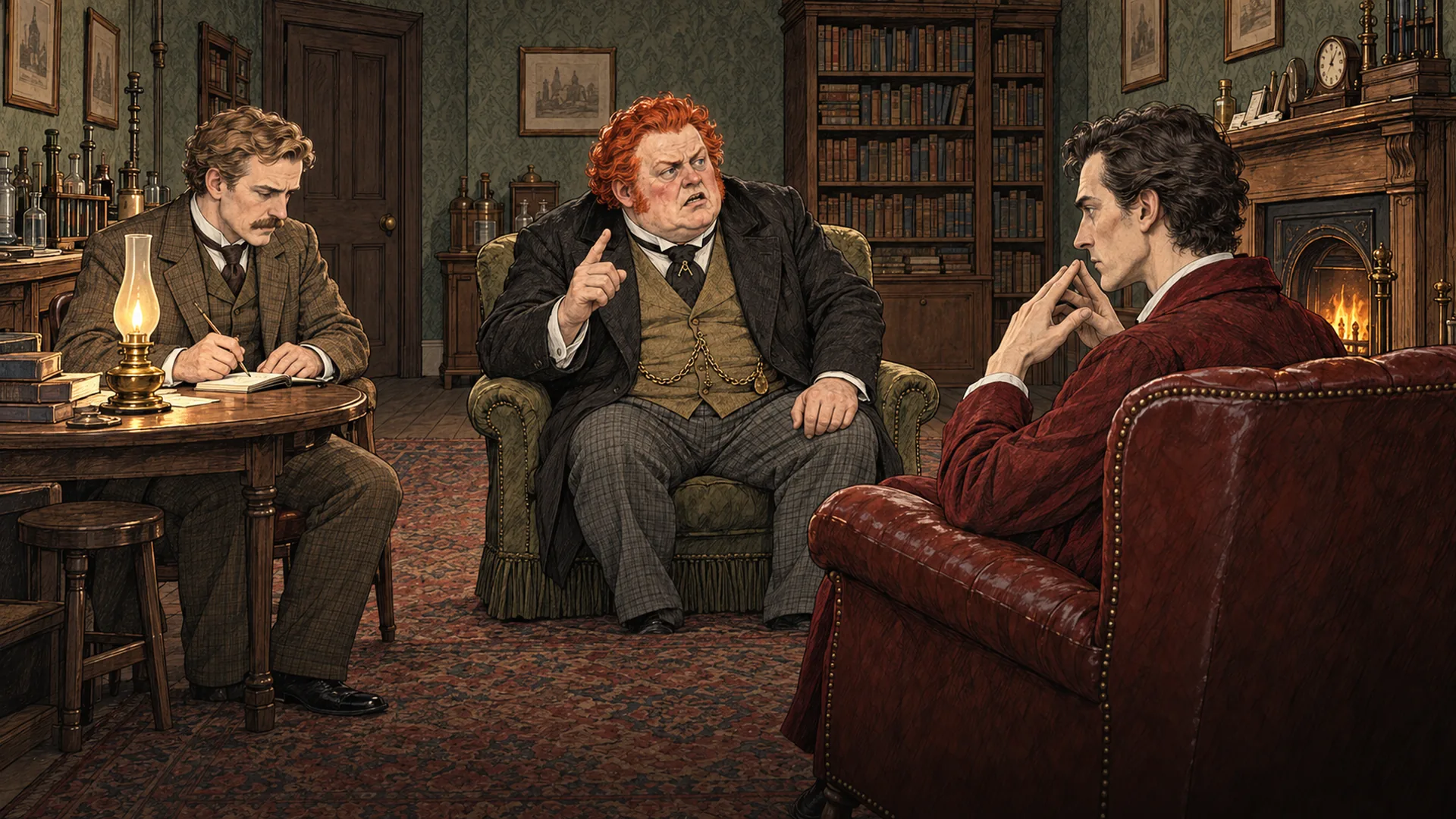
Wilson reports the failure of his search and says that Spaulding advised him to wait for news by post. Still dissatisfied, he came to Baker Street for help. Holmes agrees to investigate and warns that the case may contain something more serious than its ridiculous appearance suggests.
Japanese in this scene
- かもしれない
- かもしれない means “might; may.” It marks a possibility rather than a firm conclusion and is less certain than でしょう or だろう.
- ている
- The 〜ている form can show an action in progress, a continuing condition, or the present result of a completed action. The surrounding context selects the meaning.
- という
- という connects quoted words, a name, or an idea to the noun that follows. Depending on context, it can mean “called,” “that,” or “the idea that.”
- わけ
- わけ can mean a reason, circumstances, or the logical conclusion of a situation. Expressions such as わけだ and わけがない depend on this sense of an explainable outcome.
Background
- London post
- Victorian London had several postal deliveries each day. A letter sent in the morning could receive a reply before evening, so waiting for news by post was a normal expectation.
Full text: original English and Japanese translation
"I went home to Saxe-Coburg Square, and I took the advice of my assistant. But he could not help me in any way. He could only say that if I waited I should hear by post. But that was not quite good enough, Mr. Holmes. I did not wish to lose such a place without a struggle, so, as I had heard that you were good enough to give advice to poor folk who were in need of it, I came right away to you."
「それでサックス・コバーグ・スクエアの家に戻って、助手に相談してみたんです。でも、あいつにもどうにもできませんでした。待っていればそのうち郵便で知らせが来るでしょう、と言うばかりでして。ですが、それではどうにも気がすまないんですよ、ホームズさん。あれほどの勤め口を、何もせずに手放すのはいやでしたし、それに、困っている貧乏人にも親切に助言をしてくださる方だと聞いておりましたので、すぐさまこちらへ伺ったというわけです」
"And you did very wisely," said Holmes. "Your case is an exceedingly remarkable one, and I shall be happy to look into it. From what you have told me I think that it is possible that graver issues hang from it than might at first sight appear."
「それはまことに賢明だった」とホームズは言った。「あなたの件はきわめて珍しいものだから、喜んで調べさせてもらおう。今うかがった話からすると、この件には、一見して思うよりも重大なことがかかっているのかもしれない」