 よみうち英語Read the classics by typing
Notes Scene 43: The Busy Street Behind
You've finished this scene
Notes on this scene
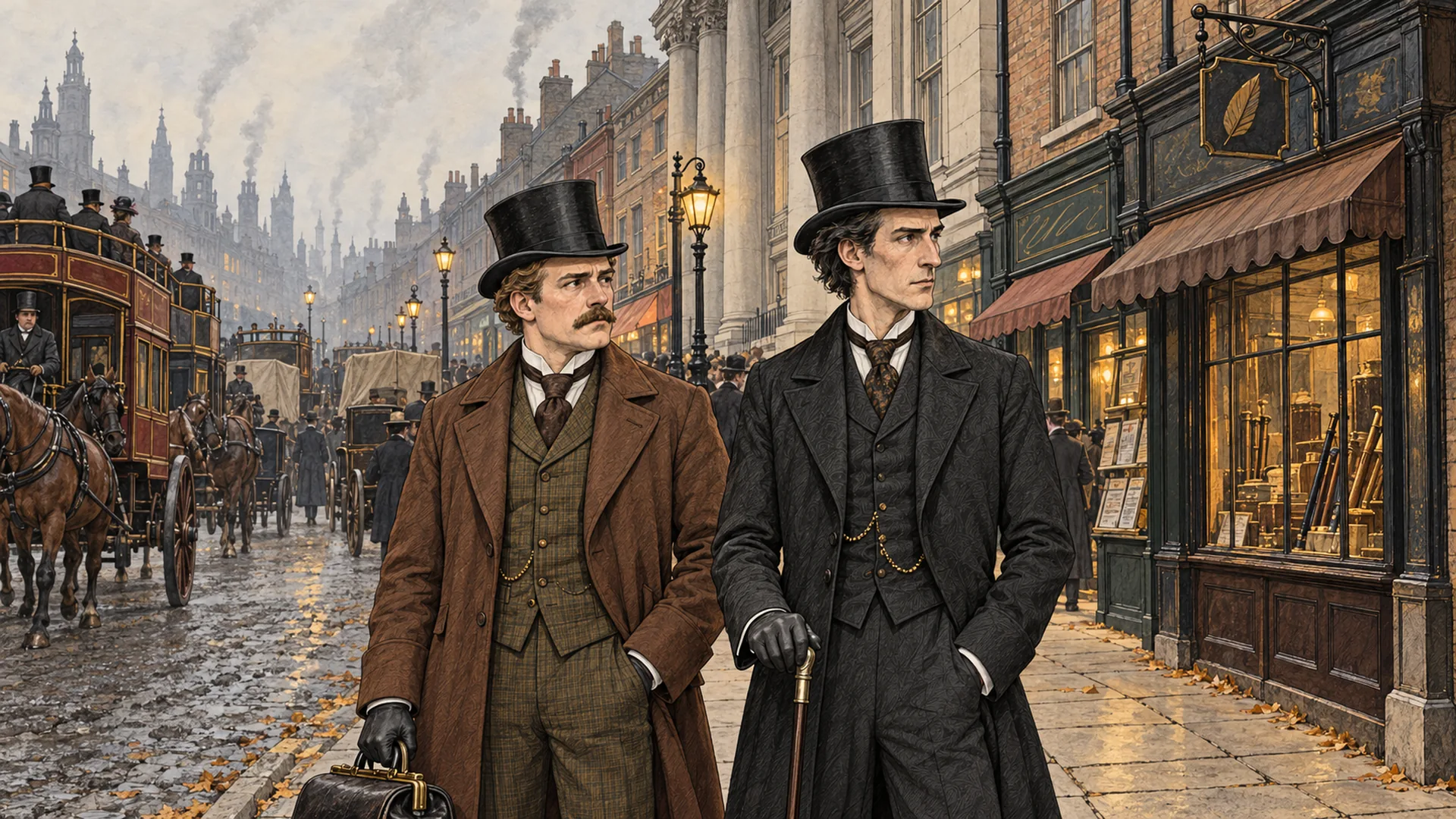
Behind the neglected square lies a major London thoroughfare crowded with traffic, shops, and people. Watson is struck by the contrast between the two connected streets. The respectable commercial buildings on this side stand back-to-back with the pawnbroker’s shop and the quiet row Holmes has just examined.
Japanese in this scene
- ている
- The 〜ている form can show an action in progress, a continuing condition, or the present result of a completed action. The surrounding context selects the meaning.
- ていた
- The 〜ていた form is the past of 〜ている. It describes an action that was in progress or a state that continued at the time being discussed.
- ように
- ように can express a goal, an intended result, or resemblance, depending on the words around it. With a verb of request, it can also report what someone was told to do.
- ほど
- ほど expresses degree or an approximate extent: “to the point that; as much as; about.” The comparison in the sentence determines its natural English rendering.
Background
- The City
- The City of London is the old central district inside the Roman walls. By the nineteenth century it was Britain’s commercial and financial heart, crowded with banks, offices, and merchants by day.
Full text: original English and Japanese translation
The road in which we found ourselves as we turned round the corner from the retired Saxe-Coburg Square presented as great a contrast to it as the front of a picture does to the back. It was one of the main arteries which conveyed the traffic of the City to the north and west. The roadway was blocked with the immense stream of commerce flowing in a double tide inward and outward, while the footpaths were black with the hurrying swarm of pedestrians. It was difficult to realise as we looked at the line of fine shops and stately business premises that they really abutted on the other side upon the faded and stagnant square which we had just quitted.
ひっそりとしたサックス・コバーグ・スクエアから角を曲がって出た通りは、絵の表と裏ほどにも、あの広場とは対照的だった。そこは、シティの人と物の流れを北と西へ運ぶ大動脈の一つだった。車道は、内へ外へと二筋の潮のように流れる商いの大きな流れでふさがり、歩道は急ぎ足の人々の群れで黒々としていた。立派な商店や堂々たる商社の建物が並ぶのを眺めていると、それらが裏側で、たった今あとにしてきた、さびれてよどんだ広場に接しているとは、なかなか実感できなかった。