 よみうち英語Read the classics by typing
Notes Scene 22: The Client Departs
You've finished this scene
Notes on this scene
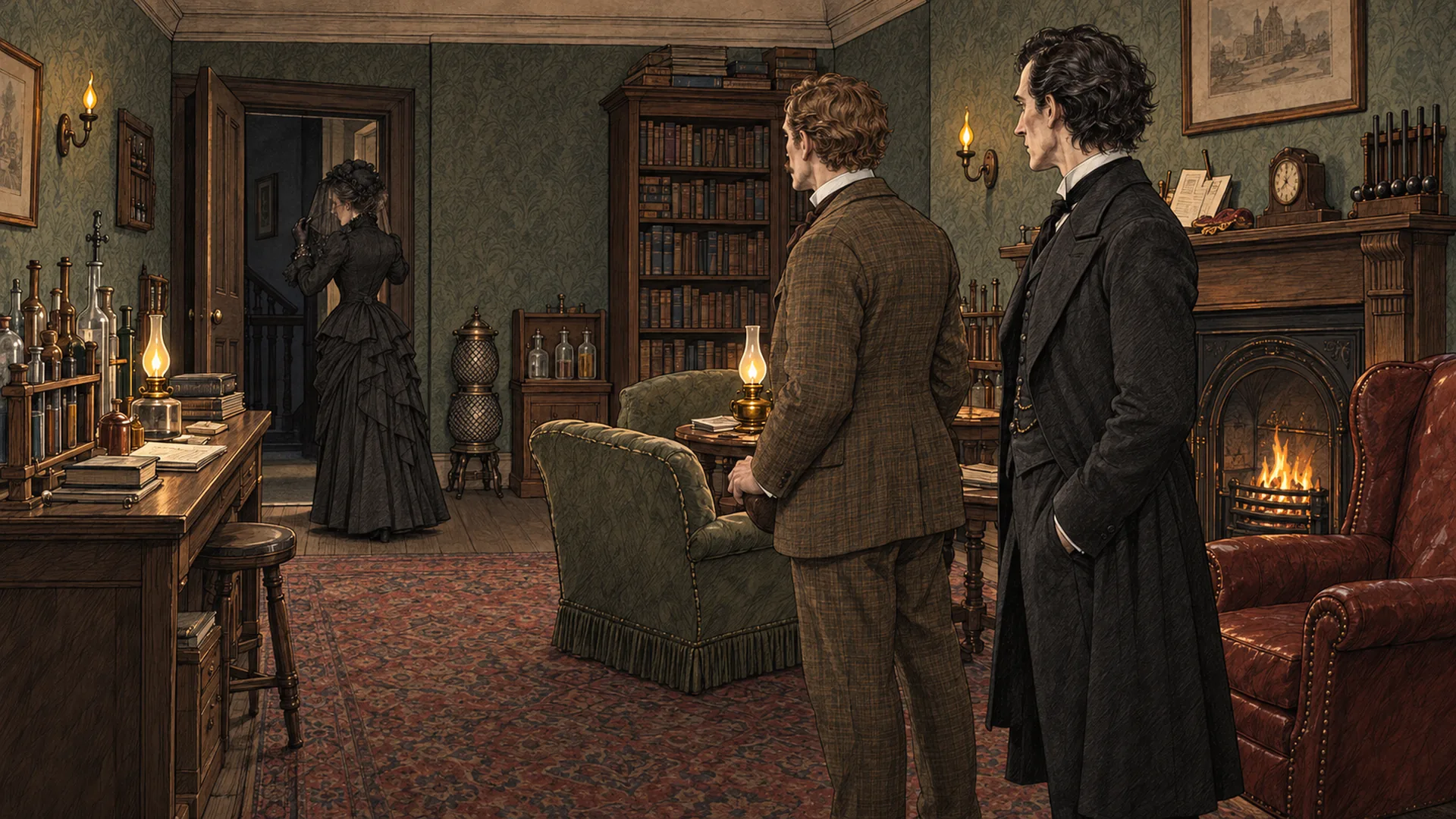
Helen says that after completing her business in town, she will return to Stoke Moran on the noon train. Holmes promises to visit early that afternoon and offers her breakfast, but she declines. Relieved after sharing her fears, Helen lowers her veil, says goodbye to the two men, and leaves Baker Street.
Japanese in this scene
- ちょっとした
- ちょっとした deliberately minimizes Holmes's own errand as a small matter, contrasting it with the serious investigation awaiting them afterward.
- ご一緒していきません
- ご一緒していきませんか is a polite invitation to join them for breakfast before Helen leaves, with ご一緒する giving ‘accompany’ a courteous form.
- けれど
- けれど contrasts Helen's departure with her promised return: although she must leave now, she will be back in time for their visit.
- 片づけておきたい
- 片づけておきたい means Holmes wants to get his small errand dealt with in advance, before he and Watson travel to Stoke Moran.
Background
- black veil
- Black clothing could indicate mourning, and a thick veil concealed the wearer's face. Helen lowers hers again when leaving so that her identity remains private.
Full text: original English and Japanese translation
"I have one or two things which I would wish to do now that I am in town. But I shall return by the twelve o'clock train, so as to be there in time for your coming."
「町に出ている今のうちに、いくつか済ませたい用事があります。けれど十二時の列車で帰り、あなた方がいらっしゃるのに間に合うようにしておきます」
"And you may expect us early in the afternoon. I have myself some small business matters to attend to. Will you not wait and breakfast?"
「では、午後の早いうちにこちらから伺うと思ってください。私自身も、片づけておきたいちょっとした用事がある。朝食をご一緒していきませんか?」
"No, I must go. My heart is lightened already since I have confided my trouble to you. I shall look forward to seeing you again this afternoon." She dropped her thick black veil over her face and glided from the room.
「いいえ、行かなければなりません。悩みをあなたにお話ししたら、もう心が軽くなりました。今日の午後、またお会いできるのを楽しみにしています」彼女は厚い黒のヴェールを顔の上におろし、すべるように部屋から出ていった。