 よみうち英語Read the classics by typing
Notes Scene 41: Gestures at the Window
You've finished this scene
Notes on this scene
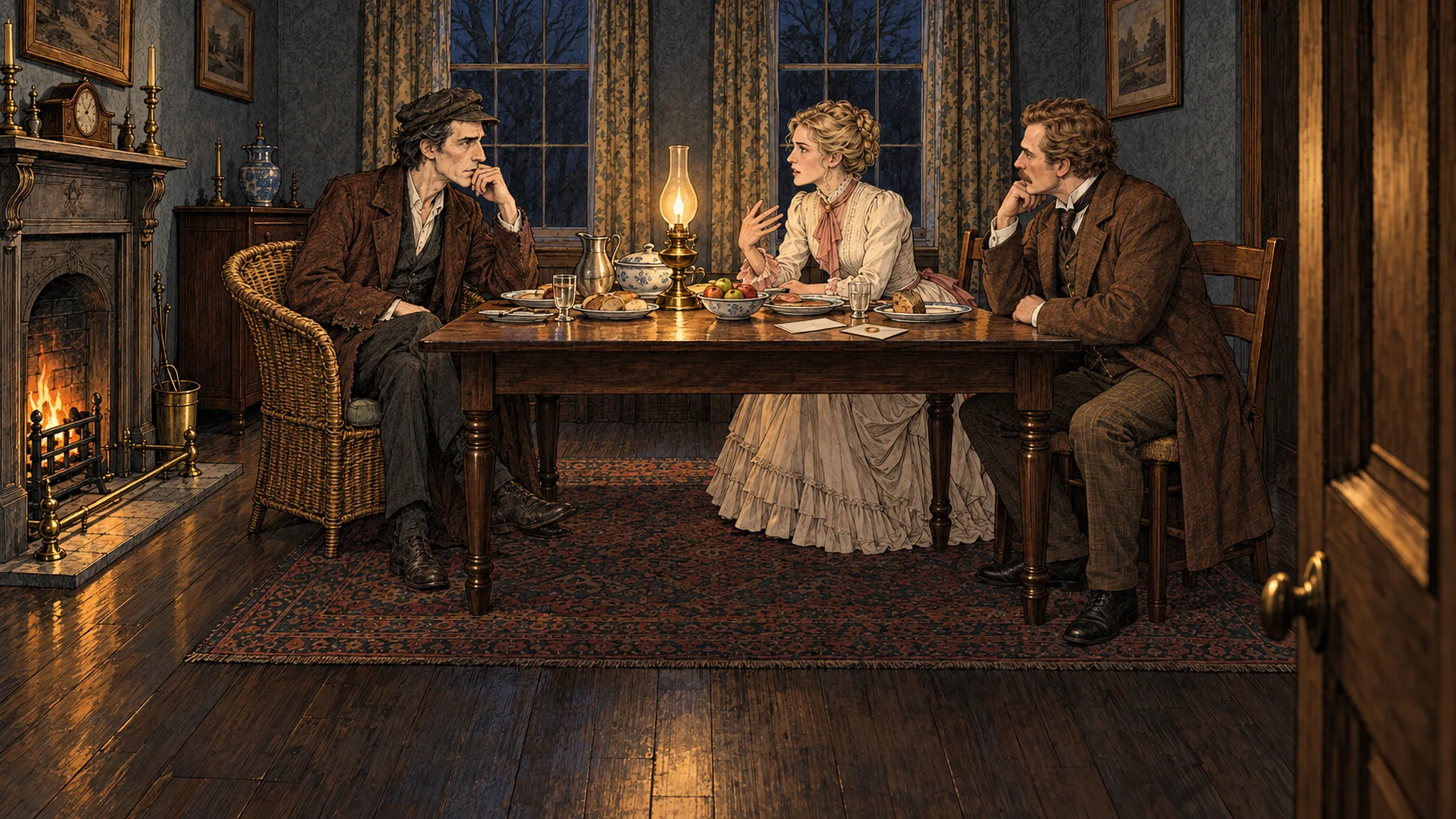
Holmes suggests that Neville's cry may have expressed surprise and that throwing up his hands may have followed from unexpectedly seeing his wife. She admits these readings are possible and confirms that she did not see anyone else pull him away.
Japanese in this scene
- 付け襟もネクタイも着けていませんでした
- Repeated も pairs the two absent items. 〜ていませんでした politely describes what St. Clair was not wearing.
- 部屋の中に、ほかの人は見えませんでしたか
- 見える means to be visible rather than to look deliberately. Holmes asks whether anyone else could be seen in the room.
- あの恐ろしい男はそこにいたと認めています
- 〜と認めています reports Boone's own admission that he was in the room, although Mrs. St. Clair did not see him there.
- 見えた限りでは、ご主人は普段の服を着ていました
- 見えた限りでは limits the claim to what was visible, allowing Holmes to test her observation without overstating it.
Full text: original English and Japanese translation
"But it might have been a cry of surprise. Astonishment at the unexpected sight of you might cause him to throw up his hands?"
「しかし、驚きの声だったのかもしれません。思いがけず奥様を見かけて驚き、両手を上げたとも考えられますね」
"It is possible."
「あり得ることです」
"And you thought he was pulled back?"
「それから、後ろへ引かれたように思われた」
"He disappeared so suddenly."
「とても突然姿が消えましたから」
"He might have leaped back. You did not see anyone else in the room?"
「自分で後ろへ跳んだのかもしれません。部屋の中に、ほかの人は見えませんでしたか」
"No, but this horrible man confessed to having been there, and the Lascar was at the foot of the stairs."
「見えませんでした。でも、あの恐ろしい男はそこにいたと認めていますし、店主は階段の下にいました」
"Quite so. Your husband, as far as you could see, had his ordinary clothes on?"
「なるほど。見えた限りでは、ご主人は普段の服を着ていましたね」
"But without his collar or tie. I distinctly saw his bare throat."
「でも、付け襟もネクタイも着けていませんでした。何も覆っていない喉元がはっきり見えました」