 よみうち英語Read the classics by typing
Notes Scene 13: A Pair of Horses
You've finished this scene
Notes on this scene
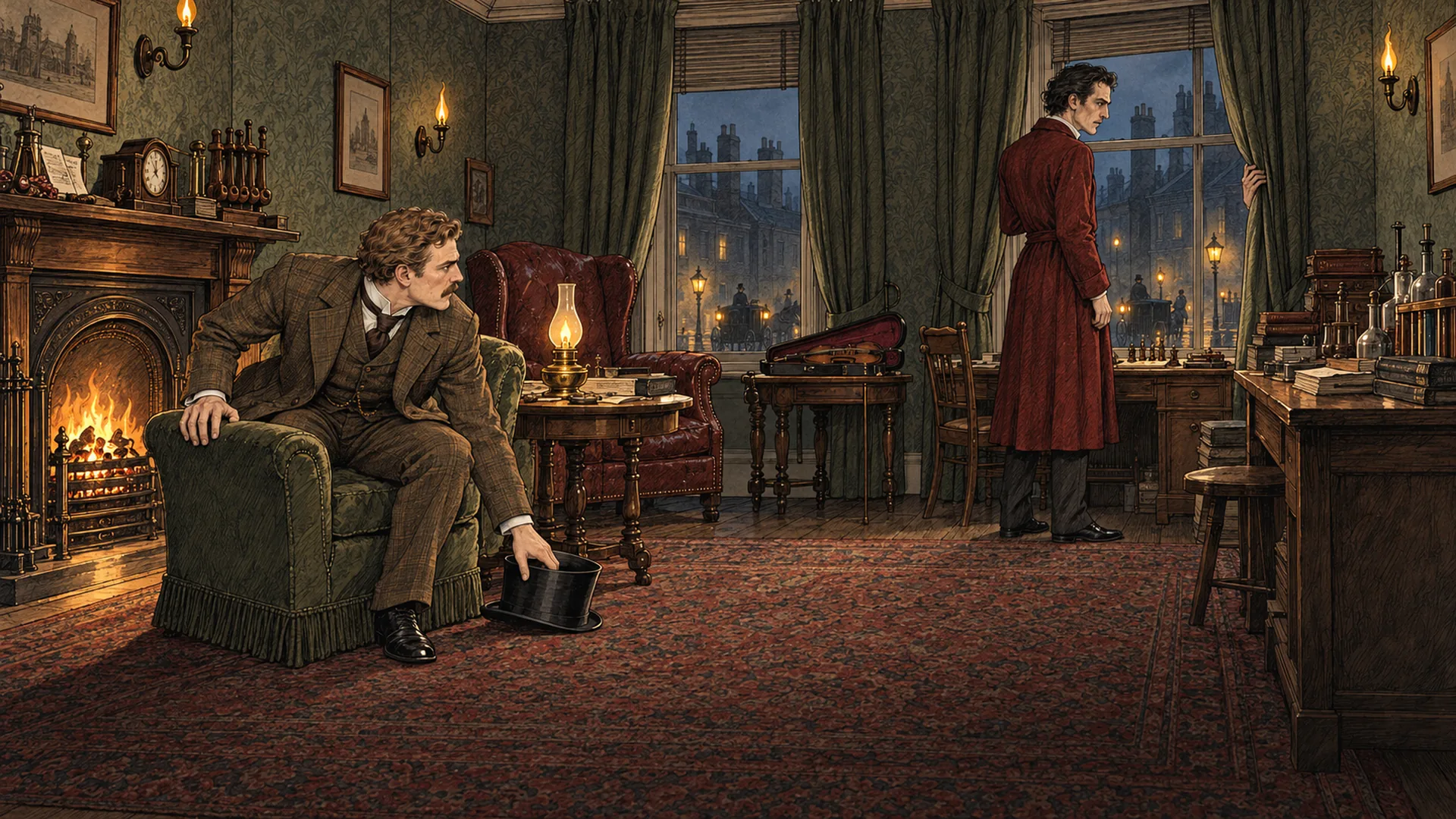
Holmes identifies a fine two-horse carriage and estimates the horses’ value. He expects the case to be profitable. Watson offers to leave, but Holmes insists that his chronicler must stay, comparing him to Boswell. He also thinks the case will be too interesting for Watson to miss.
Japanese in this scene
- からすると
- からすると marks the basis for a judgment: “judging from.” Here the sound provides evidence about the carriage.
- 一頭あたり
- あたり means “per.” 頭 counts large animals; 一頭 is read いっとう, with a doubled consonant.
- お手上げ
- お手上げ means being at a loss or unable to manage. Holmes uses it playfully to insist that he needs Watson.
Background
- Brougham
- A small four-wheeled enclosed carriage with an outside seat for the driver, named after Lord Brougham. It was favored as an elegant private carriage. Usually drawn by one horse, a two-horse brougham suggested wealth.
- Guinea
- A unit worth twenty-one shillings, or one pound and one shilling. Although the gold coin was no longer minted, guineas remained customary for prices of expensive horses and artworks and for doctors’ and lawyers’ fees.
- Boswell
- James Boswell was the biographer who recorded the words and actions of the eighteenth-century writer Samuel Johnson in detail. Holmes compares Watson, who writes accounts of his cases, to this famous biographer.
Full text: original English and Japanese translation
"A pair, by the sound," said he. "Yes," he continued, glancing out of the window. "A nice little brougham and a pair of beauties. A hundred and fifty guineas apiece. There's money in this case, Watson, if there is nothing else."
「音からすると、二頭立てだな」と彼は言った。「やはりそうだ」と彼は窓の外をちらりと見ながら続けた。「小ぶりで上等な箱馬車に、見事な馬が二頭。一頭あたり百五十ギニーはするね。ワトソン、この事件はほかに何もなくとも、金にだけはなるよ」
"I think that I had better go, Holmes."
「ホームズ、私は失礼したほうがよさそうだね」
"Not a bit, Doctor. Stay where you are. I am lost without my Boswell. And this promises to be interesting. It would be a pity to miss it."
「とんでもない、先生。そのままいてくれたまえ。記録係のボズウェルがいなくては、私はお手上げなんだ。それに、これは面白くなりそうだ。見逃すのは惜しいよ」
"But your client—"
「でも、きみの依頼人が――」